

On Thursday we visited two estates in the Vidigueira region in the south of Alentejo. The landscape was huge – mountains in the distance, but mainly rolling hills with fields of cereals, olive trees, cork oaks and very occasionally signs of human habitation or enterprise. Storks nest on the top of posts, their huge structures seeming crazily precarious.
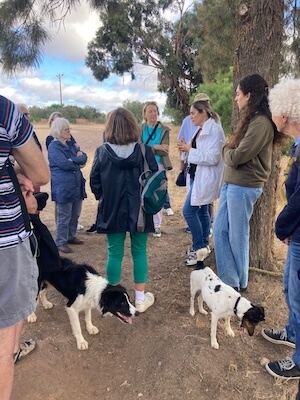
Our first visit was to Herdade dos Lagos, where we met Helena, the farm manager and her colleague Mariana. Also Kika, a fox terrier and her colleague Tinto, a border collie (both of whom only spoke English as this is the lingua franca of the estate, which is owned by a German family and managed by a team of Portugese).
The Seppenfeld family have owned the estate for nearly 50 years, and invested hugely in its sustainability, planting native trees, building artificial lakes (their only source of water, and a stopping off point for a flock of flamingos!), and creating olive groves, carob orchards, pasture for Merino and local breed sheep, and 25ha of vines.

They were only the third estate in the Alentjo to be certified under the WASP sustainability scheme, and view the sustainability approach as one of economic sense as much as virtue.
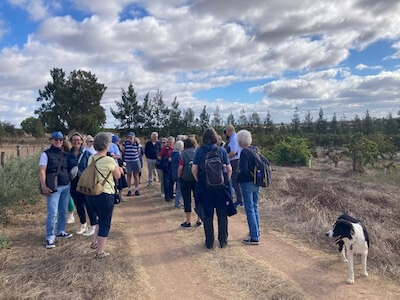
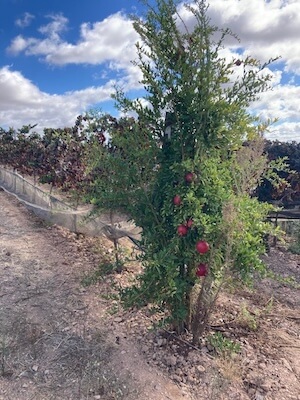
As we experienced, this is a windy place, so they have built windbreaks of casuarina bushes and other hardy plants such as myrtle and oleander, which also provide shade and refuges for bees and beneficial insects. On our walk round the nearby vineyards we saw bushes loaded with pomegranates, quince and citrus fruit. Helena explained that in the last 25 years they have replanted vineyards as they have learnt more about what works in terms of the orientation of rows (for both aspect to sun and also retention of water), and where different varieties do best.
They continue to experiment with grape varieties, recently planting Alvarinho which one might associate with cooler, wetter conditions, but brings some floral characters to their white wines.
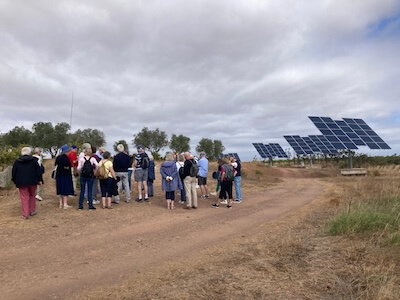
They are totally organic (the sheep assisting with soil fertility), and self sufficient in electricity through arrays of solar panels which feed into the grid.
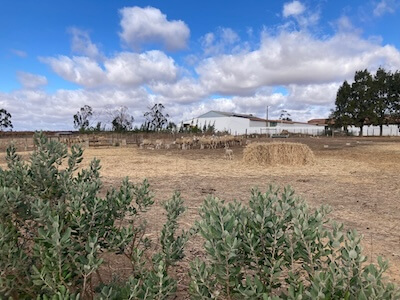
Helena was an inspiring guide, her passion for what she does, and warmth to us was very special. We finished with a tasting of their ‘HDL’ wines, enjoying their white, rosé, and five reds – including four Touriga Nacionals, one made in a granite barrel, and their amphora wine which is a team effort – everyone on the estate is involved in crushing the grapes by foot in clay pots, and all the varieties grown on the estate go into the blend. All were lovely. We toasted our wonderful hosts (Kika and Tinto had provided endless entertainment) with their Espumante Rosé, and very sadly bade them goodbye.
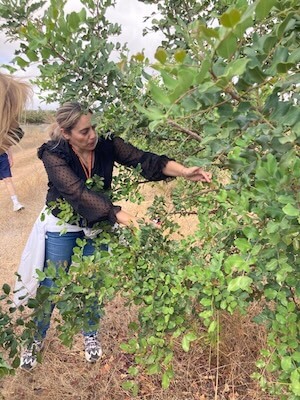
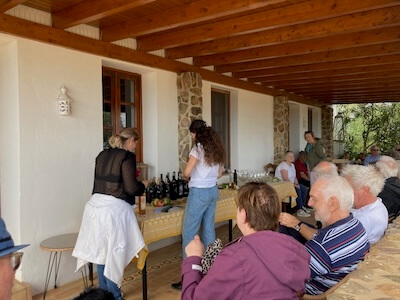
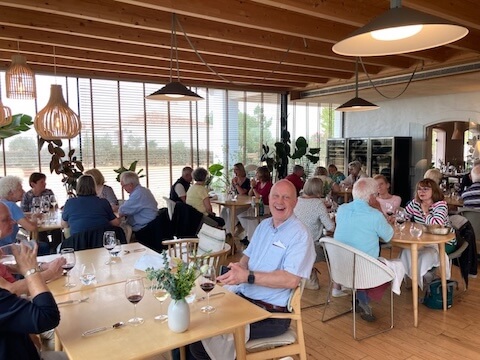
At Herdade do Malhadinha, also a family owned estate, we kicked off with lunch in their very elegant restaurant – tomato bruschetas followed by pork on a bed of migas, the local staple of day old bread that has been soaked in water and fried accompanied of course by their wines.
We were then treated to a masterclass in winemaking by Nuno, the chief winemaker. From the viewing point above the winery he described how each element is used – they ferment red grapes both in tanks and in open fermenters, complete with robotic treader. Harvest was nearly finished, Nuno and his team had been working 7 day weeks since the end of July, but he was still very energetic and very generous with his time and thoughtful answers to our questions.
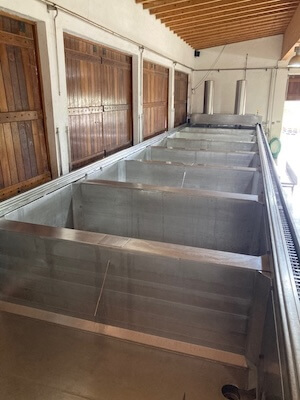
In the barrel cellar Nuno talked passionately about the importance of barrels – all theirs are made from French oak, by coopers he knows personally.
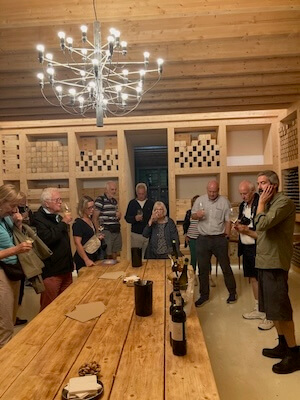
While Herdade de Malhadinha has a great international reputation, only 20% of its wine is exported, and most of that to Switzerland. So for most of us our tasting of their wines, led by Nuno, was a ‘first’. A 100% Verdelho was a surprise, and very crisp and floral, while their estate white and red were more familiar styles of Alentejo wines – generous wines with loads of different flavours thanks to the blends of grapes that go into them, and the oak barrels they mature in. The 100% Touriga Francesa was dark and powerful, and their Late Harvest wine, made from Petit Manseng, which spends 24 months in barrel, was really good – despite loads of residual sugar, its fresh acidity and slightly savoury notes made it a wonderful wine to sip and enjoy, and evoked flavours of Christmas!
Our coach journey home passed quickly enough, most of us dozed I think. But the weather was improving and Évora looked very pretty, so most of us strolled out in the evening, dodging the students who were clearly enjoying the start of the new term at the university.