A shorter coach journey this morning, around 45 minutes drive east to Reguengos de Monsaraz, through the rolling countryside, with lots of vineyards who had clearly been harvested, the vines’ leaves turning from green to many shades of red.
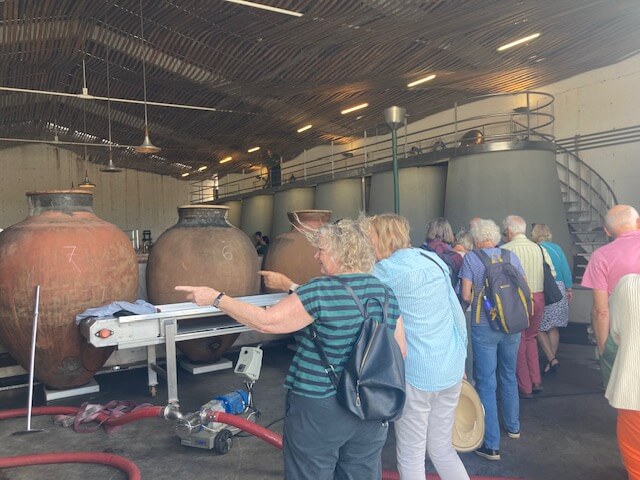
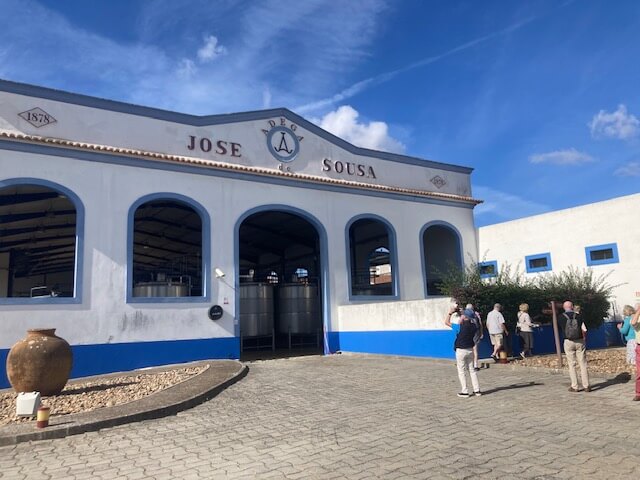
Our first visit was to Adega José de Sousa, an old estate rescued by the JM Fonseca in the last century. With the purchase of the estate came more than a hundred Talha, the traditional clay pots in which wine has been made in the Alentejo for millenia. These were the focus of our visit.
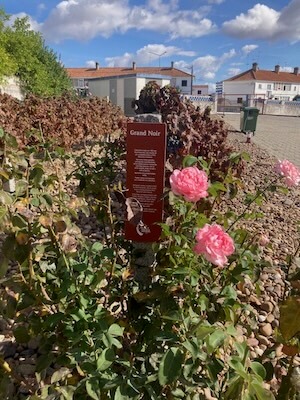
Our guide was Sofia, and we started in the small garden where there was a row each of the three main varieties they grow: Trincadeira and Aragonés (Tempranillo), which we were already familiar with, and Grand Noir, a relative of Alicante Bouschet (created by the same oenologist) and another teinteurier (red-fleshed) variety.
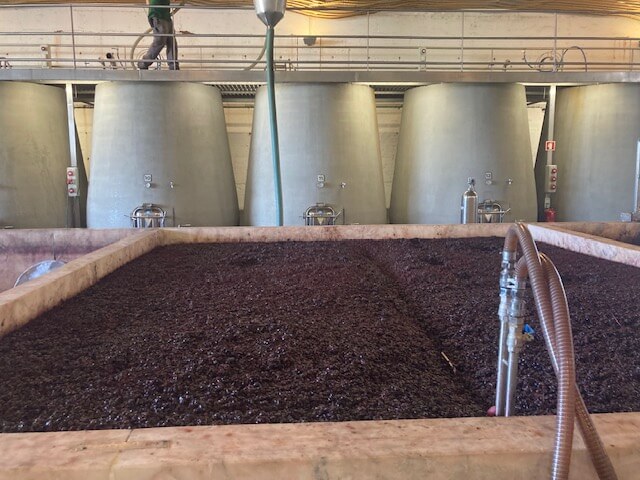
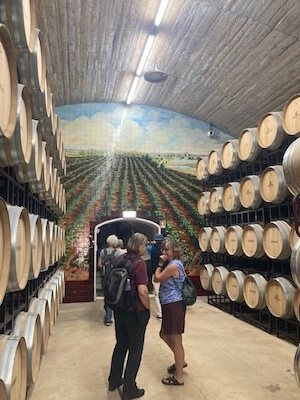
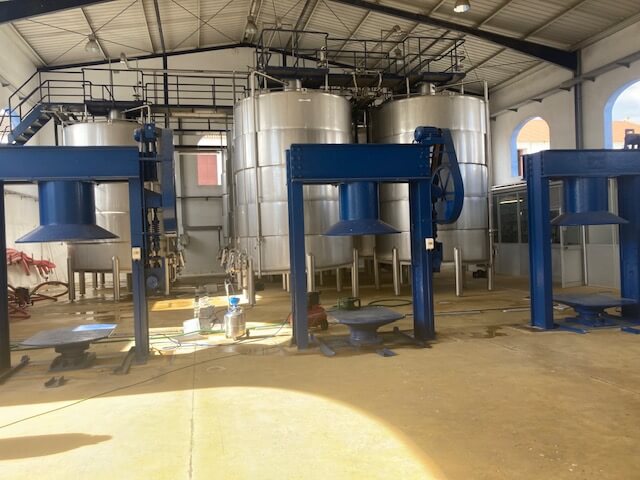
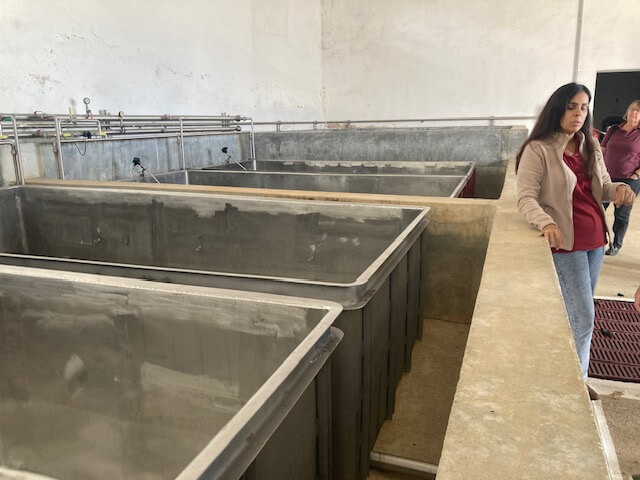
We skipped through the winery past the equipment we normally see, stainless steel tanks, pneumatic and vertical presses, French and American oak barrels, plus some stainless steel lagares, used for foot treading of grapes for the top wines.
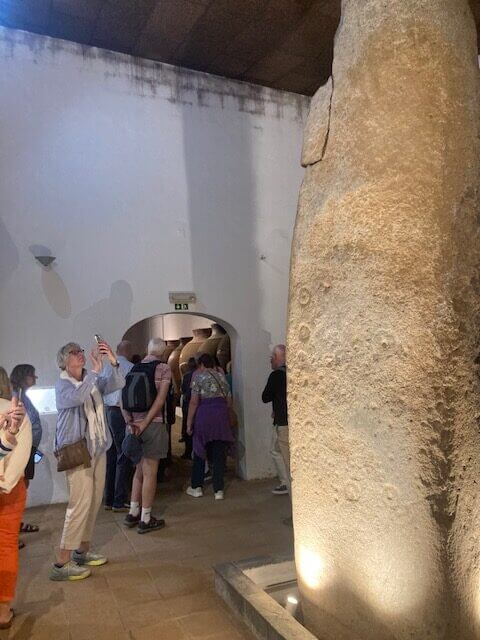
We then descended to the Adega de Potes, through the room containing artefacts found in their estate, including a Menir, a huge dolmen stone that had lain in a vineyard for 10,000 years with its curious carvings protected from the elements by its bed of soil.
Not all of the Talha they own are on display but there were plenty for us to admire.
Sofia described how they are made, and that they choose not to coat the interior of these huge ‘urns’ with pine resin and beeswax, as some other producers do. So their Talha wines are the product of grapes interacting with the very clay – crushed grapes are placed in the Talha, onto a bed of stems that will eventually facilitate drainage through the outlet at the bottom.
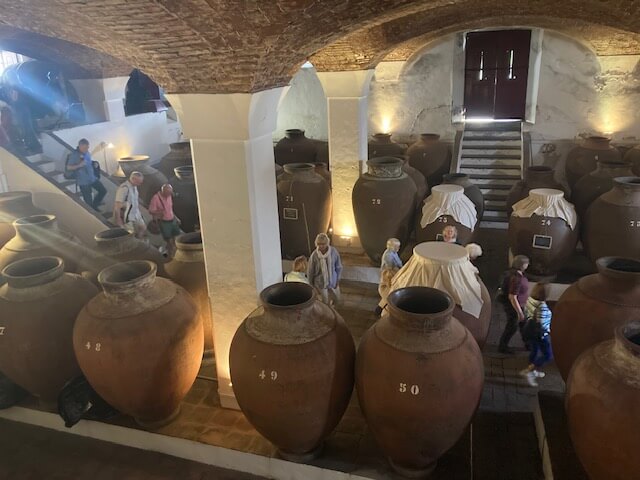
During fermentation the must has to be stirred to prevent a cap forming, and the exterior or the vessels is hosed to cool them down. The rules of Alentejo Talha wines means the first time the fermenting must can be checked is the 11th November, but they stay in them longer, finishing the fermentation and then being drained, lightly finltered and returned to cleaned Talha, where they have a layer of olive oil poured onto them to prevent excessive oxidation while they mature of many months. Reds and white wines are made in this method.
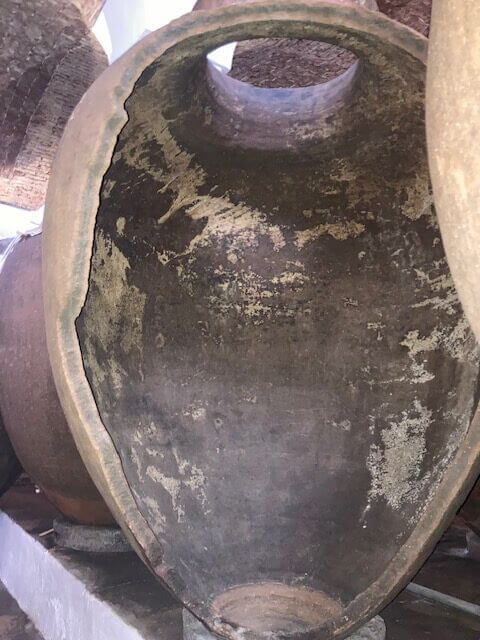
We could see several of the Talha contained either fermenting must or maturing wine, and were able to examine the interior of a couple of the pots, which had helpfully got broken at some point. It was an amazing experience, unlike any winery we have visted before.
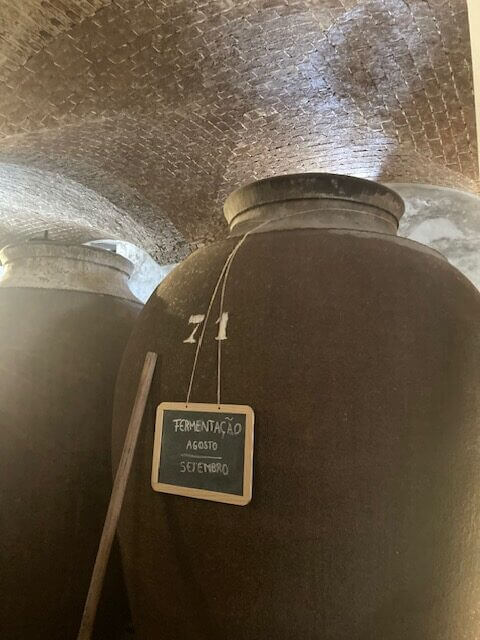
Back up in above ground, we enjoyed a tasting of a variety of their wines, aided by the chief winemaker Josep, who described how their Talha winemaking has involved trial and error as there was no instruction manual back in 1986 when Fonseca acquired the abandoned winery. By 2015 Josep felt they had got it right, and that was lucky as we tasted their Talha red from 2015 and their white from 2016. Both were very different from the other wines we have been tasting. As would be expected from wines that have matured with exposure to oxygen (through the porous clay), they were faded, the red wine to a pale rust, the white to almost tawny port brown. In the process their alcohol levels have dropped through evaporation, and they have developed really evolved flavours such as fruit cake. I don’t think many of us became instant ‘fans’ of these wines (which are relatively expensive), but it was incredibly interesting to taste them and to get a sense of the passion and effort that has gone into rescuing an ancient tradition of winemaking. Talha wines are included in the blends of their superior ‘normal’ red wines, and the Jose de Sousa Mayor from 2018 was a beautiful complex wine with lovely tannins.
We then reboarded the coach to head over to Herdade do Esporão, one of the most famous estates in the Alentejo, whose wines are well distributed in the UK. The estate was nationalised in 1974 after the Carnation Revolution, but returned to the owners in 1984 and they have a developed a great reputation since their first vintage in 1985. Our lunch was fabulous (their restaurant has a Michelin star).

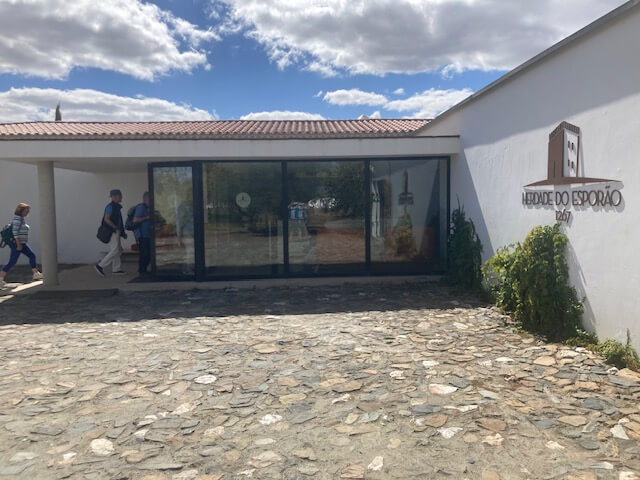
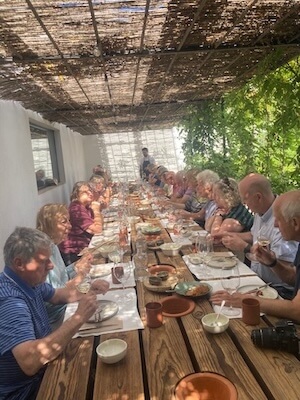
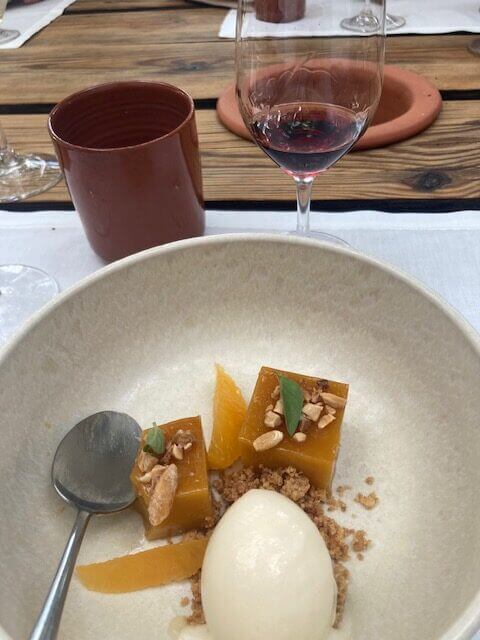
We sat under a wisteria covered cloister, and enjoyed a variety of starter dishes that celebrated local produce, followed by a sublime slow cooked lamb, and a pudding of olive oil flan with port praline and apple and basil ice cream. Accompanied by a trio of wines from the different regions they have wineries in: Quinta do Ameal Vinho Verde , their DB30 Syrah from Alentejo and a 10 year old tawny port from Quinta dos Murças.
A tour round their magnificent winery helped lunch go down. We saw lagares made from local marble, some huge concrete ‘tulips’ used for fermentation and maturation of fresh styles of wine, a few Talha, and rows and rows of barrels in their tiled cellar. We were inspired and refreshed, ready for our tasting, led by Joanna. This was of the white and red of each of three flagship ‘brands’, Montel Velho, Colheita and Esporão Reserva. All were blends of the varieties we are becoming accustomed to, international ones such as Cabernet Sauvignon and Syrah, Portugese ones such as Touriga Nacional, and local varieties such as Arinto. The wines were lovely and it was a great end to a lovely day.