Terra Alta is a less well known wine region of Catalunya, and this needs to change! Our day in the region, an hour or so south of Tarragona, on the other side of the Ebro river from Priorat and Montsant, introduced us to some glorious scenery, super wines and lovely people.
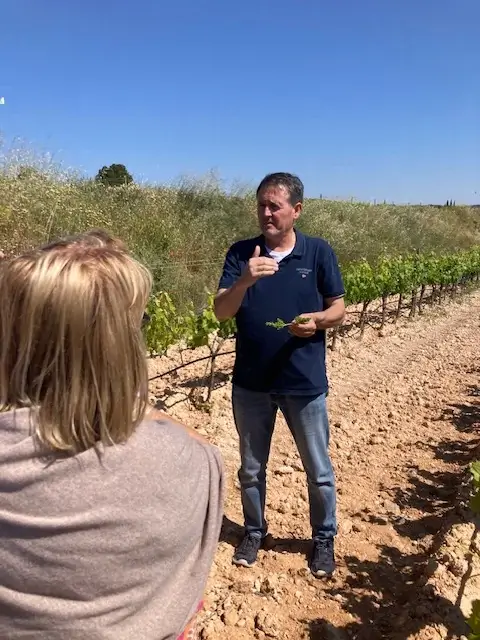
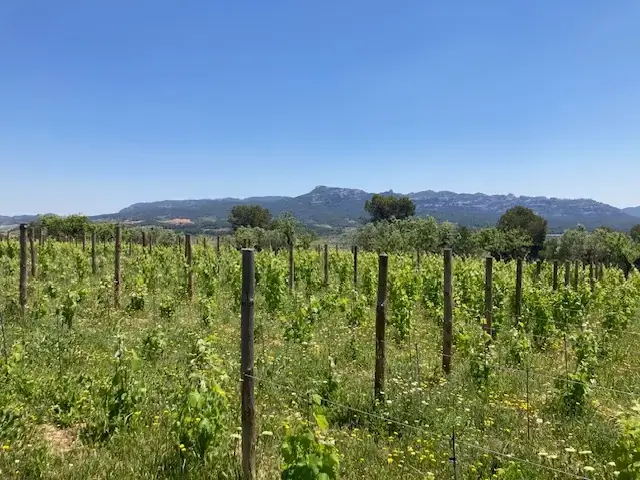
Our first visit was to Celler Comer d’en Bonet. Pepe Fuster, the owner, met us in the town of Gandesa, and we were ferried up to the winery in his car and a local taxi – the driveway could handle the odd truck but our coach was a bit long! Once we were at top of the hill we immediately experienced two of the key climatic features of the Terra Alta region, bright warm sunshine and constant wind. Pepe led us into the vineyards and we received a master class in green pruning, with a Garnacha Blanca vine obligingly providing lots of shoots, leaves and loads of tiny bunches of inflorescences.
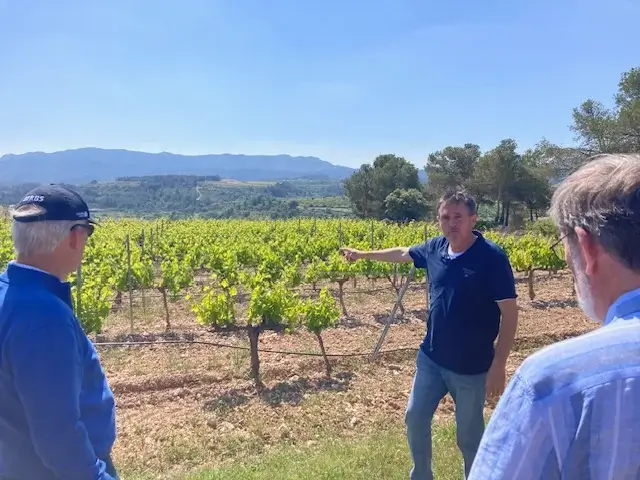
Their 28ha are farmed organically, and Pepe talked about how the changing climate (Catalunya has just emerged from a three year drought) requires him to adjust his vineyard practices almost by the day – his grandfather was harvesting grapes in October only a few decades ago, and while Pepe was hoping this year he’d be harvesting in September (thanks to improved rainfall), starting in August is not impossible. Luckily they are permitted to irrigate if vines are stressed.
Pepe was passionate about the vineyard being the most important part of the winemaking process. His vineyards encircle the winery, planted mainly with Garnacha Blanca, 4ha of Viognier, and some red grapes – Terra Alta is responsible for 40% of world Grenache Blanc production, so that is the major focus.
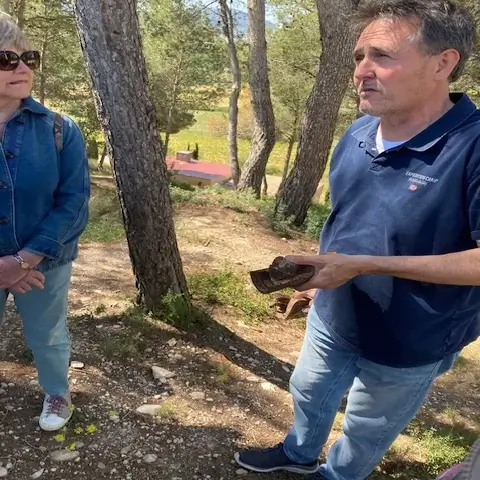
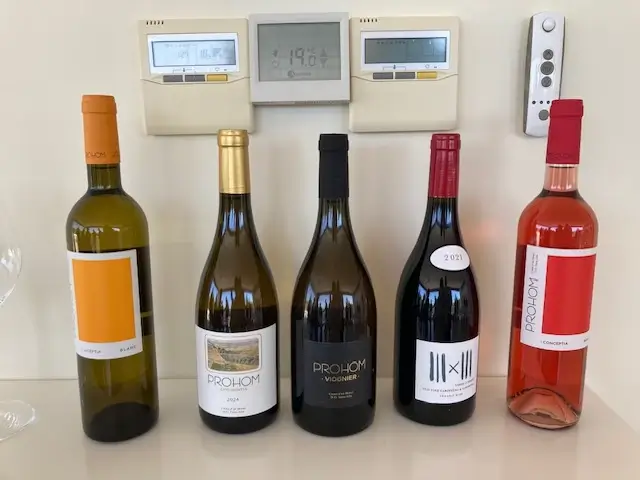
After a short diversion to look at some old mortar shells from the Civil War, which are still being dug up from time to time, we went into the winery, and pretty much walked the process from reception, past the destemmer and press, the fermentation tanks, maturation tanks, barrels, filter and finally the bottling line, before ascending to a lovely room where we tasted five of his wines, and promptly fell in love with Garnacha Blanca!
Pepe includes Viognier in his mainstream white wines, to add some florality and complexity, and also makes a beautiful Viognier. Sadly his 100% Garnacha Blanca had just been bottled so was too unsettled to put on taste, but the two blends we tasted (one with 10% Viognier, the other with 20% Viognier and some oak ageing) were fresh and textured with lovely complex flavours. Accompanied by a snack lunch, they were perfect, as were his rosé and his IIIxIII – a Cariñena/Garnacha Negra blend from grapes from three plots, vinified in three 500 litre barrels, a project shared by three friends.
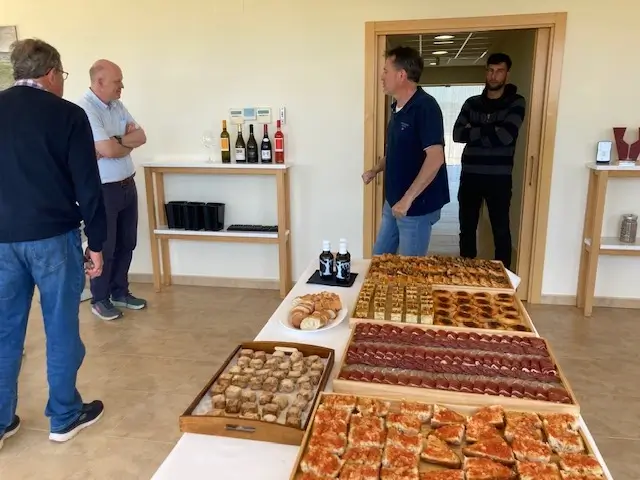
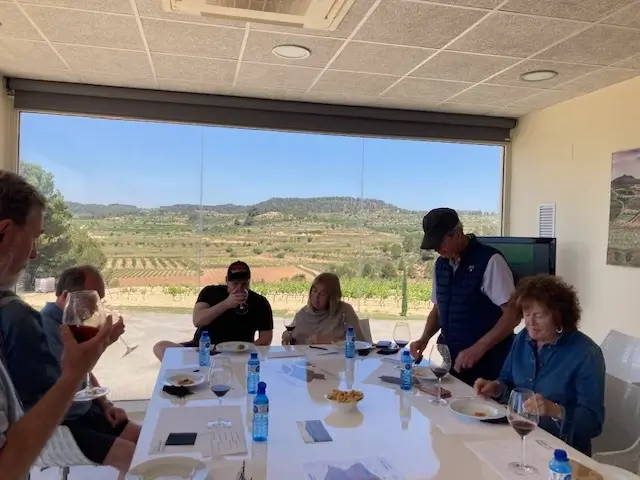
We had been spoilt by magnificent views from the tasting room so were very sorry to leave, but our next visit, also near Gandesa, produced even more wonderful vistas.
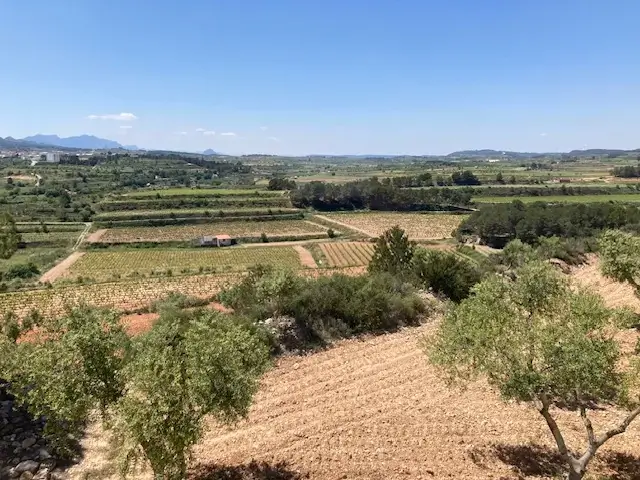
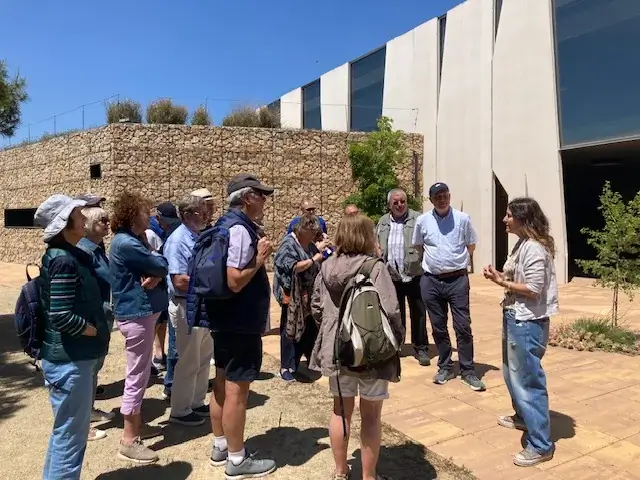
Herència Altés is a family owned vineyard, run by Núria Altés and her British husband Rafael de Haan. Having worked in wineries in France, in 2013 they came to Terra Alta, buying more vineyards and building a beautiful winery, using a local architect and local labour. 20 of their 50ha were planted over a hundred years ago, and they also have olive and almond trees, and a plethora of wildflowers and pine trees, encouraging all sorts of wildlife, including some wild boar who so far have preferred drinking from the natural spring to raiding grapes.
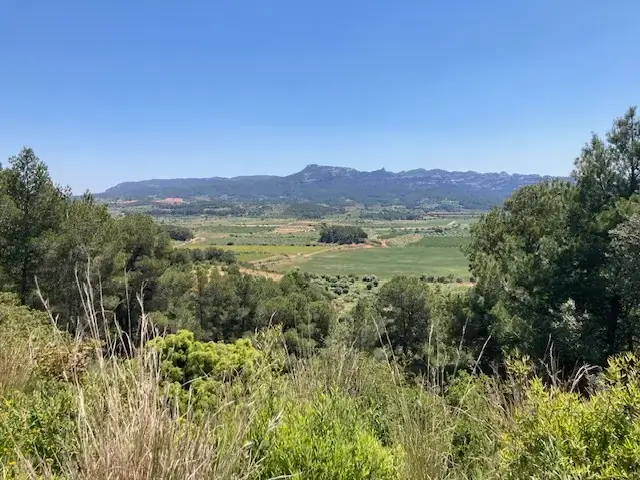
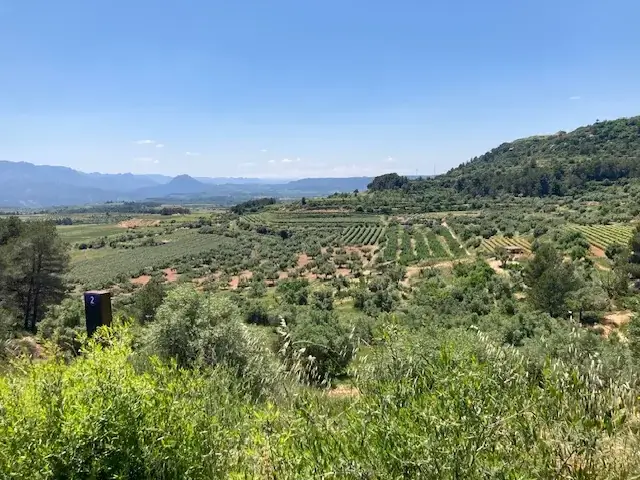
We looked out across a stunning landscape stretching from the Ebro Delta to the east to the border with Valencia to the west – the old frontier with Moorish Spain. The region’s geology is thought to have inspired Picasso’s Cubism, and the Civil War still echoes in parts.
The gravity fed winery was as beautiful inside as outside, with concrete fermentation vats, small tanks enabling different plots to be vinified separately, clay amphorae for ageing of orange wines, and a variety of oak vessels including Austrian foudres. Their wines ferment under natural yeasts, and they even manage to develop a layer of flor on some of their orange wines matured in barrel.
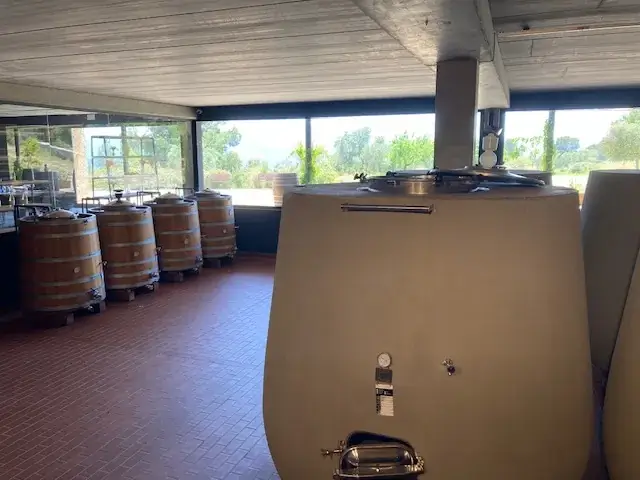
Núria explained that they are part of the International Wineries for Climate Action sustainability programme, and as well as generating solar energy, they have moved to lighter weight bottles, which has made a very positive impact on their carbon footprint. Their corks are sealed with wax and we took a look at that happening too.
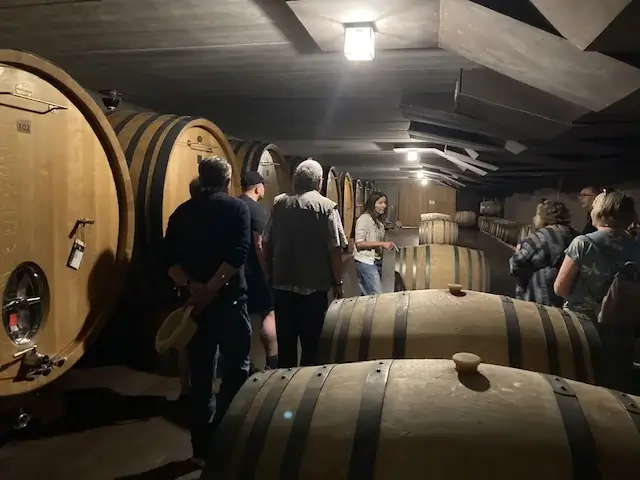
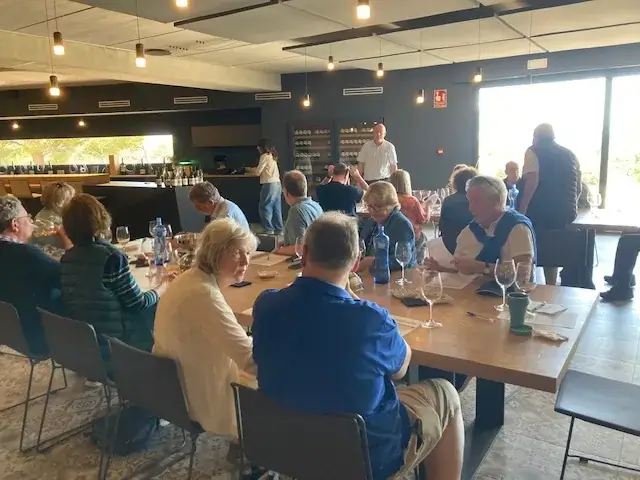
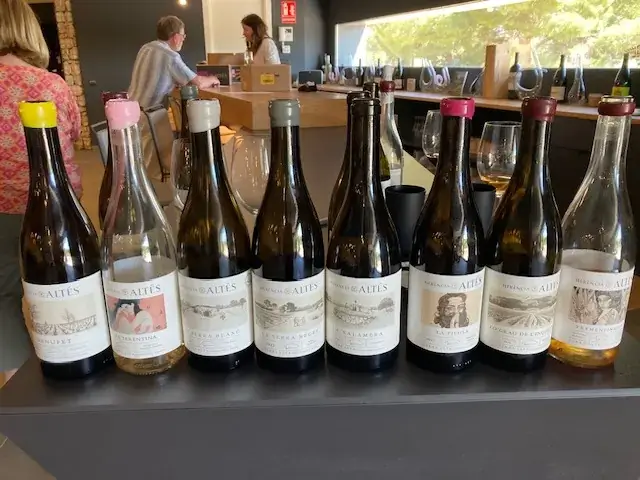
Then to the tasting room where we were treated to eight of their wines, including another first with a couple of 100% Garnacha Peluda wines! Herència Altés wines are available in the UK, and they are worth looking for – their single vineyard wines were stunning, their La Serra vineyard is one of only 19 Vi de Finca, a Catalan version of Vinos de Pagos, or single vineyards with international reputations. Núria was a very generous host, and we felt extremely spoilt, and, yet again, sorry to leave!
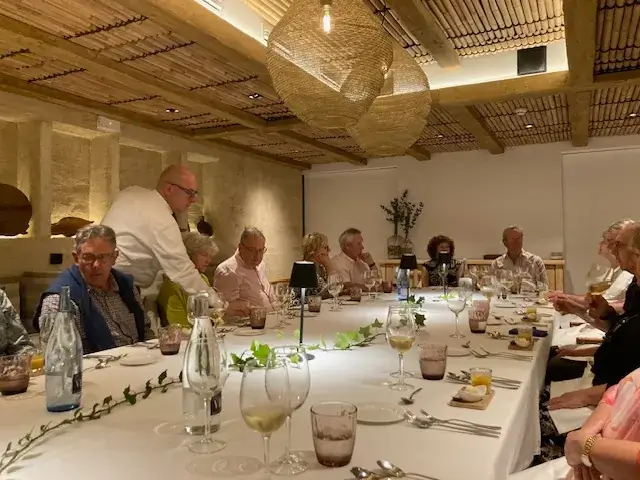
Having had a relatively light lunch we were ready for our final night dinner, in the restaurant of the Hotel Gran Claustre, up the hill into central Altafulla. Another multi-course event, with lots of innovative (and delicious) dishes, including a smoked aubergine terrine with pear compote, and variety of seafood and fish, steak with the most delicately presented cabbage I’ve ever seen, local cheeses and another twist on Crema Catalana. Accompanied by Tarragona wines, adding another Catalan DO to our growing list.