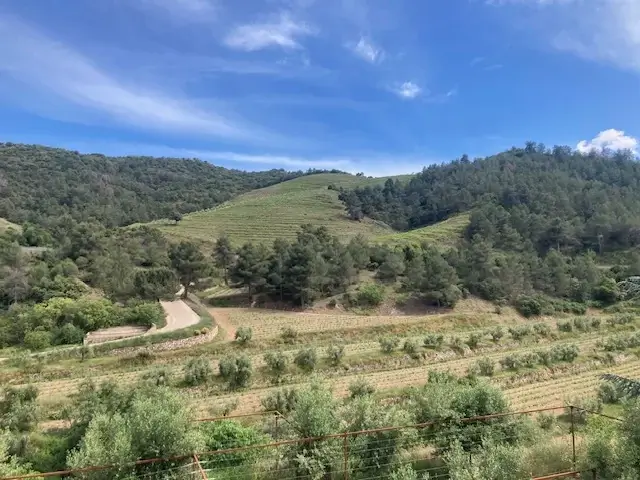
We were away promptly at 9am as it was an hour’s journey to Priorat and we had lots to do. En route Tim talked about Calalunya in general and Priorat specifically, and once we left the motorway and started to wind through the rugged scenery we concentrated on that.
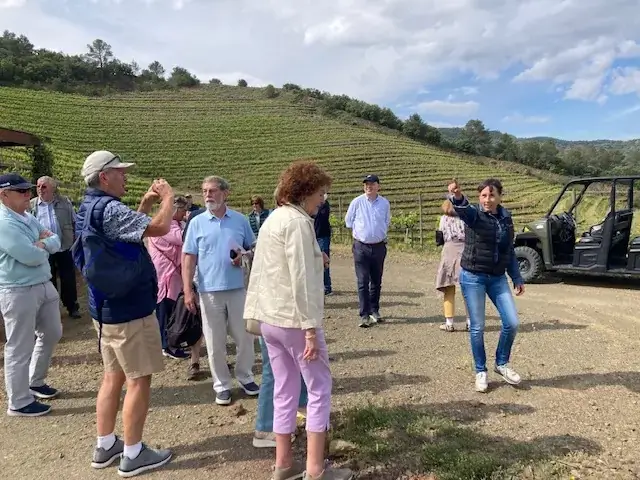
We ascended a winding drive to the Perinet Winery, where we had a wonderful visit, escorted by Carlotta who is an agronomist by training, a saleswoman by vocation (for Perinet) and a passionate exponent of Priorat at heart. She was lovely.
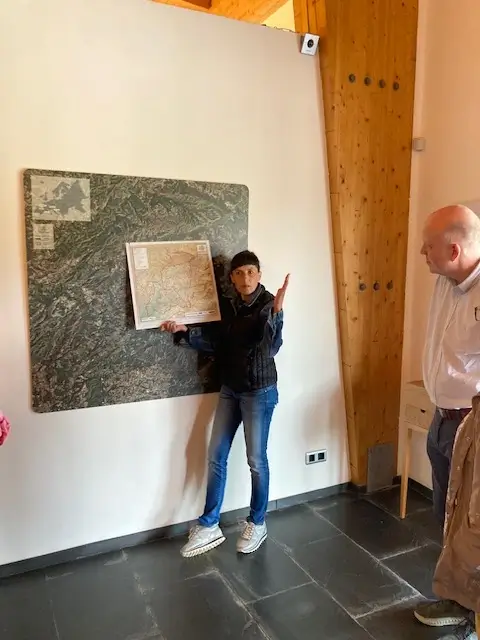
We received an overview of the region with the help of a map, and a short history of its origins: the name comes from the French priors who built the monastery at Escala Dei, and cultivated vines. Phylloxera and poverty resulted in the region being virtually deserted during the early 20th Century, but a group of ‘hippies’ (the number of them is contested) rescued old vines and introduced modern winemaking techniques in the 1980s and several hundreds of Parker Points later the wines of Priorat are now revered and very expensive.
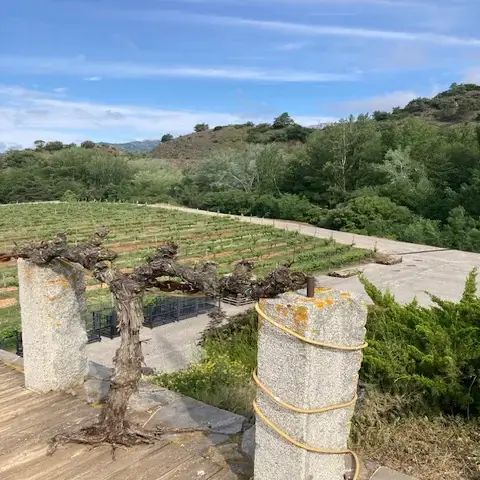
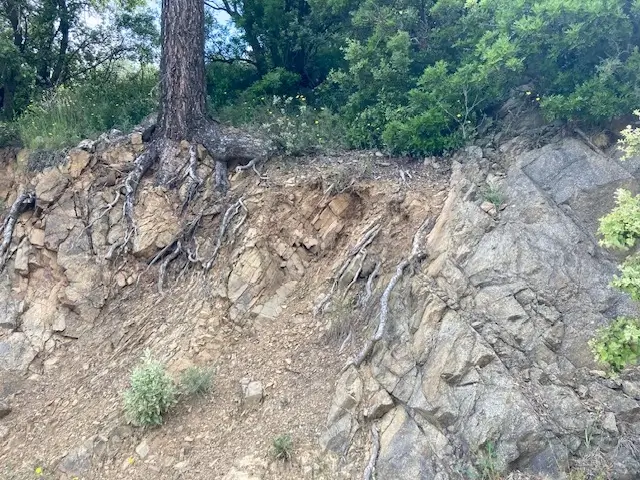
During our visit to the vineyards at the top of the hills, with amazing views across to the Montsant mountain, we learnt about why Priorat wines are so expensive. Carlotta showed us the licorella soil, which is basically shattered slate with vertical fissures that contain tiny amounts of soil, through which grape roots must grow in search of water – or if they are unlucky they hit a patch of granite and are in trouble. We learnt about the tiny yields the vines produce on this poor soil, with very low rainfall (particularly in the last three vintages). When individual vines don’t survive they are not replanted as it tells the viticulturalists that that particular spot is not a good place for a vine. So we really felt the tortuous terroir of the place, almost every vine was in a unique position determined by the aspect and gradient of the slope it was planted on and the type of soil and rock beneath it.
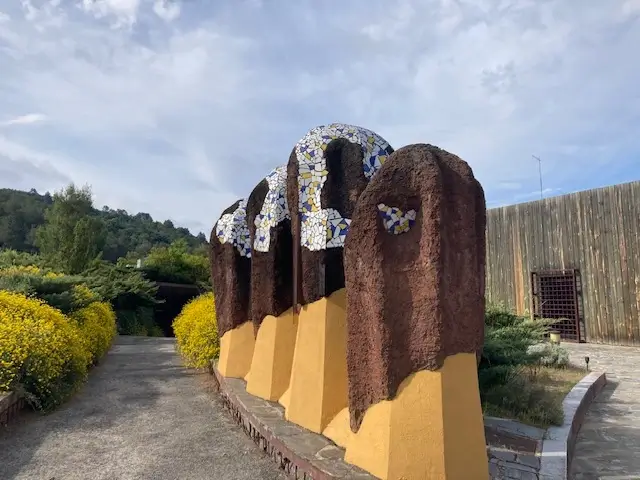
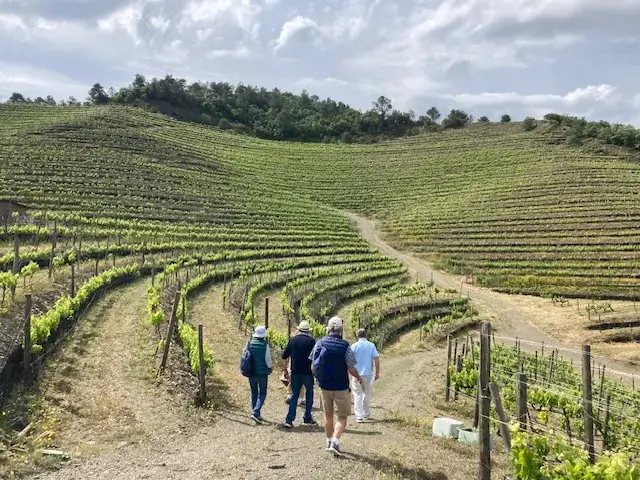
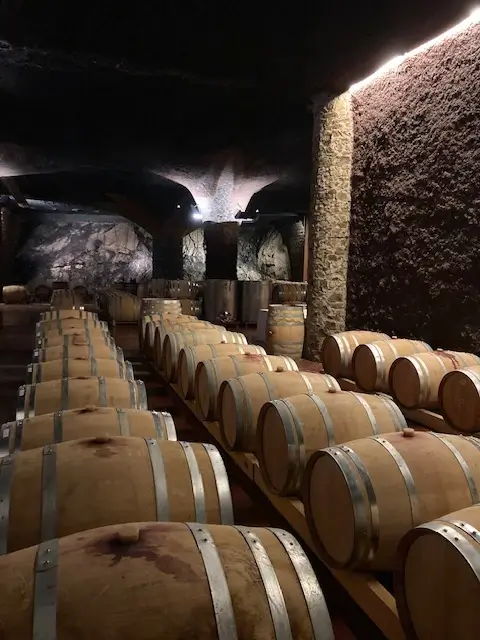
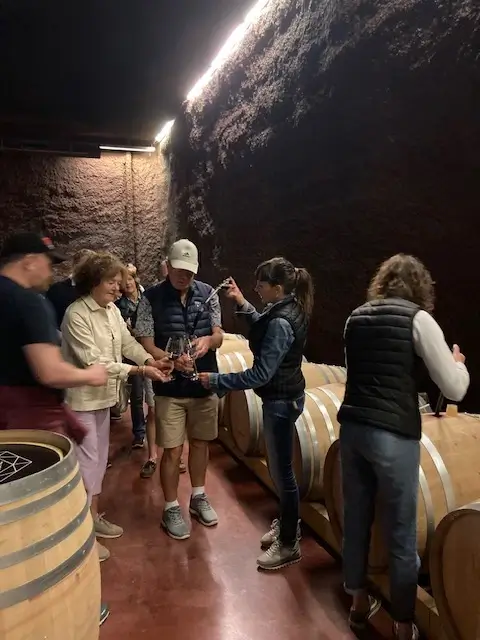
Having ascended the hill by buggy we bravely descended by foot, and then entered the winery, which is set up to take very small batches of carefully sorted grapes and vinify them separately. In the beautiful barrel cellar, inspired by Gaudi’s Park Guel in Barcelona, we tasted wines from barrel, contrasting two Garnachas from north and south facing slopes, and two Cariñenas one from French oak the other from American.
Back up in the tasting room, with its magnificent views, we revisited older vintages of the wines we had tasted from barrel, and also the estate’s flagship blend of Garnacha, Cariñena, Cabernet Sauvignon and Syrah. This was a wonderful tasting, accompanied by delicious local meats and cheeses, and once again we felt we were leaving too soon! So many more barrels to taste from! So many more vineyards to visit!
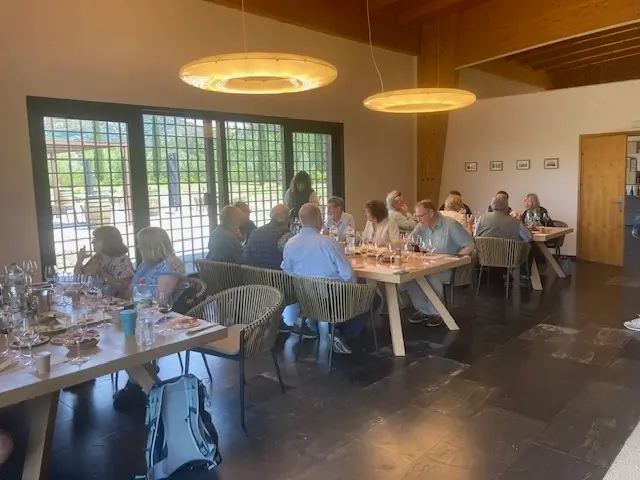
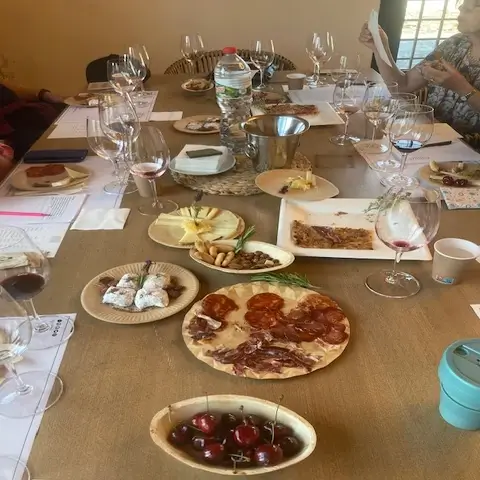
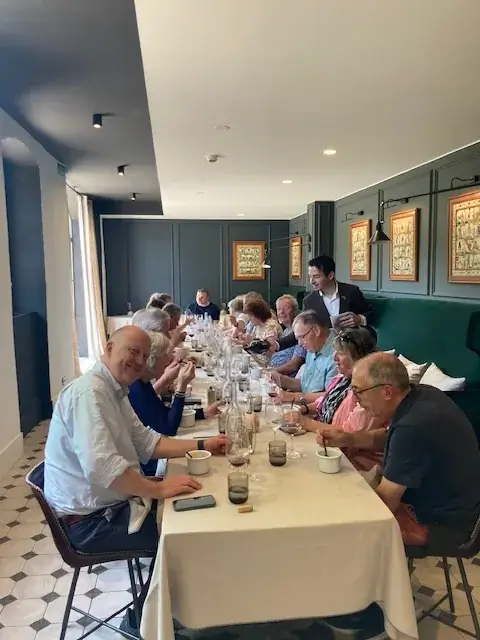
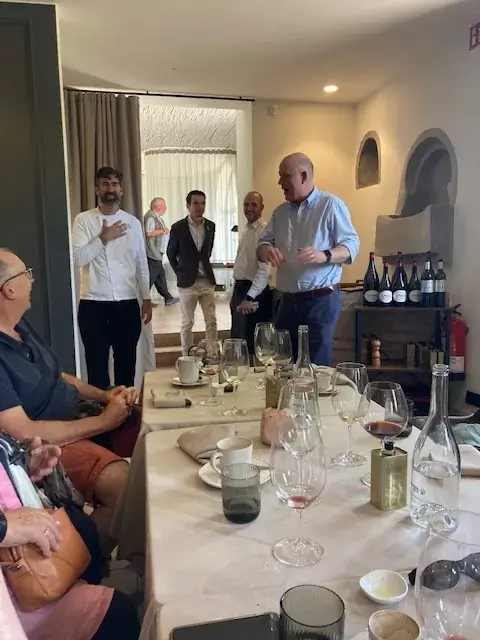
However, lunch beckoned, at the restaurant of Terra Dominicata, which is in an old farmhouse that was part of the Escala Dei estate. With a delicious six course lunch we had their white wine made from Macabeu, and their 100% Garnacha. The service was impeccable and enthusiastic: everyone is very proud of the region and their food and wine, and we could see why. We applauded the chef and staff with equal enthusiasm.
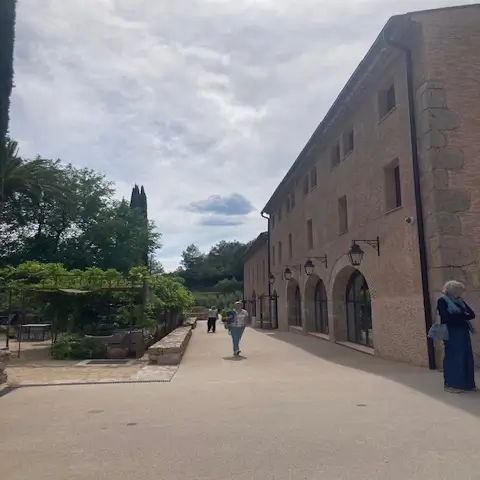
Terra Dominicata also has a lovely hotel, and its location could not be more glorious, with views of mountains and vines clinging to the steep terraces in all directions. Our drive back to Altafulla was very peaceful and our evening was quiet – though the waves crashing against the beach was a lovely sound to go to sleep to.