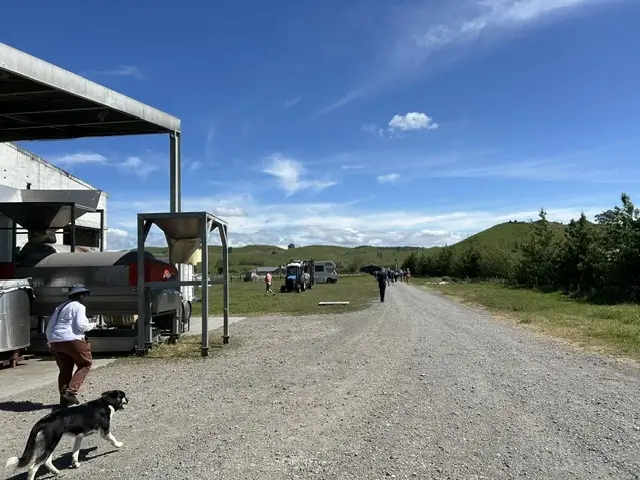
Following some early morning mist, it was a glorious day. We drove along the promenade, and then towards Hastings, en route for the Bridge Pa Triangle, one of Hawke’s Bay’s key sub regions. En route Tim explained that Hawke’s Bay had until the 1980s been New Zealand’s premium wine making region, but globally attention turned to Marlborough Sauvignon Blanc and Central Otago Pinot. However, among wine lovers, it still has a wonderful reputation, which we were to discover is fully deserved.
Our visit in Bridge Pa was to Ash Ridge, a winery owned by Leith and Tracy Ashworth. Leith’s dad is John Ashworth, about whom we will learn more tomorrow. Our visit was led by Thalia, the winemaker, who came to New Zealand from Hawaii via California. She gave us the most brilliant explanation of their approaches in the vineyard and winery.
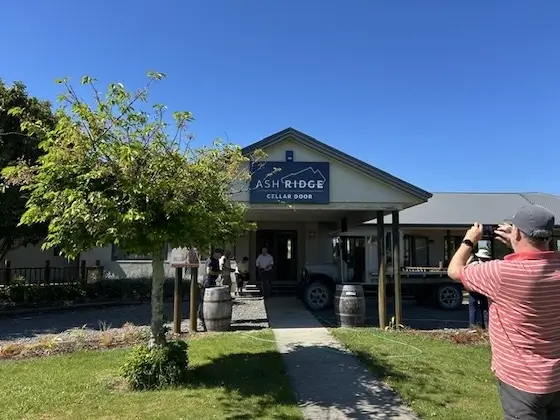
We wandered through the vineyard, glasses in hand, stopping to taste different wines in different spots. We learnt about different grape varieties and their clones, different approaches to pruning, and particularly about the importance of livestock in their operation. They are organic certified, and for a surprising amount of the year cattle and sheep graze in the vineyards.
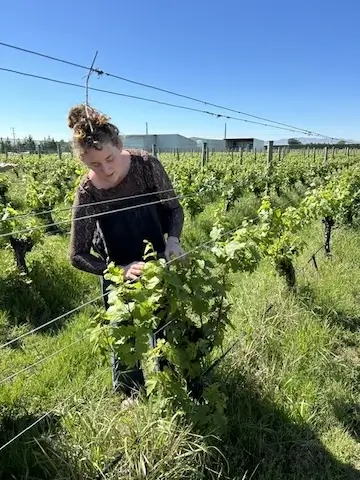
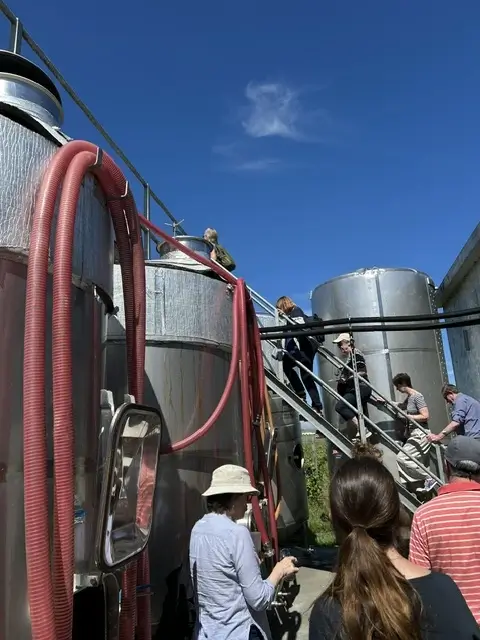
This adds an extra dimension to the challenges of winemaking, Thalia told us some great stories, some at her own expense. We visited the winery, clambered up to the platform above the stainless steel tanks and looked out across the wide flat old river bed that forms the Bridge Pa Triangle.
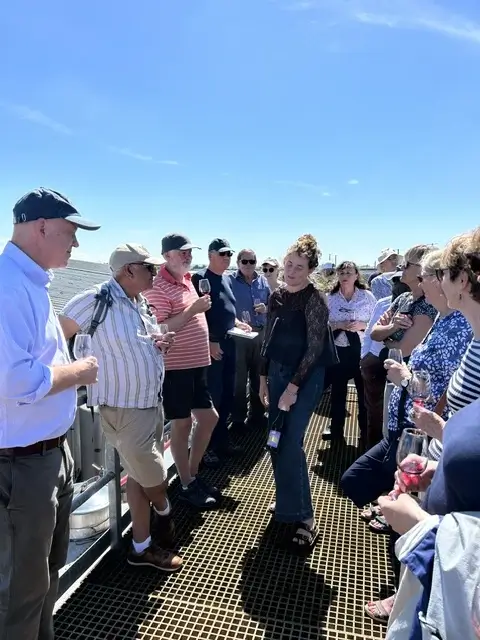
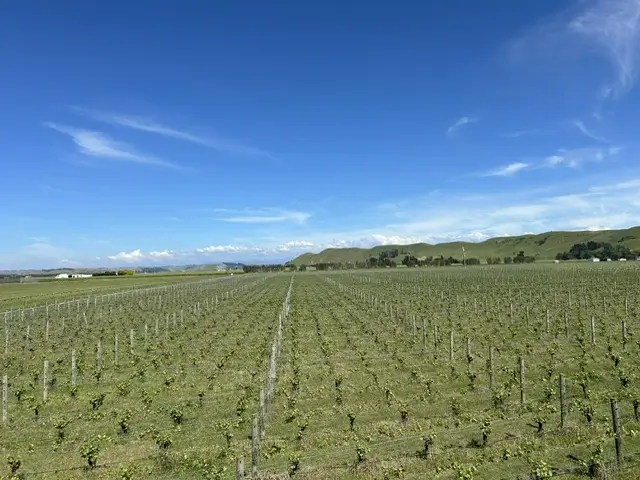
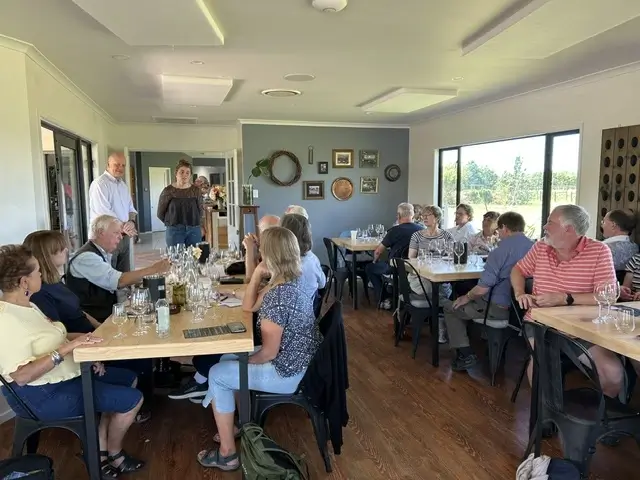
Back in the tasting room we completed our tasting of their wines, which included some very interesting blends, a great Viognier, and a particularly lovely Bordeaux Blend. We finished with a very pretty late harvest white blend. Thalia was so engaging, her enthusiasm and innovative style was a joy to get to know. It was a brilliant visit.
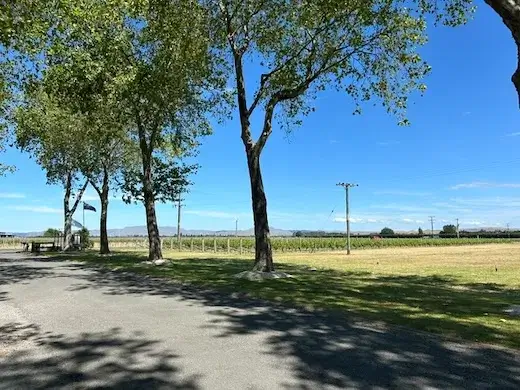
It was then just a few minutes to our next visit, Trinity Hill, and we crossed from Bridge Pa into the Gimblett Gravels, probably Hawke’s Bay’s most famous sub region. Formed when an earthquake in 1867 changed the course of the Ngaruroro River, its black gravelly soils were too poor to support any kind of crop or fruit or even raise sheep. Our host at Trinity Hill, Mike, explained that the only use that it had been put to was as the location of a drag racing track, and by the 1980s it was destined to become a quarry with a prison along side. Luckily for wine lovers, CJ Pask, a local winery owner, recognised its potential similarity to Bordeaux (maritime, little frost, gravel that retained heat and added to grape ripening time), and following the success of some experimental planting the local government were persuaded to designate the area for wine grape growing.
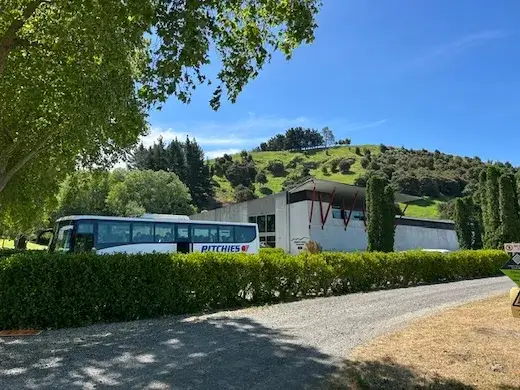
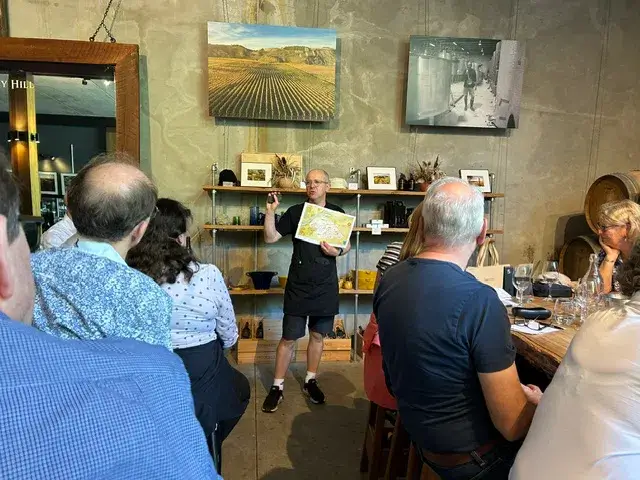
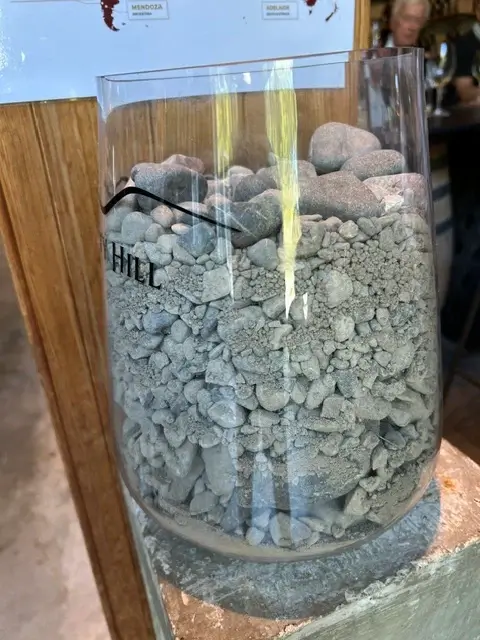
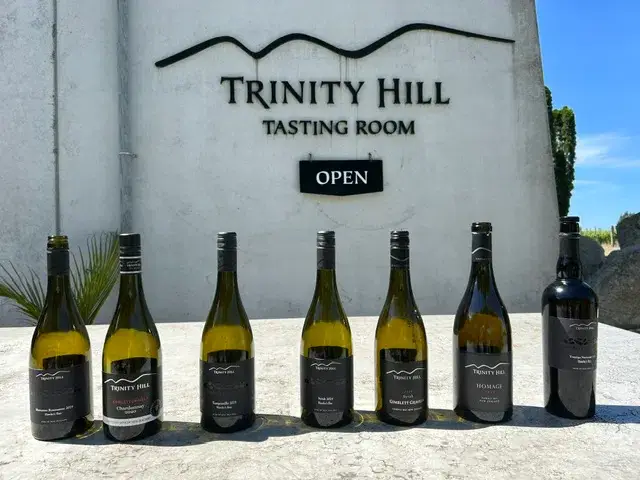
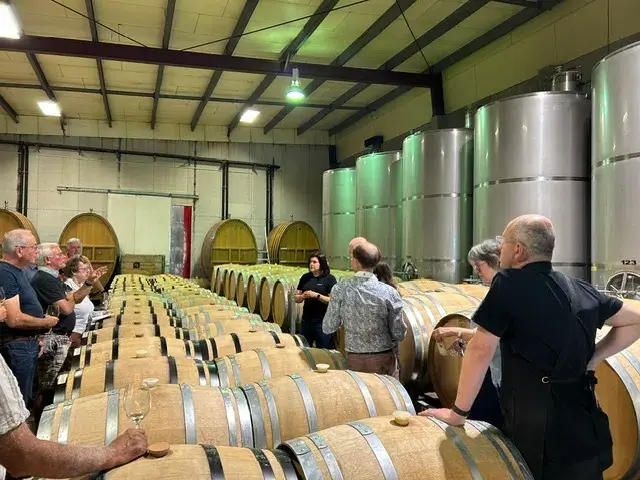
We kicked off with a tasting of their white Rhône blend (Marsanne and Roussanne) and then took our glasses of their Chardonnay into the white barrel cellar where Anna, one of their winemakers, told us about barrel fermentation and ageing. She was talked about how they choose whether to allow malolactic fermentation to happen, and the trials and tribulations of stuck fermentations, it was great to hear it ‘from the horse’s mouth’.
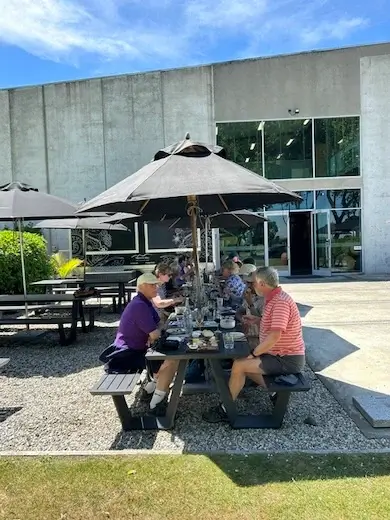
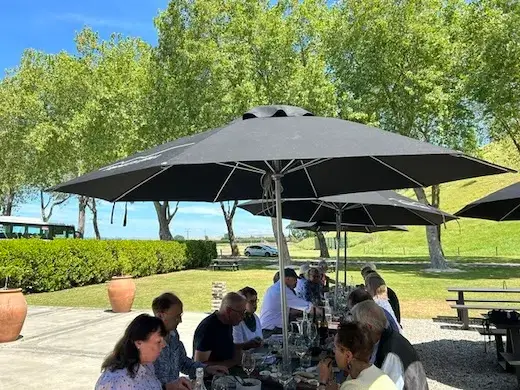
Back in the tasting room we tried their Tempranillo, and then their flagship ‘Gimblett Gravels’ Syrah, first the current vintage (2024) and then the 2014. The latter we took with us outside to enjoy with a super lunch of salads and cheese and dips, after which we had the 2015 ‘Homage’, their top wine, named in honour of the cuttings from the Rhône Valley that became the 35 year old vines from which it is made. We finished with a Kiwi Vintage Port (from 2021, made from Touriga Nacional!).