Following our fabulous visit to the Black Estate in Canterbury yesterday, we flew to Queenstown. Queenstown is an easy place to find something to eat or drink in, and provides lovely views so we had had a pretty nice evening.
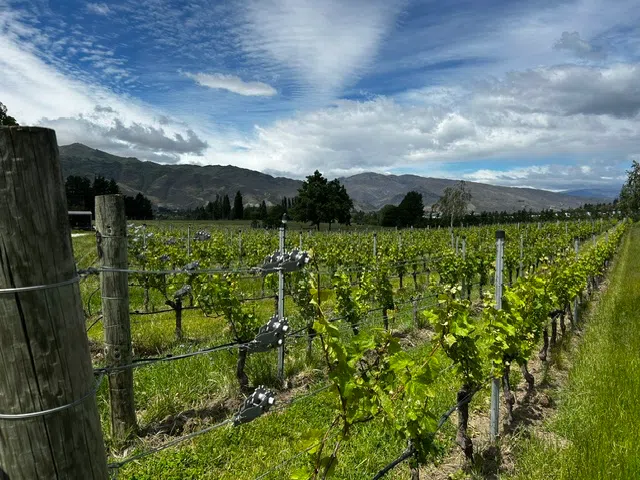
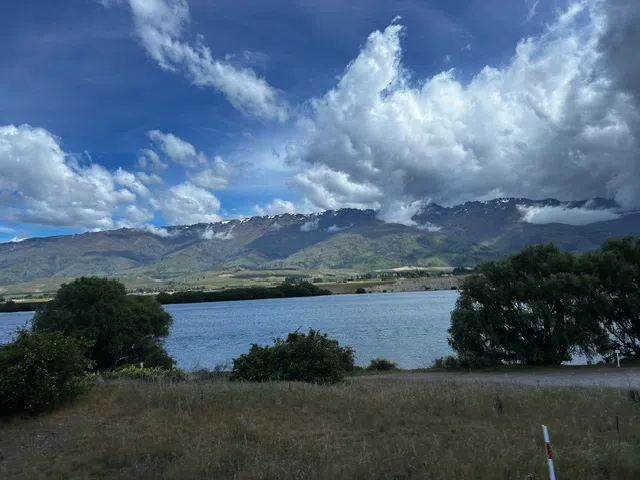
On Monday we set off on our first day of visits in Central Otago. Our driver Euan gave us lots of interesting information as he drove us over the Shotover river and down the Gibbston Valley. Once past Cromwell and driving up the eastern side of Lake Dunstan Tim took over to talk about the specific conditions that make Central Otago so special – a nearly continental climate with short hot summers and very cold winters, because of altitude there is a big difference in termperature between day and night throughout the year. This is very conducive to quality grape vine growing, and Pinot Noir in particular has been found to enjoy the intense sunshine, and brief hot spells. Wind and frost can be an issue.
Our first visit was to Māori Point. In 2002 Dr John Harris and Dr Marilyn Duxon, both having had long careers in scientific academia, planted a vineyard in Bendigo, buying the ‘worst’ paddock from a local farmer. Loess soil over glacial moraine provides great free draining conditions, and they embarked on a series of experiments across the property, using different clones of Pinot Noir and different rootstocks. They were joined in 2011 by Matt Evans, a Californian winemaker who we met towards the end of the visit, and have subsequently added Pinot Gris and Chardonnay to their plantings. Today they run an active cellar door, and sell their wine in New Zealand, they are too small to export.
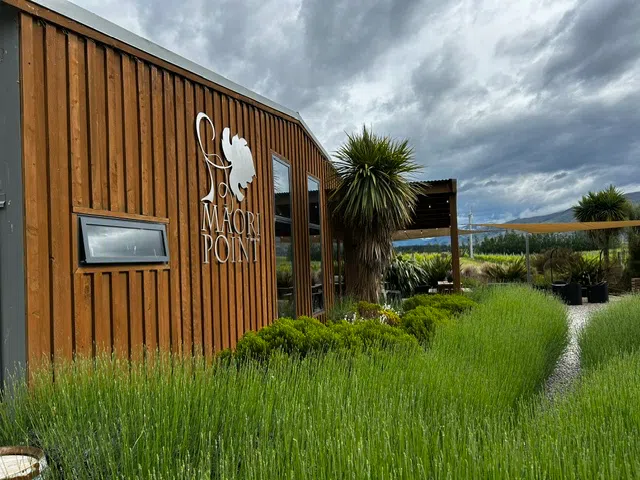
This was explained to us by Hannah, their cellar door manager, and Trevor, a neighbour who had planted his vineyard at around the same time and continues to work with Marilyn (John died earlier this year). They were a great team and brought lots of vineyard and winery work ‘to life’.
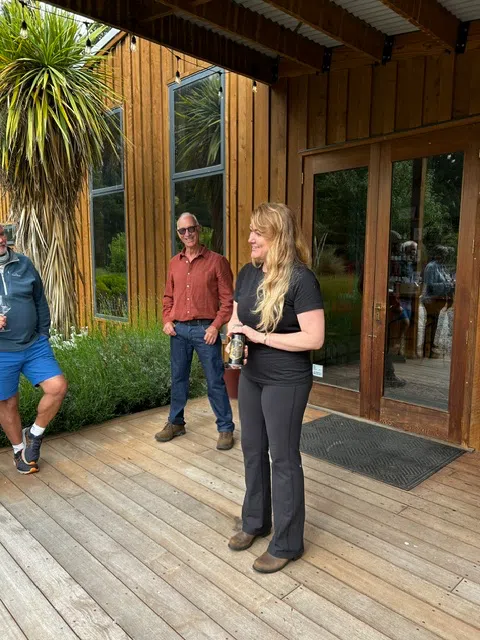
In the vineyard they explained that the vines will probably flower next week, and things look promising – we’ve passed Labour Day so frost risk has dropped. The bird nets will go on in January, and even the smallest hole needs to be patched as tiny wax eye will find them and make a bee line for ripe grapes which they peck and spoil. They harvest by hand (helped by friends and family), rely on natural yeasts for fermentation, and are as experimental with their choice of barrels in the winery as they are with clones and rootstocks in the vineyard.
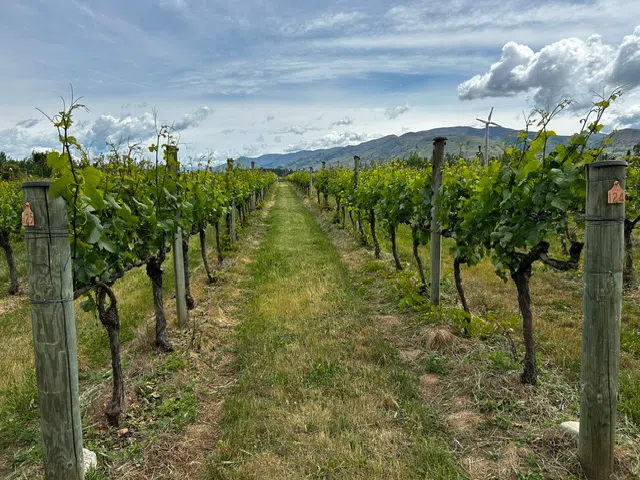
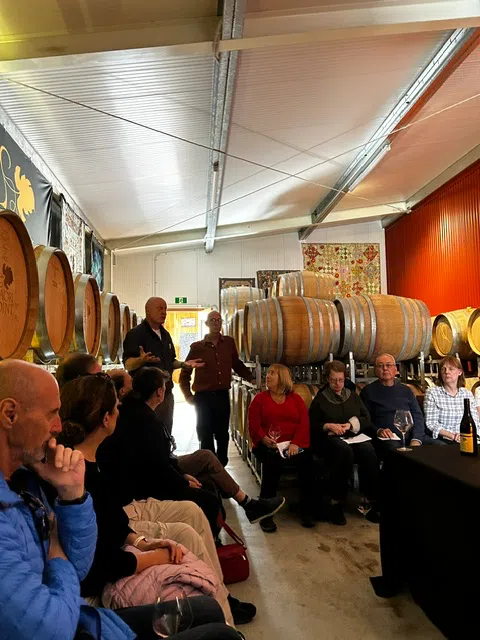
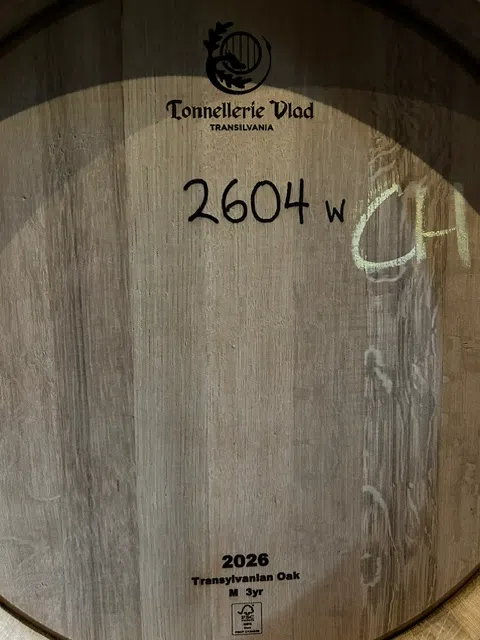
Our tasting started outside pretty much as soon as we arrived, with a sparkling Pinot Gris, poured from an aluminium can! Following our vineyard exploration we tried a Pinot Noir Rosé, two Chardonnays and two Pinot Noirs, all of great quality, the final Pinot Noir coming from their ‘Professor’s Block’, which thye have identified as consistently producing their best wine. We completed our tasting in their barrel room, which is decorated with quilts made by Matt Evans’s mum. A ‘Professor’s Port’ fortified Pinot Noir finished the tasting.
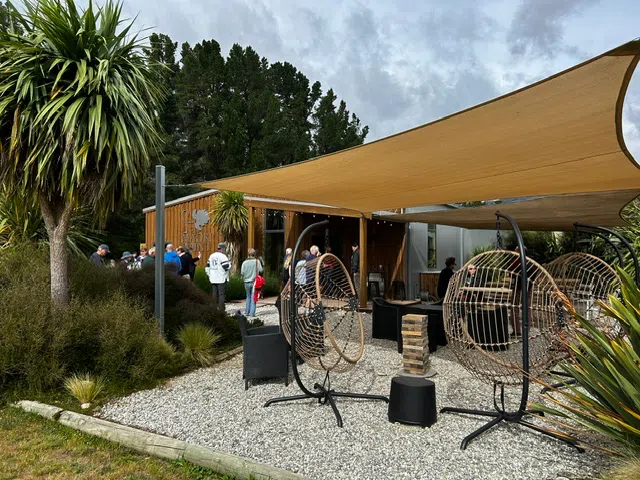
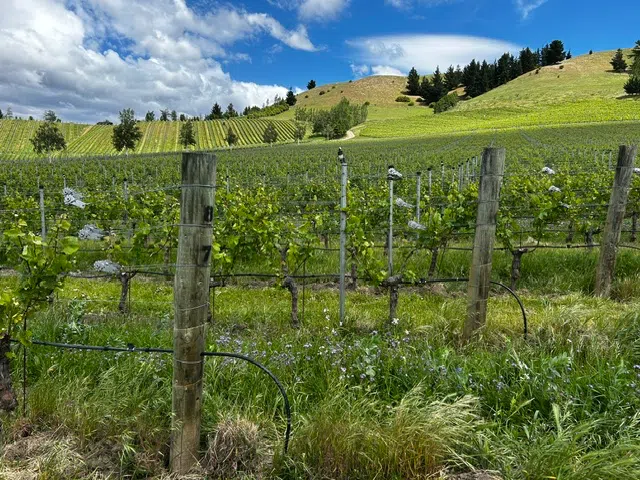
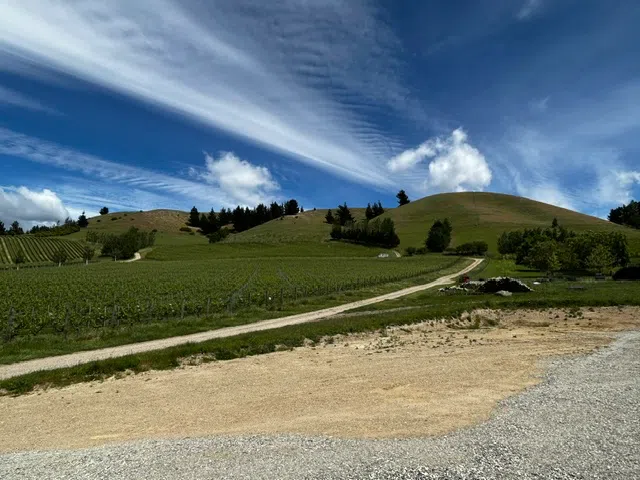
We then drove back down Lake Dunstan, through Cromwell and up the west side to Lowburn where we visited Burn Cottage. This is a very well known, award winning winery, created in 2002 by the Sauvage family. Ted Lemon (of Littorai in California) helped them plan and plan the vineyard, insisting they practiced biodynamic principals from the start so huge efforts were put into enhancing soil fertility before they even planted. Clair Mulholland has been their winemaker almost from the start and she, and her assistant winemaker Lily Mosolino, greeted us on our arrival and explained the layout of the vines which are planted on northwest facing slopes. They also have a vineyard in Bannockburn, which was planted in 2000 and they have converted to biodynamic.
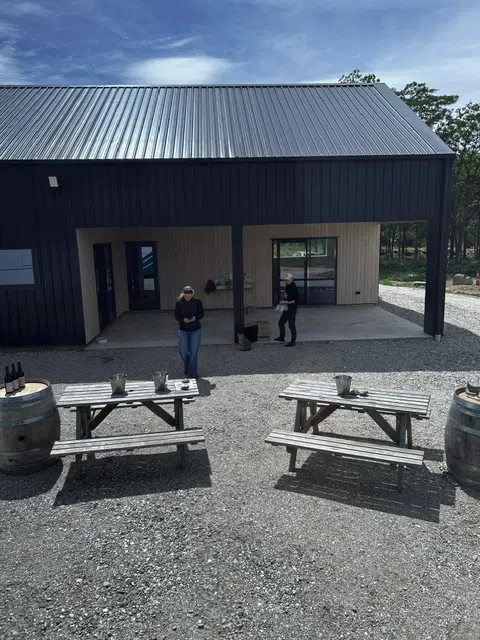
Their vines are planted at high density for New Zealand, so everything is done by hand. They have 12 clones of Pinot Noir, which they harvest across three ‘picks’, selecting ripe bunches on each pick. This means they end up with a lot of vessels of wine, as they keep the pick for each plot separate, and only blend later. They currently make their wines at a winery in Cromwell, there are plans to expand the vineyard sheds we were meeting beside to put a winery on site – maybe we will see that on our next tour to New Zealand!
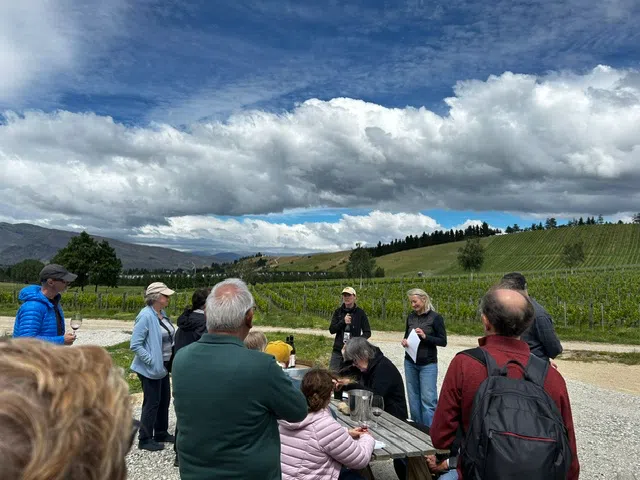
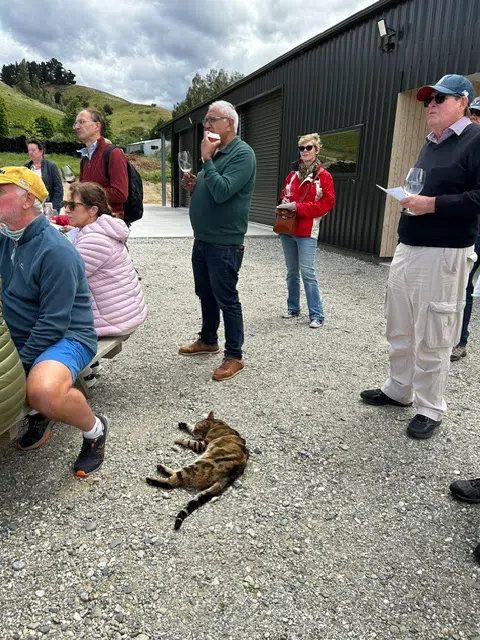
Our tasting of their range of Pinot Noirs, which covered the different vineyards and different vintages and despite the very windy conditions (and a very engaging and distracting cat) the quality of them was clear. To finish we had a Riesling/Grüner Veltliner blend – their only white grapes in Lowburn, co-fermented and cellared for a year in neutral barrels, sandstone amphora and stainless steel!
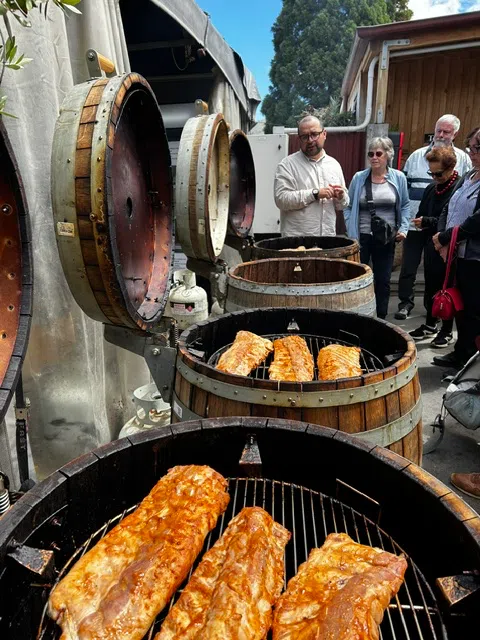
This visit flew by all too quickly, but lunch beckoned and we had a quick drive into Cromwell and arrived at the Stoaker Room. Quintin Quider, who had been a commercial diver in his native California came to New Zealand in 1998, buying vineyards overlooking the Kawarau River in Bannockburn. On Tim’s previous New Zealand tours we had visited the site (perched on the far side of the Kawarau Gorge), and enjoyed a tasting and early version of his ‘stoaker’ method of barbecue, which employs old oak wine barrels containing a tray of toasting oak chips over a gas flame, and a water bath to create steam (STeamer-OAK-smokER).
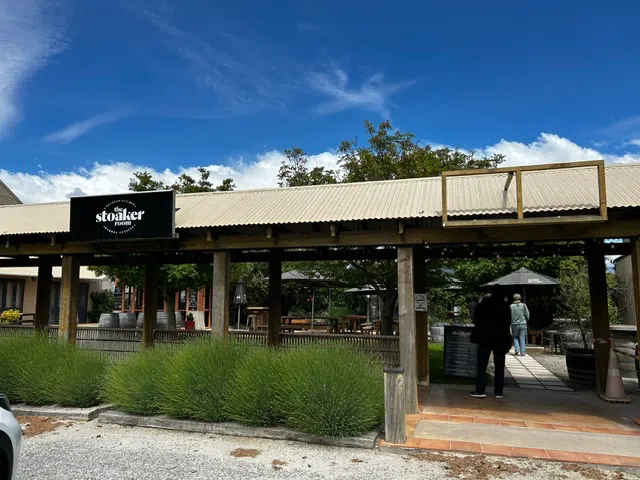
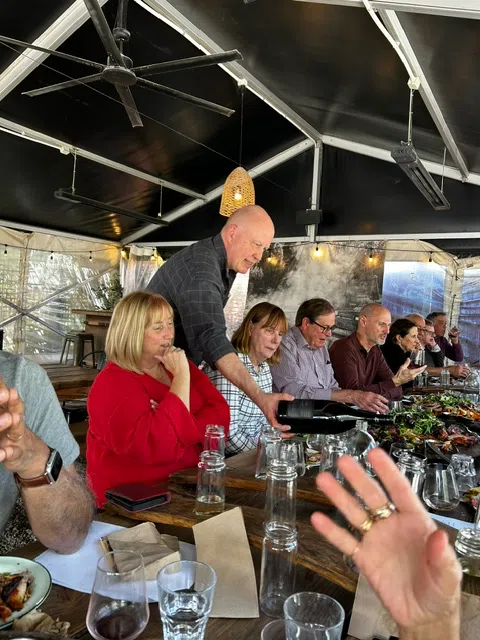
J-P, our host, demonstrated the meat cooking in the stoakers, before taking us into the tasting room for a comparison of three Wild Earth Pinot Noirs. Quintin sold his vineyard to invest in the restaurants in Cromwell and Wanaka, and now buys in top qualtity grapes from several Central Otago sub regions. We will meet his winemaker Jen Parr tomorrow! Wild Earth have a great reputation in the UK, but when we moved into the restaurant for our ‘Butcher’s Feast’ we were also treated to tasting some of their wines that don’t make it to the UK. Red wine was definitely essential for this festival of fish, chicken, pork, lamb and beef and Tim treated us to a double magnum and then a magnum of Wild Earth’s top red ‘Earthy and Sky’. The double magnum was from 2009 and its power and complexity was stunning.
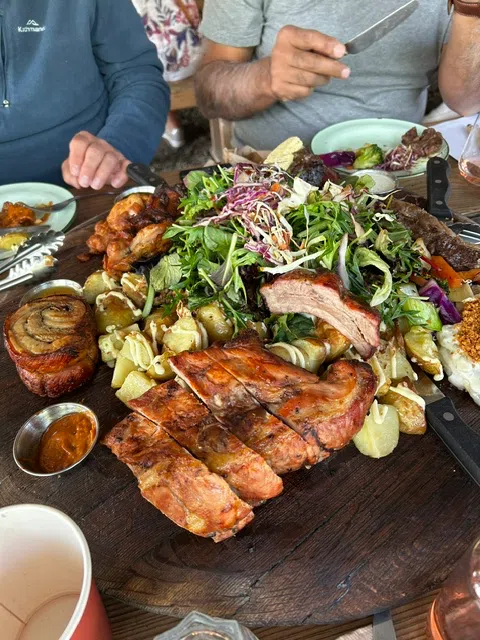
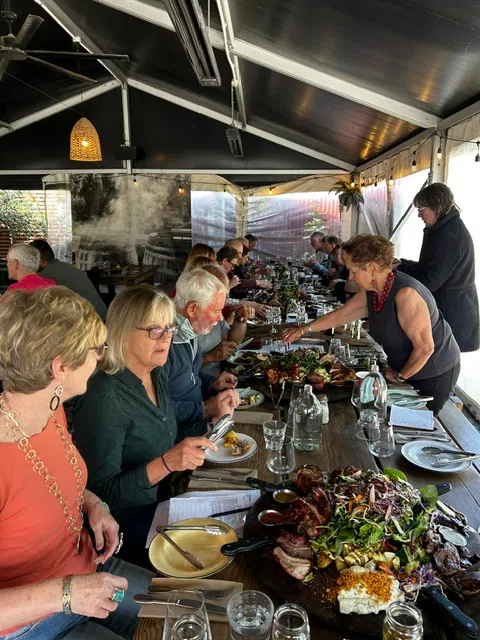
Tim kept telling us we had plenty of time to eat our lunch, but the amount of food we were looking at didn’t seem to get any smaller. Luckily there was plenty of salad and vegetables, and I very much doubt anyone will be eating a big meal tonight. Fortified by coffee we reboarded the bus and returned to Queenstown. What had started as a somewhat dreary cloudy morning had turned into a glorious (if windy) afternoon. The mountains are stunningly beautiful, this is an amazing place to grow wine.