
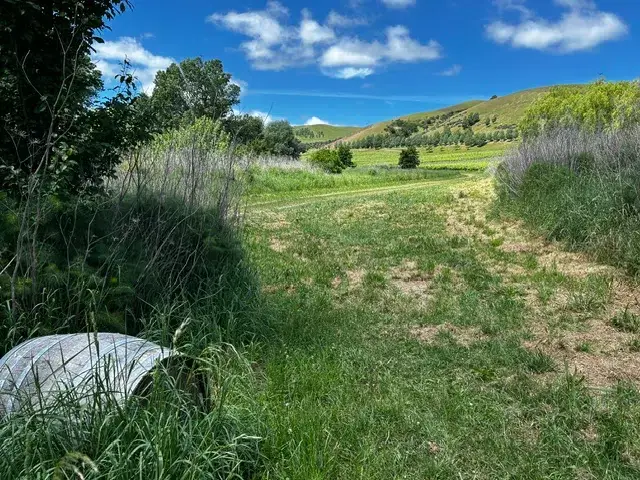
Our morning was spent in transit, but what a transit! Nigel drove the coach through the most beautiful scenery, initially out of the Wairau Valley from Blenheim, then up through the hills into the Awatere valley, with vineyards stretching out to either side, and then down to the coast, and the glorious drive, via Kaikoura, towards Christchurch. A quick coffee stop just south of Kaikoura was welcome, and the final hour or so was spent looking for seals and dolphins to the left and the rugged ranges to the right.
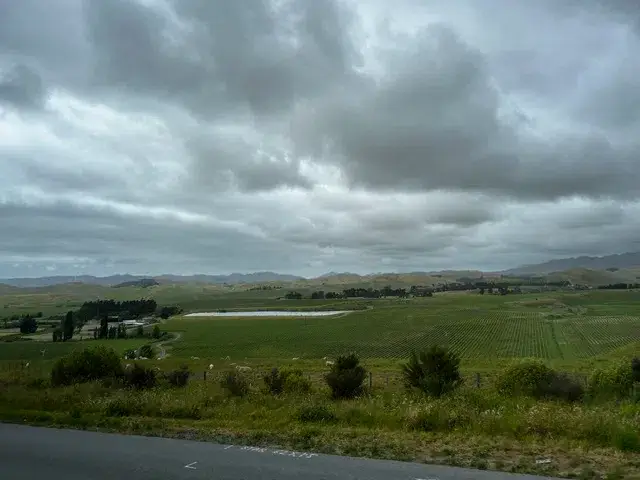
Tim’s introduction to North Canterbury was disrupted slightly by a series of ‘phone calls and as we neared our destination we learnt why. We were due to visit the Greystone Winery at their restaurant, but they had arrived that morning to find their water supply wasn’t working. So in the space of an hour they switched our location to the winery itself, and in the end, we felt, we got an even better experience! As we negotiated the slightly twisty road up to the winery the beauty of this region became apparent. The vineyards were on more rolling terrain than in Marlborough, and everything looked so vibrant and fresh.
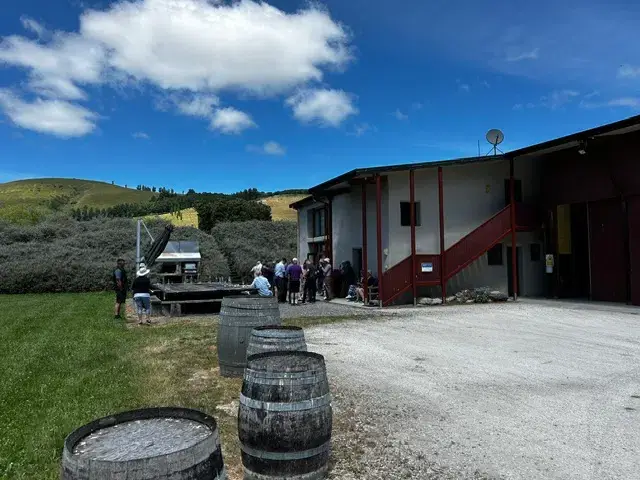
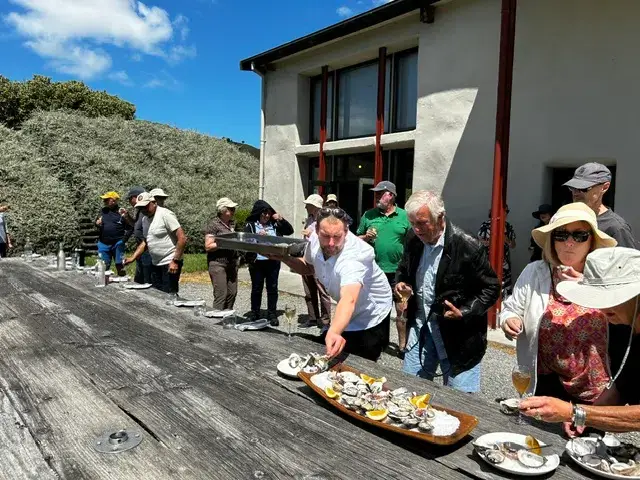
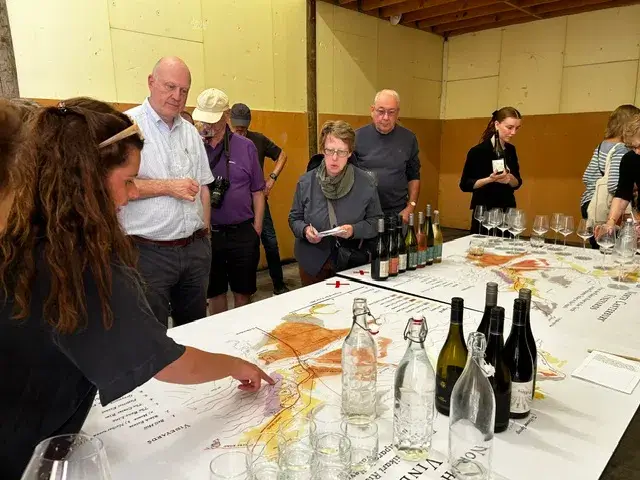
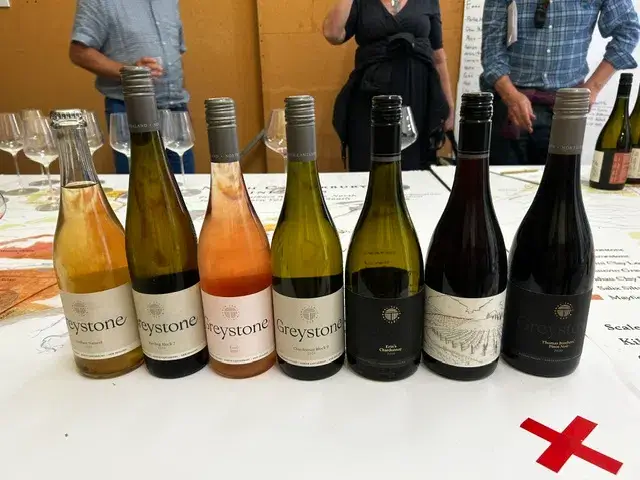
At the winery a huge table, made from old kauri pine planks that had previously been the Bollo Bridge (they don’t make planks that big these days!) was laid with glasses and we were welcomed by the team with their Pétillant Naturel Riesling, and from nowhere a huge platter of oysters arrived.
The lovely team, led by Emily, continued to present more food: local cheeses and cold meats, fresh peas in the pod, asparagus with Canterbury Buffalo Mozzarella, ceviche fish and finally a gorgeous almond cake. Cameron, the chef, explained how very different his job is here compared to Scotland where he is from. He sources from dozens of local suppliers so on Sunday evening he will have a few hundred text messages to go through to work out what he wants to use that week! With the food we had their Riesling and a Rosé.
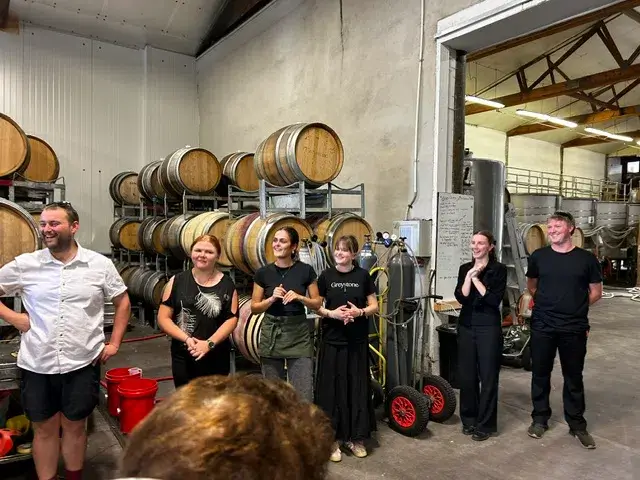
Then Georgia Mehlhopt, the winemaker, took us through the winery, starting in the white barrel cellar. The barrels we were looking at still held the 2026 vintage Chardonnay, some of which was still fermenting. Their 50ha of vines are organic, the Thomas family planted vines in the 2000s, and subsequently bought the neighbouring Muddy Waters vineyard which was planted in the 1990s. We tried samples from barrel and then walked through winery to the ‘crush pad’ (I would call it grape reception) area, and looked across to the hill where their top wines, the Erin Chardonnay and Thomas Brothers Pinot Noir grow.
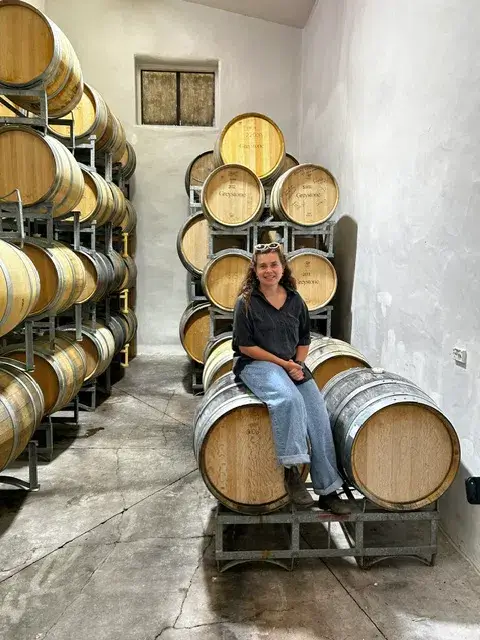
Georgia described their ‘vineyard ferment’ Pinot Noir – the grapes never leave the vineyard, they are put straight into open top fermenters among the vines, and so are only exposed to the yeasts that naturally occur on the grapes themselves. This produces a light delicate wine (intervention is minimal so there is very little punching down of the must, and colour and tannin extraction is minimal), which Georgia feels fully expresses the vineyard rather than the winery.
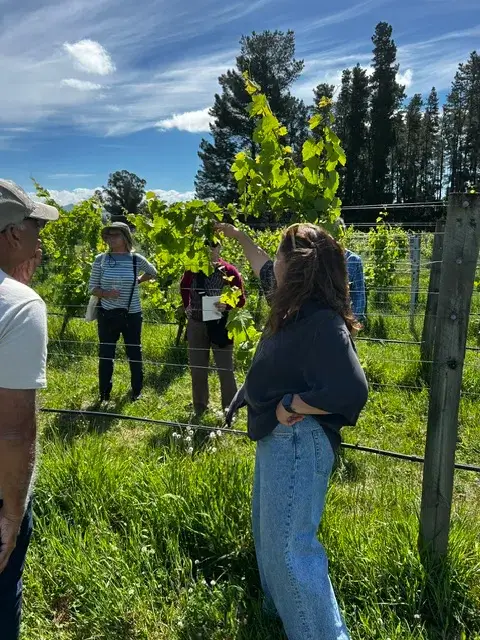
We took a walk into the vineyards, where Georgia showed us their new approach to training Riesling – the fruit will grow on canes trained along a wire at head height, with the canopy flopping down to the side. This will prevent the sheep, who graze down the sward between the vine rows, reaching the ripening grapes (the wily creatures will stand on their hind legs to get at them!), as well as reducing frost risk. They are starting to bury their irrigation lines between the rows, partly to prevent damage but also to encourage the vine roots to work a bit harder. This was organic viticulture at a new level!
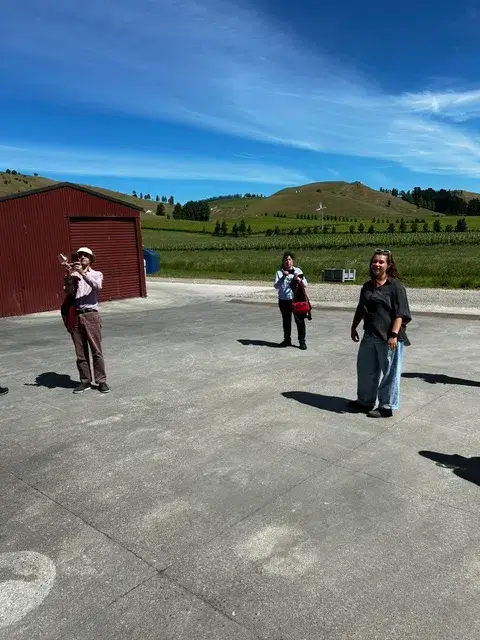
Back in the winery we completed our tasting with their Erin Chardonnay, the Vineyard Ferment Pinot Noir and their Thomas Brothers Pinot Noir, a great end to a great visit. We thanked Georgia (we’d already said our thanks to the hospitality team who were ferrying everything they had brought up to the winery back to the restaurant) and boarded the coach.
Five minutes back up the road we were at Torlesse Winery’s Omihi Road Wine Bar. Here we just had a tasting of some of their extensive range, including a Verdelho (our first in New Zealand), and a ‘Reserve Old Tawny’ fortified Cabernet Sauvignon made in a perpetual reserve of barrels that average out at 10 years old. Jo, the daughter in law of Maggie Rayner who with her sons manages the vineyard (and co-owns it), hosted our tasting, which we enjoyed sitting on the verandah looking at the vines.
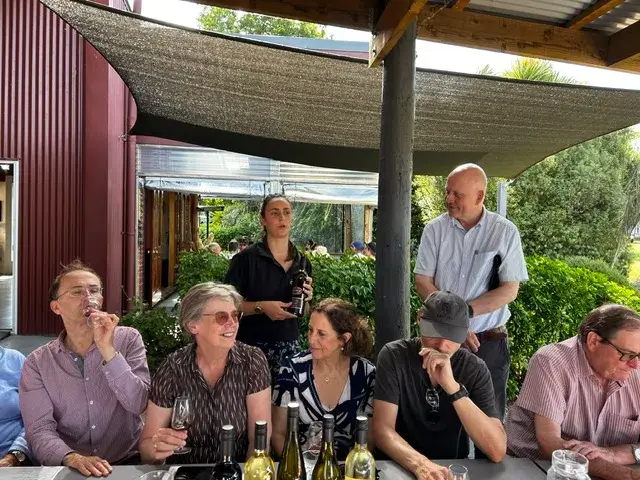
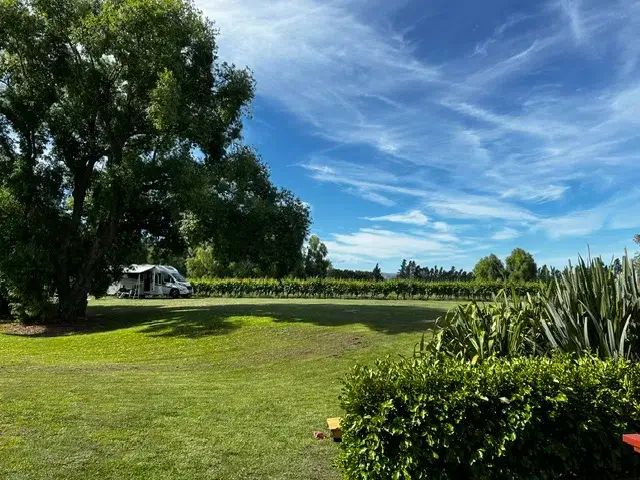
It was a busy Saturday afternoon – who wouldn’t want to nip up the road from Christchurch to sit amid the vines and drink wine (some had parked up their camper vans on the lawn!). So our visit was more focussed on enjoying the wine than asking questions – it was a nice relaxed end to the afternoon.
On to Christchurch where we settled into our hotel and had a very good dinner.
Back on the road by 9.15am, and back to the Omihi Hills, this time to visit the Black Estate. On a hill looking west across neighbouring vineyards towards the Southern Alps, their cellar door has evolved into a top class restaurant serving local food, organic where possible, and this is where our visit took place.
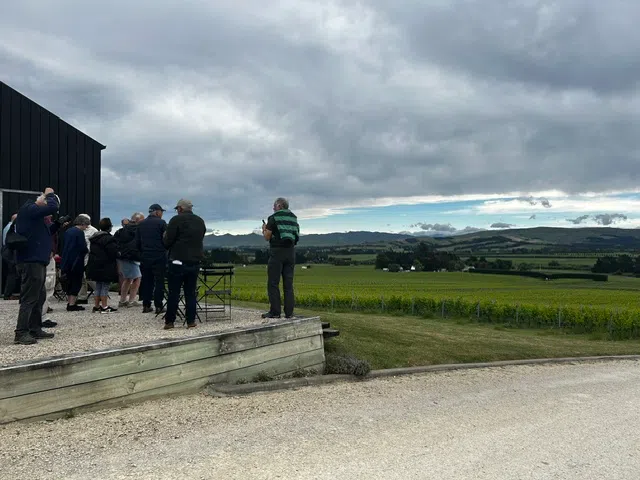
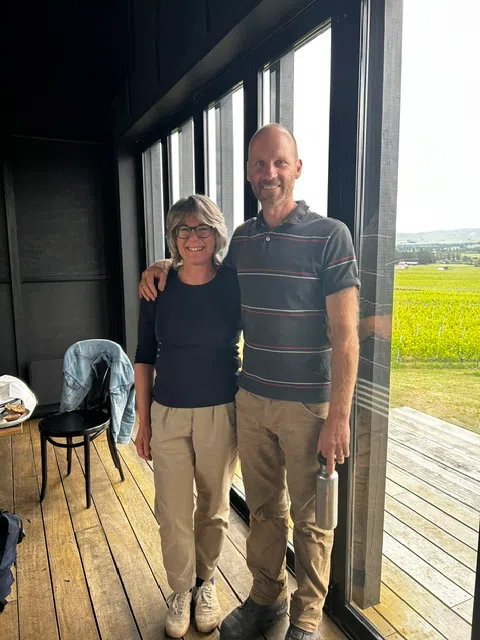
We were greeted by Nicholas Brown and Penelope Naish who bought the Home Vineyard in 2007, with the support of Pen’s family. The vineyard had been planted back in 1993, since they have owned it they have converted it to organic and biodynamic practices, planted more vines further up the slope and bought and two more vineyards, leasing a fourth. The Home Vineyard, and neighbouring Sky Punch have clay soils, Netherwood and Damsteep have more limestone.
Nicholas spoke powerfully about the various practices they have introduced which he has seen made the soil more fertile and the vines more resilient. Short-legged ‘lowline’ Angus cattle graze blocks for 24 hours so they crop it short, and are then moved on. In the winter sheep clean up and they are introducing a similar high cane training system to Greystone so that they can have sheep during the growing season.
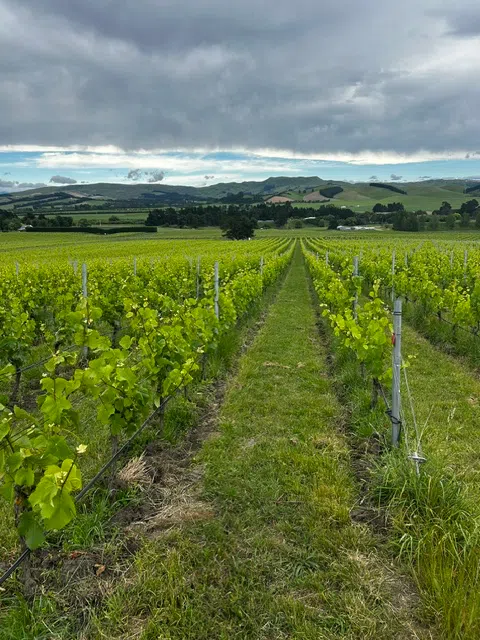
The Chardonnay vines just below the restaurant are flowering now, so wind is helpful for fruit set, but not too much. They will net for birds in January – their more isolated vineyards are particularly vulnerable to birds as they don’t have neighbours to share the burden! All their vineyards are managed biodynamically, with just one left to be officially certified – the process for this is quite onerous, and includes them demonstrating they have visited other biodynamic producers and learnt from them. The differences they have noticed include less compacted soil, more species in the sward between the vines, grasses putting down deeper
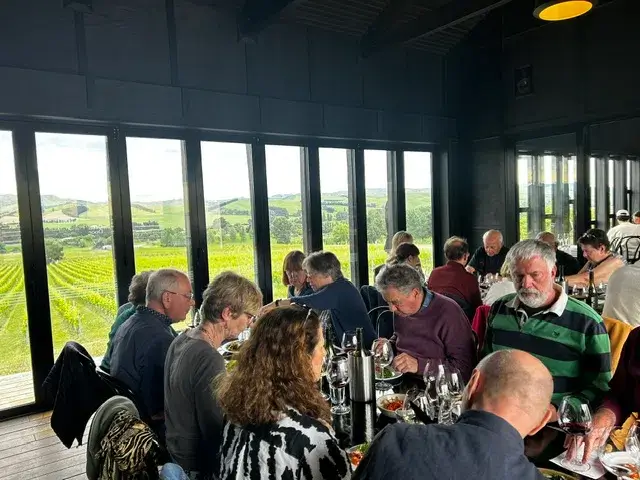
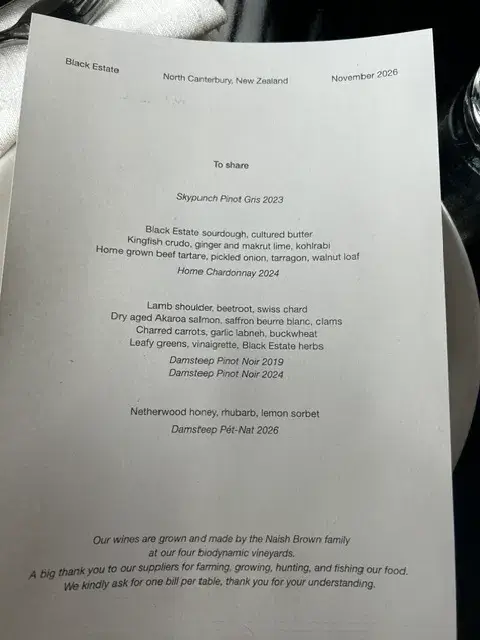
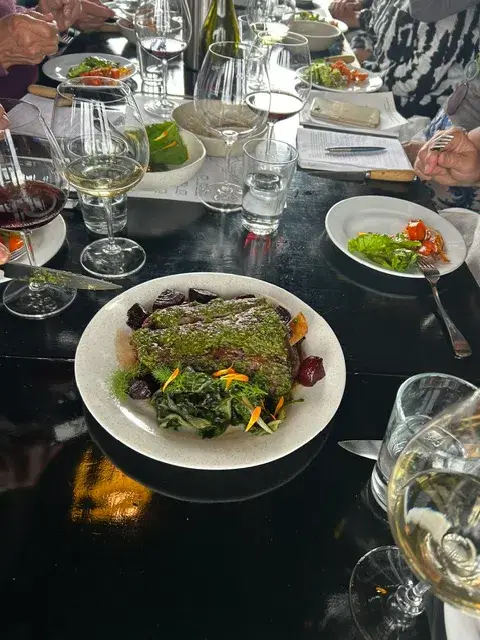
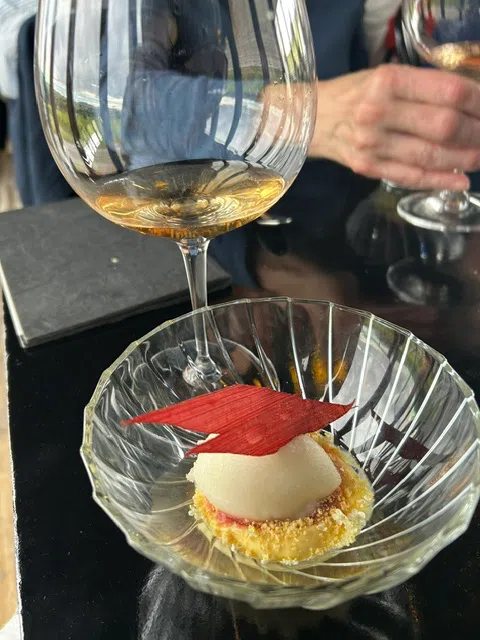
Pen described how they had set up in 2007 and almost immediately lost over half their custom thanks to the Christchurch earthquake that closed the road from the south, and then another earthquake that closed the one from the north. They were just getting going again when Covid hit. She was very humours about her father’s thoughts on what they were doing (and very grateful for her parents’ support). As we listened, and asked questions, we drank a Pinot Gris, a Chardonnay and two Pinot Noirs from the same vineyard but different vintages, and finished with their very elegant Pet Nat. And food arrived – fabulous local produce, beautifully presented – please forgive my not at all professional food photography
We had a ‘plane to catch, so had to leave all too early. Nigel got us safely to Christchurch Airport, and we were very sad to say goodbye to him, another top Kiwi driver. Our flight to Queenstown was on time – the final leg of this trip awaits.