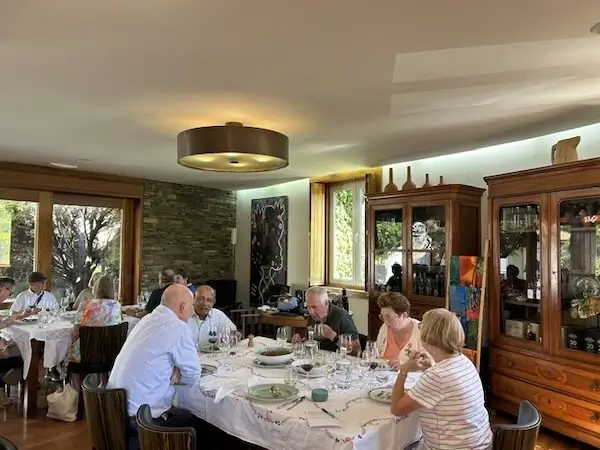
Our day in the Douro Valley took us first to Casa do Romezal. We were greeted (after a steep walk or taxi ride up the drive) by Luis Guedes, who with his sister Margarida became the 38th generation of his family to care for this land, at the ages of 22 and 19 respectively.

Luis was a great host, a marvellous raconteur and a powerful exponent of the quality of wine made from grapes grown on a few centimetres of soil. Using his (pharmacy) and Margarida’s (biomedical engineering) training they have applied a rigorous scientific approach to raising the quality of their grapes through sustainable vineyard practices, managing their olive trees that surround the vineyards, and making the property more financially sustainable with a charming bed and breakfast offering. His father had sold grapes to the local co-op, and the old winery buildings where we were had been abandoned so renovation and interior design are yet more skills they have!
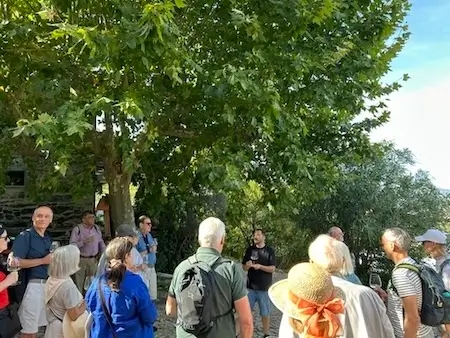
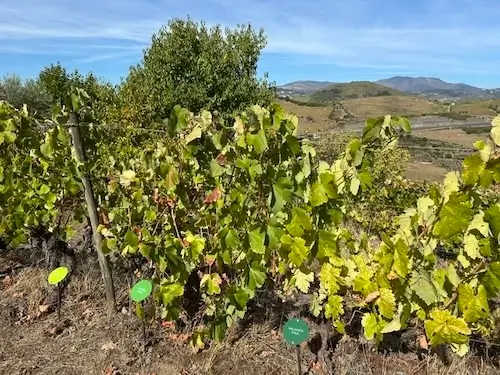
From a vineyard close to the house we looked across the magnificent landscape as Luis talked about the history of the region and its future. He is committed to making wines that the young generation will understand and enjoy. He makes his own wines and ports under the Gueda label, and the rest of their grapes are sold to other producers.

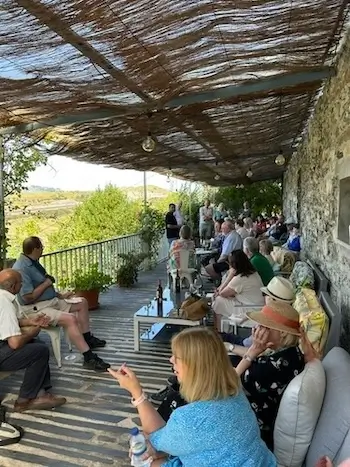
We tasted a number of their wines on the shady terrace, accompanied by a delicious spread of cheeses, cured meats and home made bread. Gueda wines are not shipped to the UK so quite a few of us bought some – they were all fresh, balanced and full of flavour, drinking beautifully now.
We were torn away from this fantastic place, promising to return (and meaning it!) as we had a second visit to make in the Douro. We crossed the river at Régua and a short climb (in the coach) took us to Quinta de Tourais, the home and business of the Coelho family. Manuela heads the hospitality side and Fernando the winemaking (all organic).
The estate has a very high classification under the Beneficio (which determines how much they can harvest for port winemaking and how much they are paid), and they are very innovative with their still winemaking, using non traditional varieties such as Baga and Alfrocheiro, and amphora in the winery.
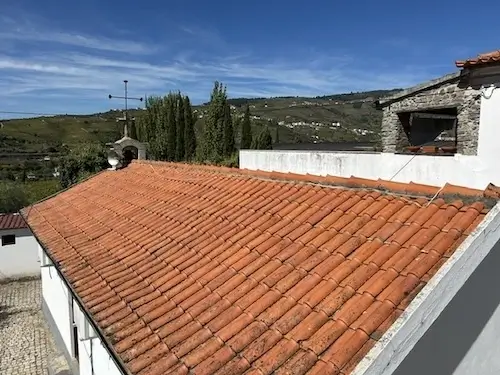
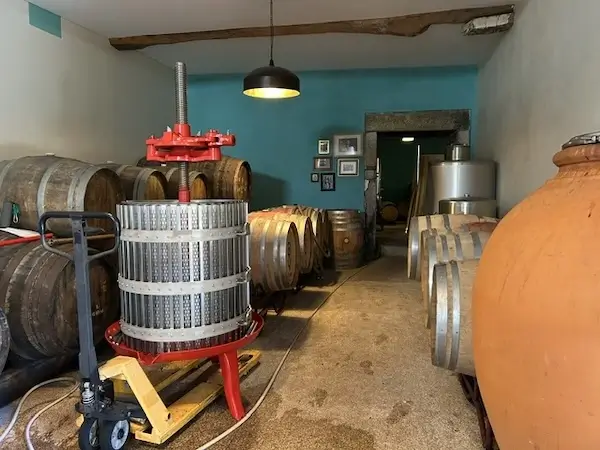
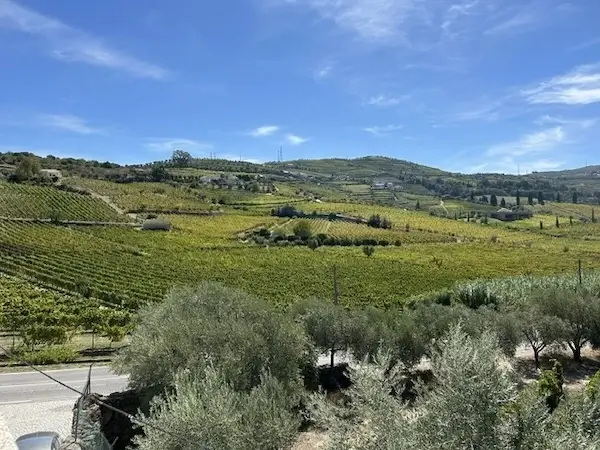
We enjoyed yet more lovely views from the terrace of the old Cistercian monastery building and then a traditional lunch of mushroom soup, salads and beef stew followed by four puddings.
We were back in Porto in time for a final stroll down to the waterfront for drinks an nibbles.