A big day started with a drive south down the coast to the Bairrada DOC. It has developed the best reputation for sparkling wine in Portugal, and its native Baga grape is making some of the most exciting reds in the country, as Tim explained to us en route.
In the village of Sangalhos, on the Portuguese Camino de Santiago we visited Caves São João, set up in the 1930s by the Costa family, who already made wine in the Douro. They originally built their business exporting to Brazil, but they were pioneers of traditional method sparkling wine making and have assembled a wonderful collection of old vintages of red wines.

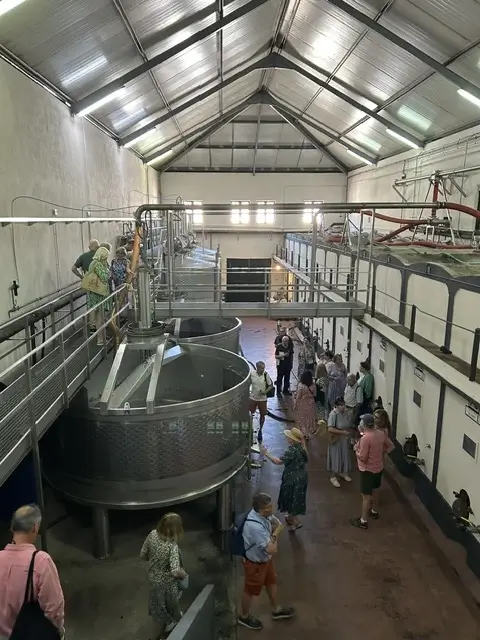
Harvest was just about over so there was only one fermentation vat to look at, but our walk through their winery showed us the big concrete tanks in which red wines mature for years and literally walls of stacked bottles, with simple chalk boards identifying vintages going back to 1959!
Today the majority of their production is of sparkling wine and we also passed walls of bottles of wine undergoing second fermentation, resting on their lees.
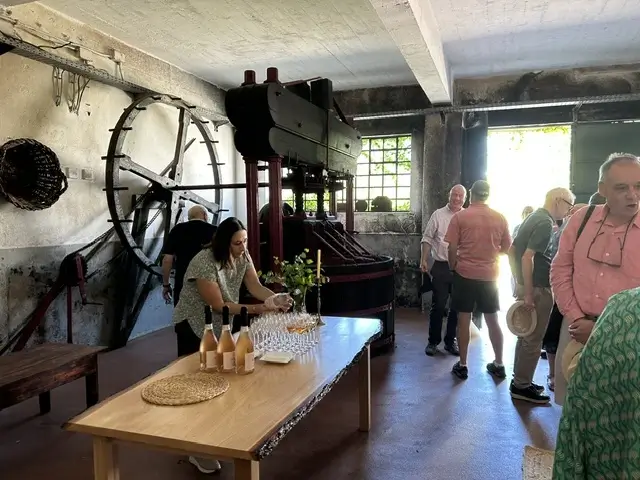
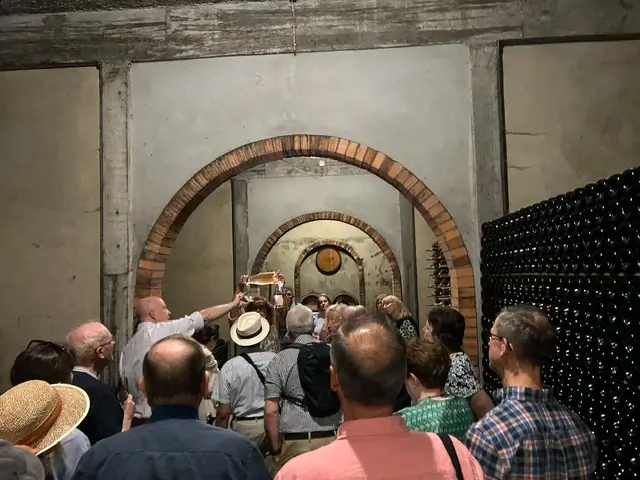

Our tasting covered sparkling, white and red wines from current vintages and their ‘library collection’. The standouts were two wines from 1991 – a Cabernet Sauvignon and a blend of Baga, Castelão and Moreta. Drinking beautifully, these wines showed what a fantastic region Bairrada is.
With the 11 wines we enjoyed a ‘light’ lunch (not really a concept in Portugal: Caldo Verde soup, a spread of cheese and cold meats, and pudding), rounding off with a late harvest Semillon and a Grande Reserva aguardiente.

An hour or so’s drive east took us to the Dão DOC, home to some top white and red wines. We visited Caminhos Cruzados, now part of the Pacheco group, which had been a dream project of the Santos family. In 2012 they decided to join the ‘new Dão movement) and make wine from the old vineyards of their family Quinta da Teixuga near Nelas. A top architect was commissioned to build a brutalist winery and cellar, in the shape of the ‘crossed paths’ the place represented.
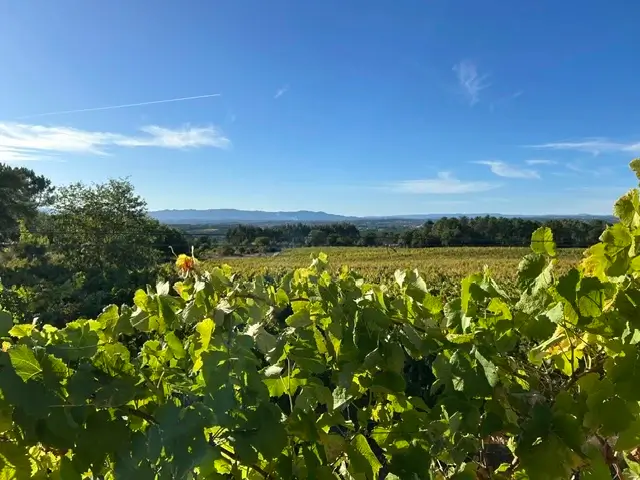
We toured the impressive structure which felt like it was emerging from the landscape, passing grape reception and walked through vineyards which had been recently harvested, enjoying glorious views out to the high mountain ranges that protect the region from maritime influence.

We carried wine glasses with us and enjoyed a rosé, a white blend and a fresh red as we stopped at different points. Our guide Carolina explained about the emergence of the local Encruzado variety which is now widely planted making a variety of white wine styles.
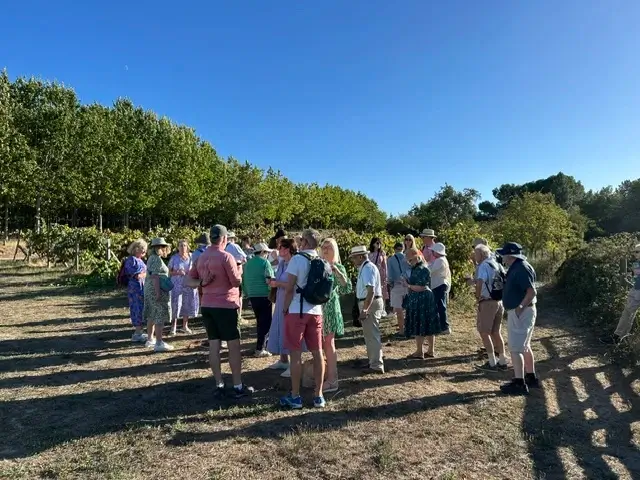


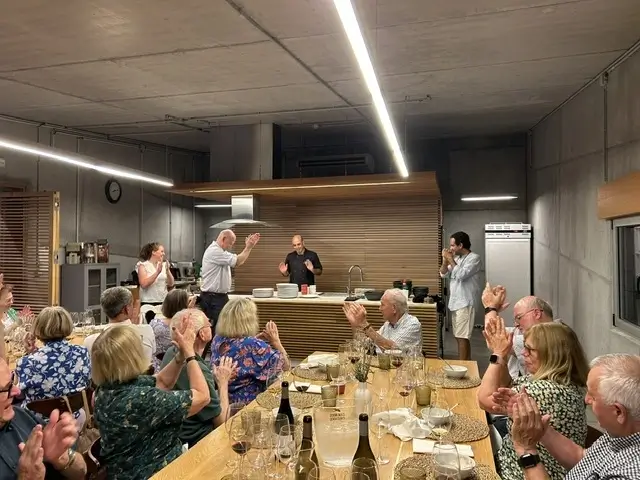
Following a walk through the barrel cellar we sat down for our tasting with dinner back in the winey. This confirmed the very high quality of not just the whites but also the reds of the region, with Alfrocheiro being added to our list of varieties (blended with Touriga Nacional. Dinner was prepared in front of us, a very lively occasion.
We rested well on the coach back to Porto.