

In 2026 I ran five wine tours to Tuscany, three in the Spring and two in the Autumn. It was a wonderful opportunity to learn first hand about the amazing diversity and quality of wines coming from this region, and of course to meet some wonderful winemakers, and eat some spectacular food.
We were based in the medieval town of Siena for each tour. On the evenings we had some energy (we packed it in on several of the days) this was a lovely place to stroll around. Some happy evenings were spent in the Campo (the main square), our minds boggling at the thought of the palio horse race.

Chianti Classico
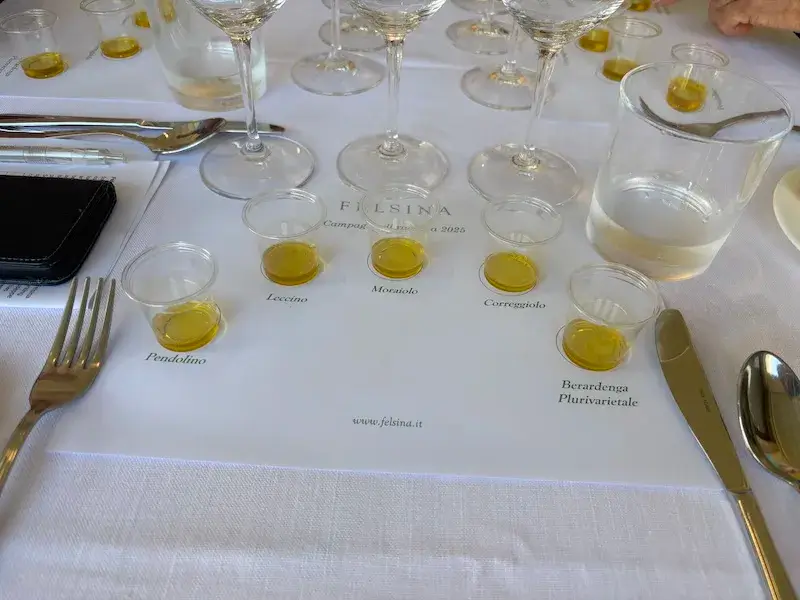
The heart of Tuscany, the original region designated as such, stretches from Florence to Siena. We had outstanding visits at Fèlsina, one of the very top estates in the region – our tasting lunch included a varietal olive oil tasting which was a real education, and of course the wine side was pretty good. Fèlsina make wines from their vineyards in Chianti Classico and Chianti Colli Senesi, and over the years have developed top Riservas, then Single Vineyard wines and recently a blend of Sangiovese from both DOCGs (which has to be released as an IGP wine thanks to the rules!).


On some tours we visited the Poggiotondo estate in the small village of Ceretto Guidi. This is the family winery of Alberto and Alessandra Antonini. Alberto is a world-renowned consultant oenologist who trained and worked UC Davis in California, Frescobaldi and Antinori before setting up his own business. Alberto consults and makes wine on many continents and we were lucky enough to meet him, and over a lunch with wine learn about his approach to viticulture, the connection between geology and taste profiles in wine, the importance of soil analysis and how they favour an organic approach in the vineyards.

Chianti Sub Regions
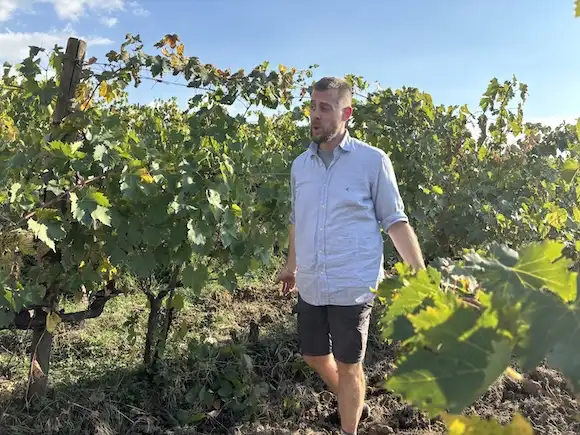
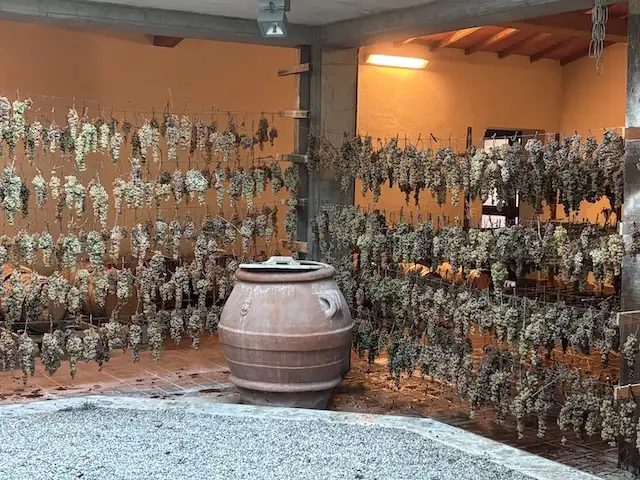
We visited Fattoria Selvapiana in Chianti Rufina, meeting Federico Massetti and his son Niccolò, tasting wines from both Chianti Rufina and the Pomino DOC, and in the autumn seeing the grapes that would make Vin Santo drying in the vin santo room. The story of Selvapiana is amazing, and their wines don’t disappoint!

The Maremma
Antinori is one of the most famous winemaking families in Italy (and beyond – we visited its Haras de Pirque estate in Chile during our South American wine tours in 2024 and 2025), instrumental in the creating the fame of Sassicaia, and very much at the forefront of Tuscan wine. In 1999 it bought the Le Mortelle estate, which until then had just grown plums and apricots. It is now one of the premium estates of the Maremma Toscana, and we had a wonderful visit. Their gravity fed spiral winery was something to behold.
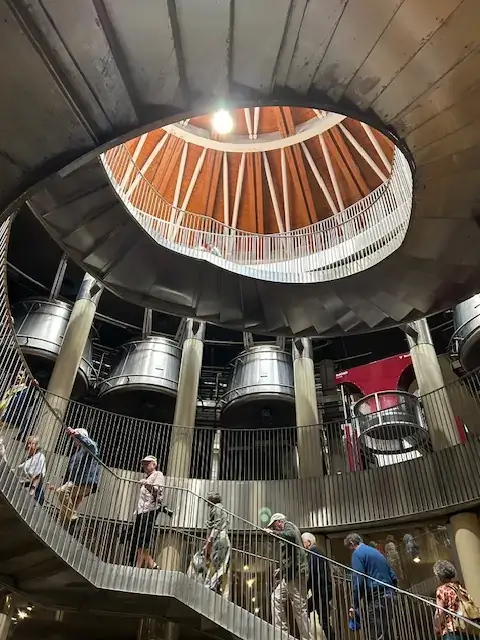
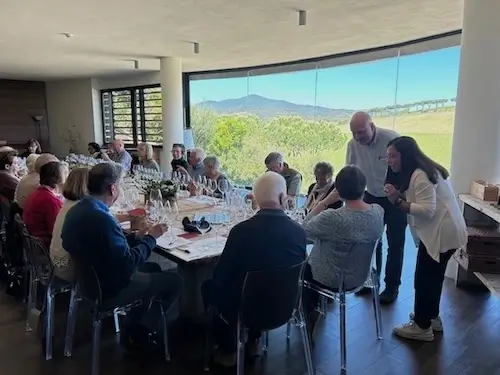
In the same building they also have the most stunning tasting room with glorious views out onto the property. As you might expect – top class wines were duly tasted culminating in their SuperTuscan Ampio – a mere €205 per bottle!
Suvereto
Suvereto is a tiny DOCG region in the hills south of Bolgheri, looking across the flat plains towards the Tyrhennian sea and the islands of Elba, Montecristo and Corsica.
Here we visited Bulichella, a wonderful estate, that has an incredible story. Hideyuki Miyakawa came from Japan on his motorbike to tour Europe and other parts of the world and met his Italian wife at a Motor Exposition in Turin in the early 60’s. In 1983, the family set up a social project in Suvereto with three other families and then took overall control in 1999. He installed a state of the art winery and commenced a new life journey in wine. Read more about this amazing story in the blog.

Bolgheri
Bolgheri, on the coast north of Grosetto, is famous, of course, for being the home of Sassicaia. It was only recently that its suitability for quality winemaking was discovered, but no time has been wasted in planting vines and setting up vineyards. We visited three of them in the course of our tours.
The legendary estate of Guado al Tasso is part of the Antinori stable of wines and has been long established as one of the top brands in Bolgheri.
We were only there for lunch, but Antinori always do things well and this was no exception. Delicious vegetable tart, perfectly cooked and tasty chicken and a lemon dessert were just right – and washed down the Vermentino cwhite, Il Bruciato red and of course the Guado al Tasso 2023.
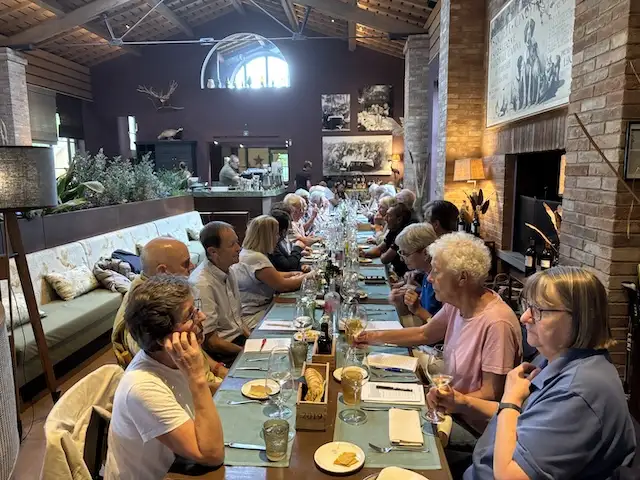
Le Vigne di Silvia is a small family estate comprising six hectares on the flat plain of Bolgheri. Family member Stefania hosted our visit and you cannot be anything but overwhelmed by her enthusiasm for her family’ estate’s enterprise. We took a short walk in the vineyard, saw the three rows of Verdicchio vines which are testament to the origin of the family (who came from Le Marche), met Mum and Dad and of course Silvia – her sister – after whom the estate is named. Silvia was a professional football for the Italian women’s team but now she and Stefania run the estate.

The small family owned estate of Vilanoviana is set in the heart of the Bolgheri DOC. The Moncellis bought a plot of land in 2006 to serve as a holiday home from their base in Emilia-Romagna. In fact they built a winery first before the villa and are producing organically certified wines. We enjoyed three lovely tastings and lunches.
Montalcino
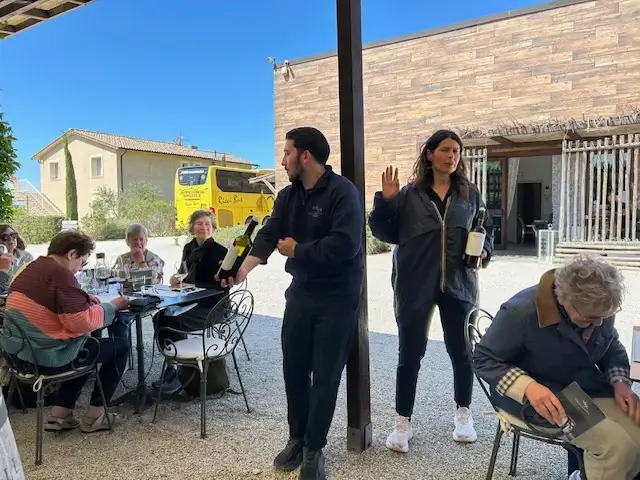
While there are recordings of Montalcino red wine dating back to the 14th Century, it was not until the Biondi-Santi family got involved in the 1870s that its reputation started to take off. They replanted phylloxera affected vineyards only with Sangiovese (the Brunello clone), and eschewed other grapes varieties in their wines. Today there are hundreds of producers of Brunello and Rosso di Montalcino, our visit was to one of the largest, Banfi.
Poggio Alle Mura, a 13th Century castle and estate, was acquired by the Mariani brothers from the USA who had an import business called Banfi. They were looking for Brunello to import and loved the area so much they decided to buy the 3,000 ha estate. By their own admission they caused a bit of consternation amongst the local populus as they reshaped hills, planted vines, dug up vines and generally shook up the usual way of life. Nearly 40 years on The Banfi estate has become one of the biggest and most important producers of Brunello di Montalcino, have created restaurants and visitor experiences, make Balsamic vinegar, prunes, olive oil and honey.
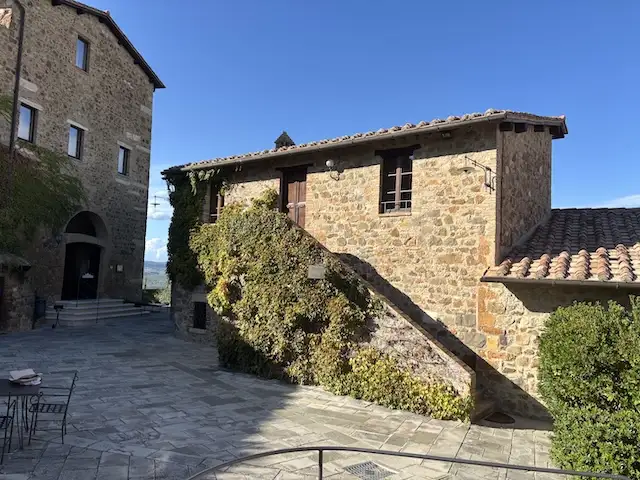
We enjoyed a superb lunch with contrasting vintages of Brunellos (as well as whites and rossos), in a private dining room overlooking the glorious scenery.
San Gimignano
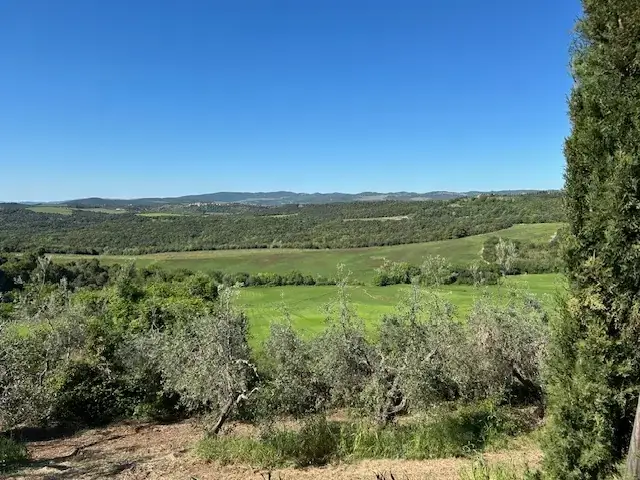
Each tour ended with a final visit on our journey towards Pisa airport. Just outside the famous town of San Gimignanom Cappella Sant’Andrea is a small, organic family estate that has the most wonderful views and another place that has a delightful sense of calm. As the bus can’t get down the narrow road, most people enjoyed the 800 metre walk before we engaged with Flavia, the owner, who gave us some valuable insights into the estate.
Our tasting of their Vernaccias (the DOCG is for Vernaccia di San Gimignano) was accompanied by local dishes, and was a wonderful culmination of our time in Tuscany – great food, served by lovely people, amid beautiful surroundings and of course superb wines!
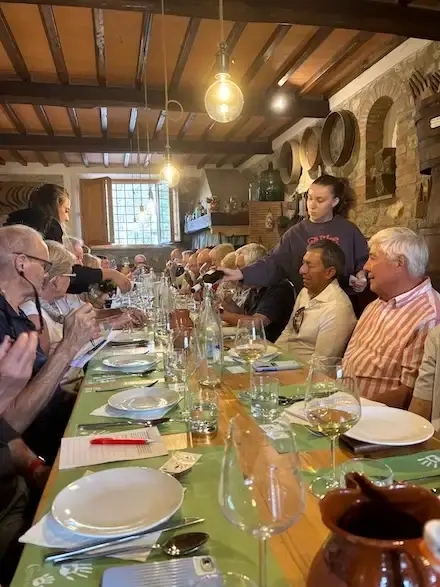
Lunch now beckoned and we started tucking into some raw vegetables with olive oil, asparagus pesto and a saffron mayonnaise. The first of three Vernaccia di San Gimignano whites were served and the afternoon continued with a delicious chick pea starter, cold cuts, cheese and more wine. Hosted by Linda, Daniela and Povlina, they created a very relaxed atmosphere while at the same time conveying the background to the family and the organic philosophy that they employ. Three Vernaccias, two Chiantis and an IGP Rosso Il Maritate rounded off the selection.
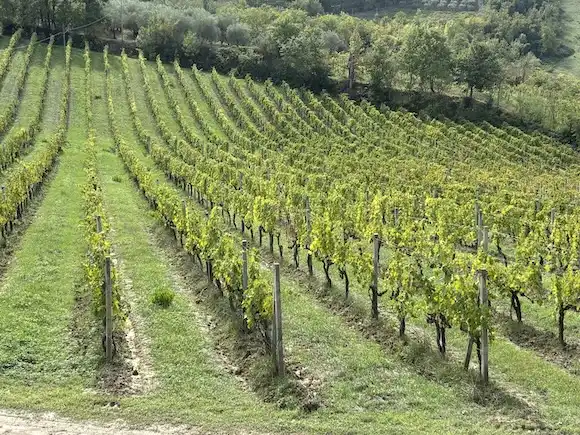
Wine tours to Italy never disappoint, but there is something very very special about Tuscany!