
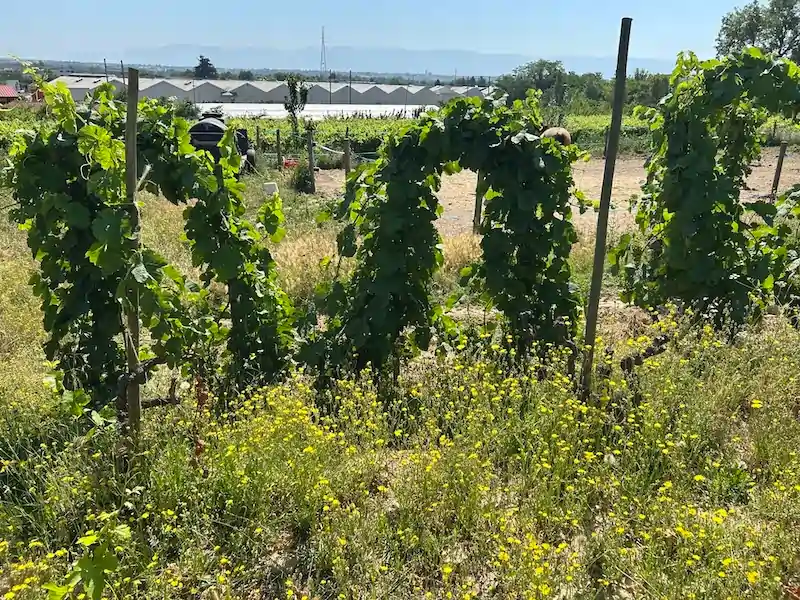
An early (8.15am) start, so we could be in Saint-Péray in good time. This is the most southerly of the appellations of the Northern Rhône, and surprisingly produces the freshest wines – all white, all made from Marsanne and Roussanne, with both still and sparkling styles. It sits beneath the amazing Crussol Castle, with its ramparts and fortifications, and benefits from both shade and altitude. Next door Cornas produces some of the most concentrated and tannic Syrah in the Northern Rhône from grapes grown in a natural amphitheatre of vineyards that suffer no such cooling influences!
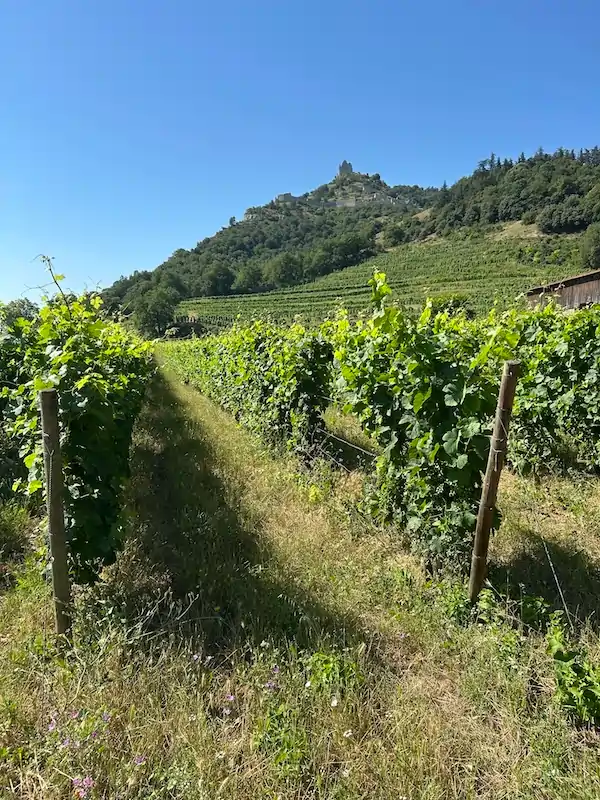
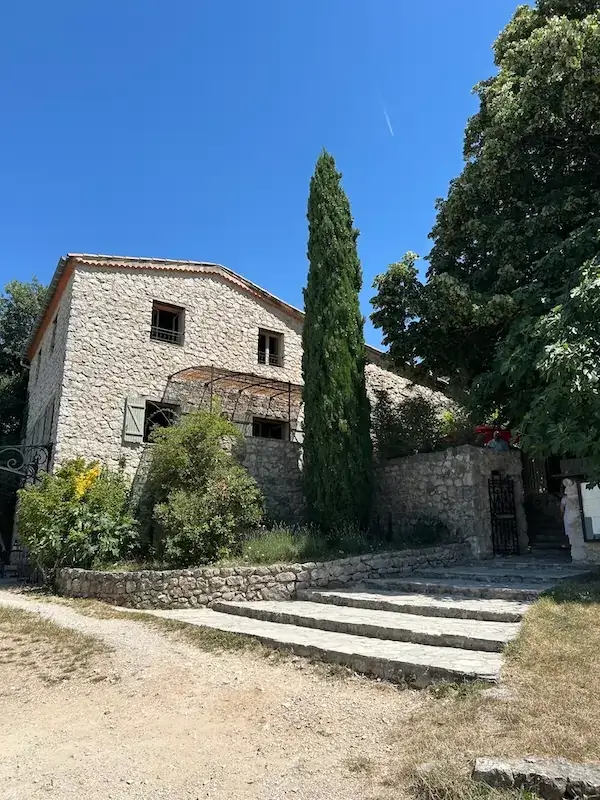
Our visit was to Rémy Nodin, a family producer established by Ernest Nodin in 1907, now run by great grandson Rémy and his wife Amandine, who hosted our visit, along with daughter Lana.
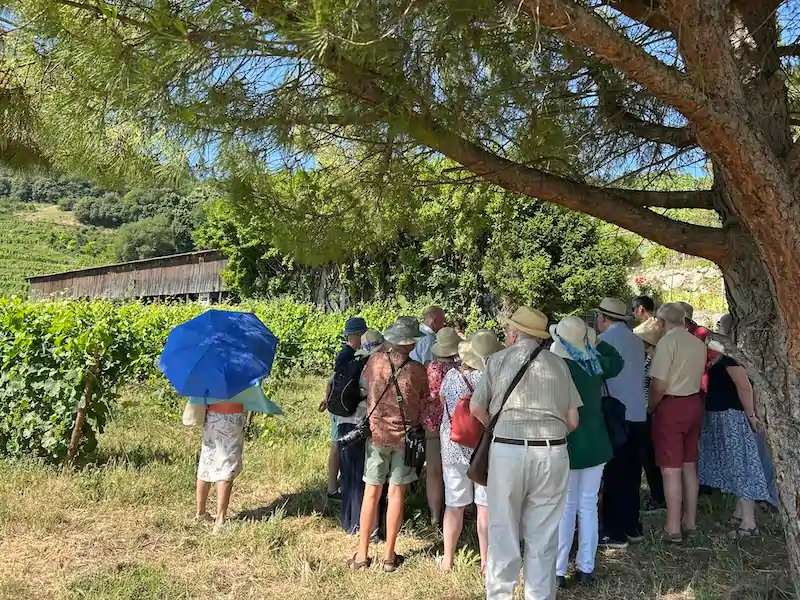
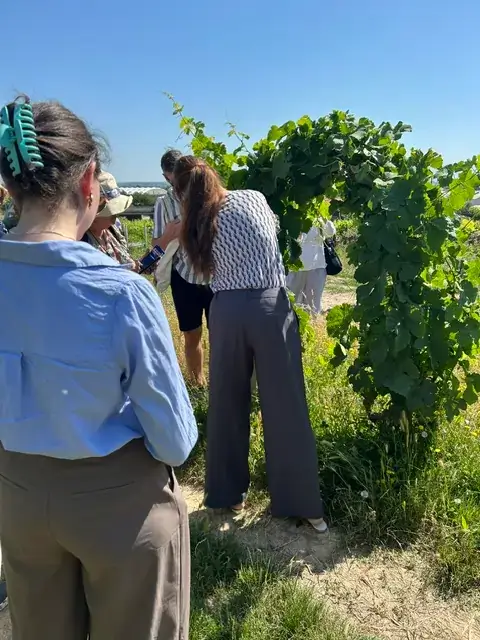
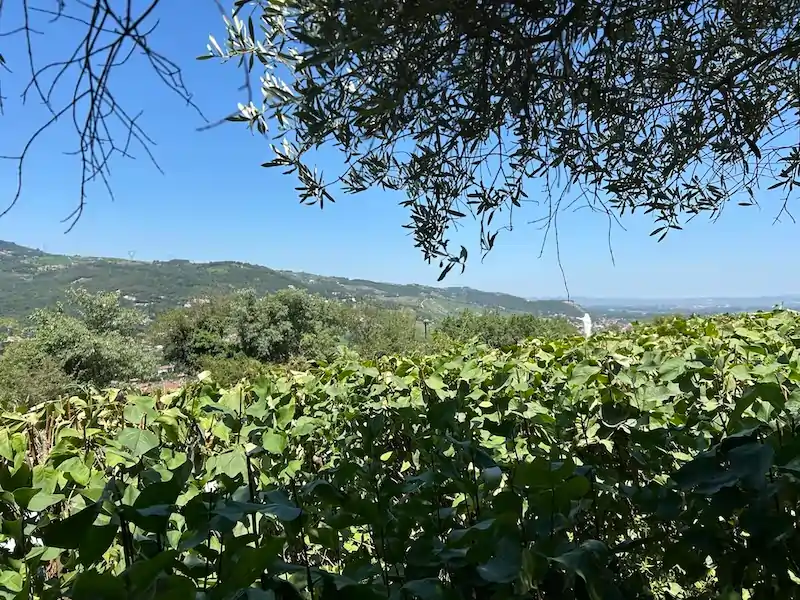
Under a tree we assembled to look across vineyards up to the looming Crussol Castle, and learnt more about their grape growing up close! The closest vineyards are on flat land and vines are trained conventionally – this allows machines to work among them. Slightly up the hill, things are very different – vines are trained in an arch – two vines curve into each other, grapes are kept shady at around knee height, and the leaves enjoy full sunshine. This is a further step from the single poles that vines are tied into, with the objective of securing them from the ravages of the Mistral wind, and maximising planting density.
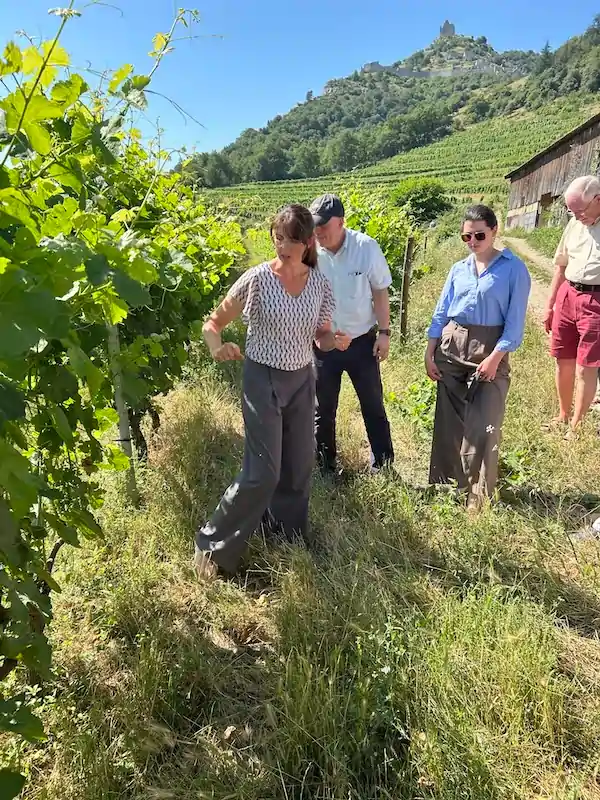
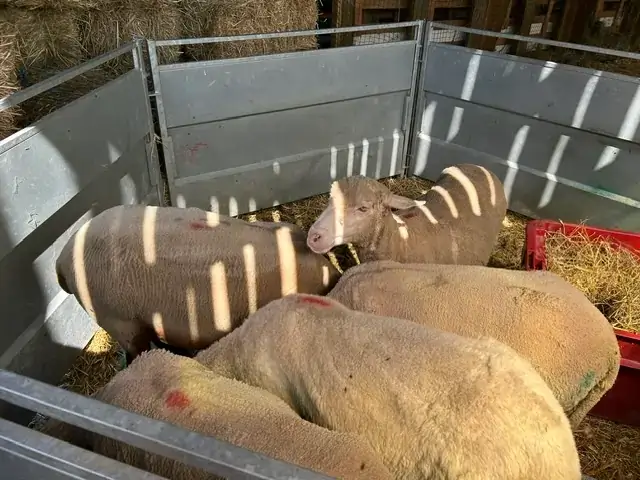
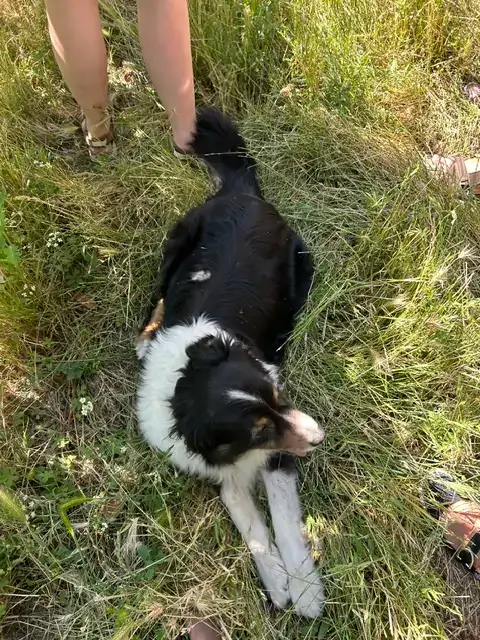
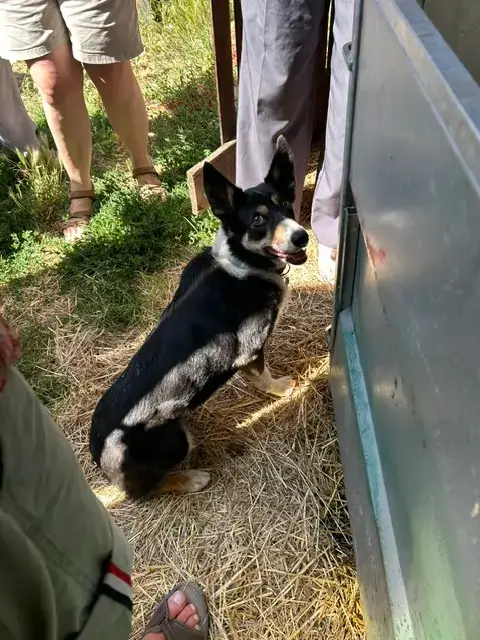
They farm organically, and in the farm building nearby we met the mowers – a small flock of very tubby sheep (actually they aren’t allowed near the vines when the grapes are growing as they would enthusiastically consume those). This explained the border collies who had accompanied our vineyard visit (and received a lot of attention).
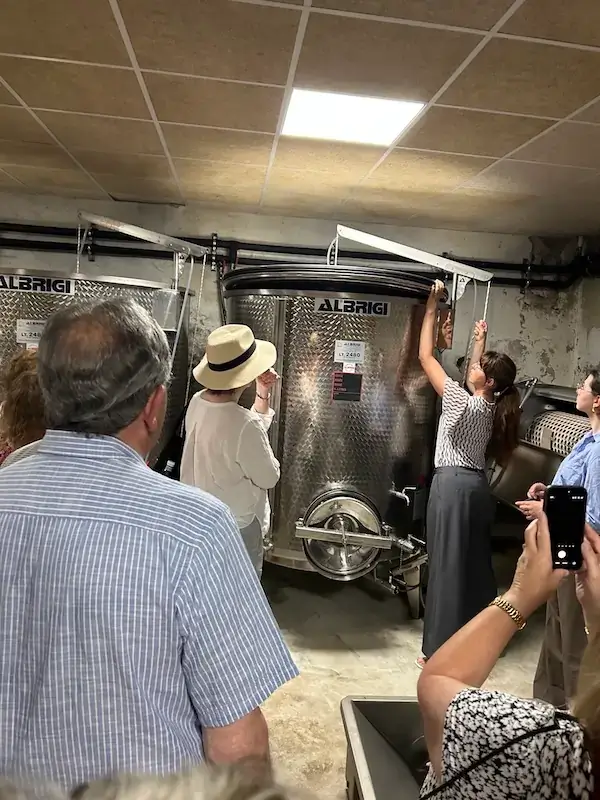
Back in the winery we saw the different stainless steel tanks in which they ferment their white wines and then store them before bottling in April. A small number of barrels are used for selected parcels of white grapes, which spend 10 months on their lees. Red wines are destemmed, crushed and fermented in stainless steel tanks – Amandine demonstrated how the ‘lids’ of these can be moved to allow carbon dioxide to excape during fermentation (and allow access for pusing down the cap – sometimes by foot!).
Our tasting was lovely, two Saint-Péray still wines, a fresh young Marsanne/Roussane blend, and a more serious 100% Marsanne which had spent time in oak. Three reds from different appellations: Crozes Hermitages, Saint-Joseph and Cornas took us from fresh, crunchy unoaked fruit to deeply coloured, concentrated wine with a fair bit of tannin (though beautifully balanced) and amazingly only 13% alcohol – we had asked all the winemakers we met about the effects of climate change and they currently seem to be able to counter rapid sugar accumulation and earlier harvests, keeping their wines fresh and balanced. We finished with their Méthod Traditional sparkling wine, made from 100% Marsanne – the variety’s stone fruit flavours combined very well with the yeasty and biscuity flavours from two years’ lees ageing.
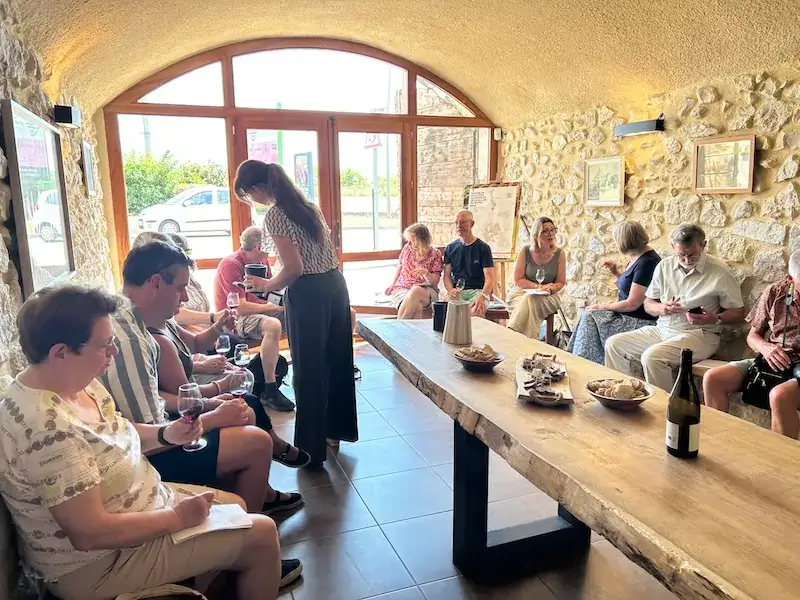
We tried some very nice local goats cheese and pâté with the wines, but tried to hold back as we knew we were heading for lunch, which was in the Auberge de Crussol. Due to the very tight bends of the road up to the auberge Tim had ordered a minibus to take us up there, which in the heat was a better idea than walking!
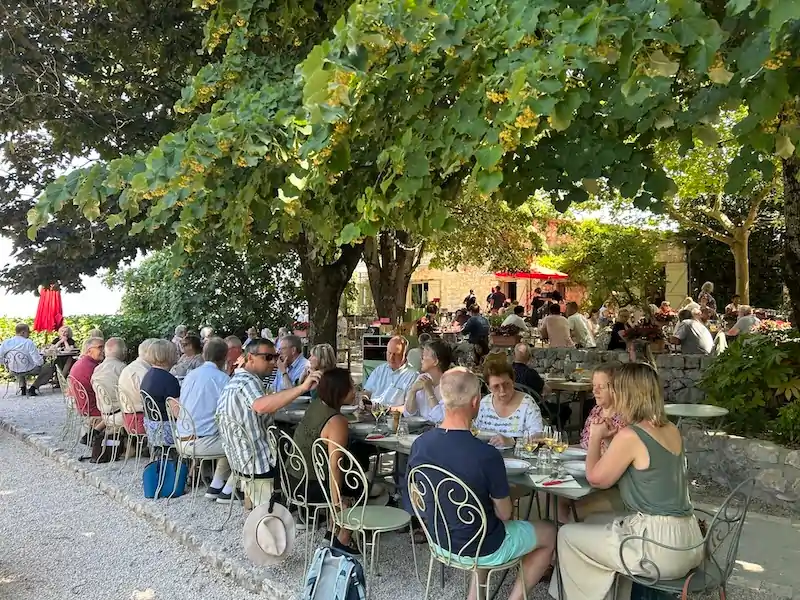
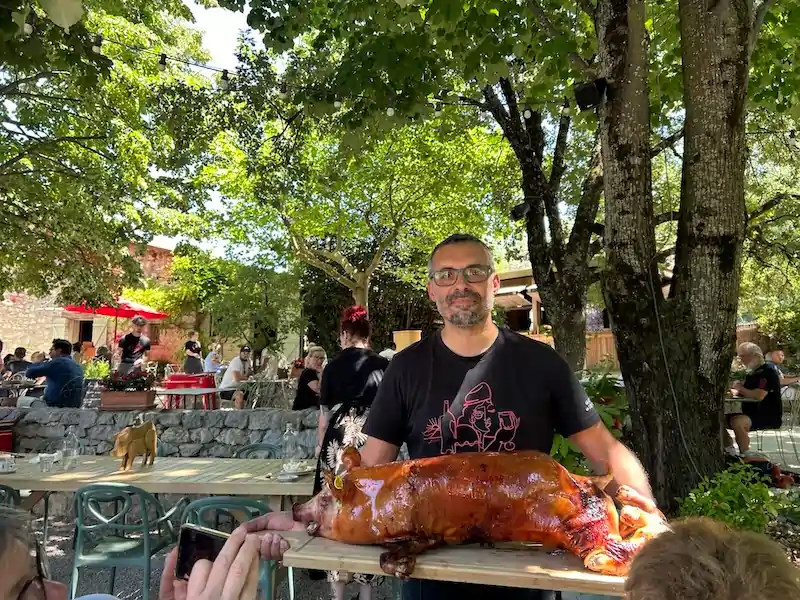
We had a lovely meal under the lime trees of their courtyard, with various salads to start, and a roast suckling pig for main. Vegetarian options were available! The views were stunning – looking out across the hills of the Saint-Péray appellation, and east across the Rhône valley towards the Alps. We kicked off with some more Saint-Péray fizz, then two still Saint-Pérays: one made from 100% Roussanne from nearby Domain de Tunnel, the other a more conventional blend. Two Cornas wines helped the suckling pig down, and somehow we found room for both Isle Flottante and Rhum Baba for pudding.
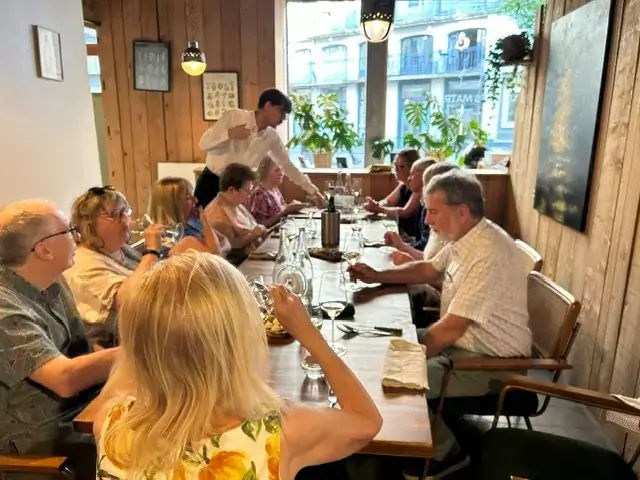
And amazingly we found room for dinner in the evening – at the Table de Matrus in Saint-Étienne run by a young innovative chef (Matrus), who served us a fabulous fennel salad, a choice of bonito or veal for main and a delicious cherry and almond dessert. We even tried some local wines – a 100% Chenin Blanc from the Côte de Forez, and with pudding a Vin de Paille made from a hybrid red grape whose name I didn’’t catch, and was super. We stayed conventional for main and had a Saint-Joseph, which is rapidly becoming our go-to red wine!
Back to the hotel, no need to watch the match that night, so early to bed!