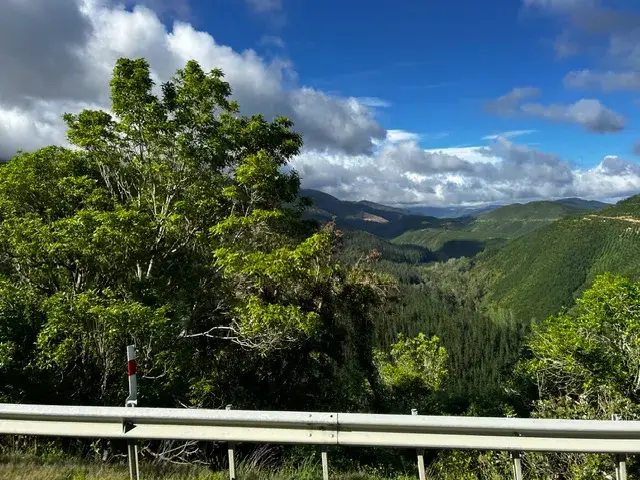
It was glorious sunshine for our drive from Nelson to Blenheim, across the cloud topped Richmond Ranges, once again grateful for Nigel’s careful driving.
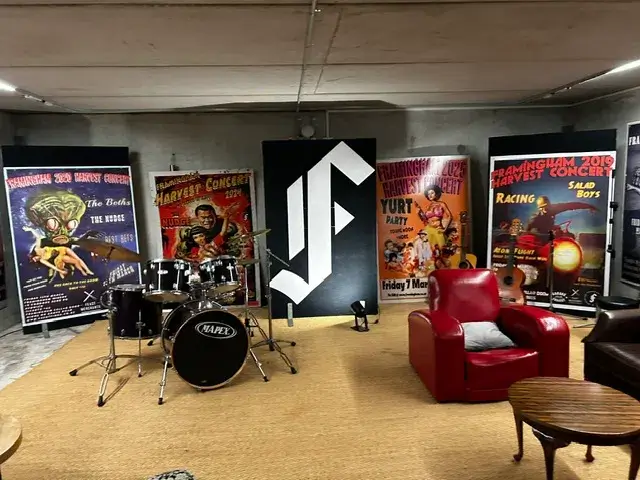
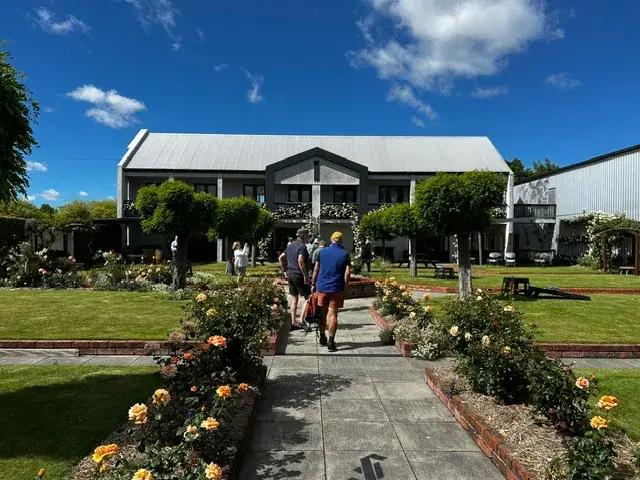
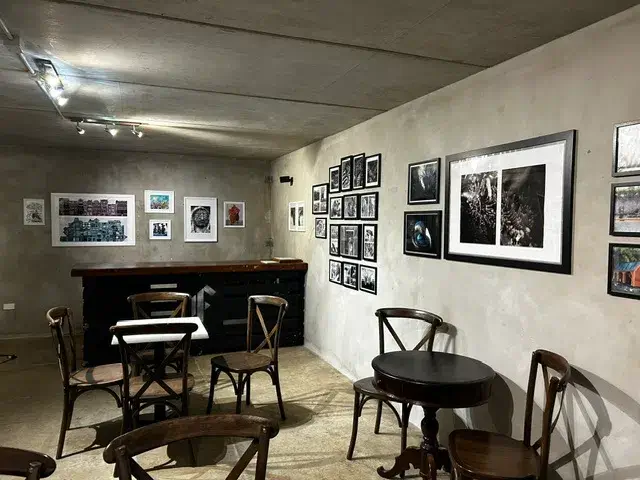
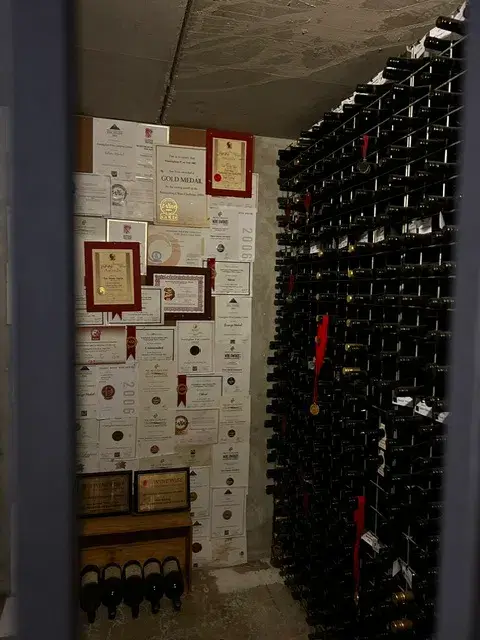
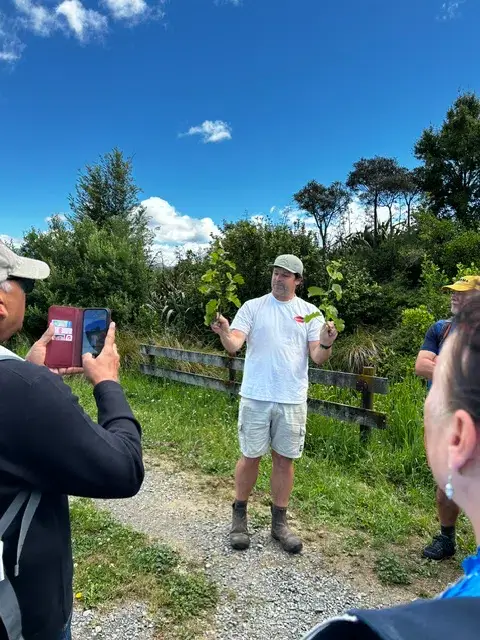
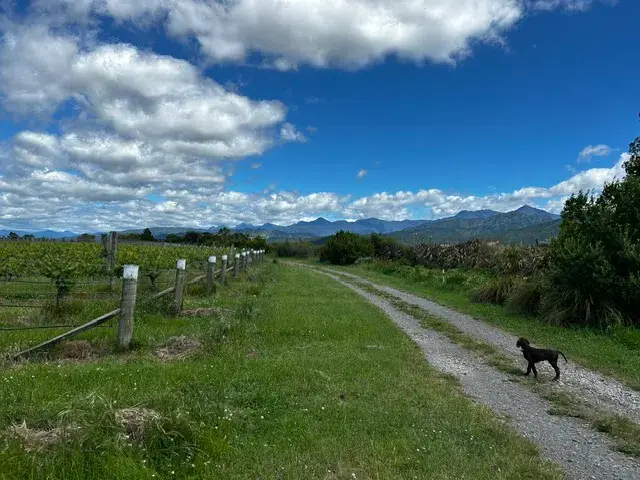
We crossed the Pelorus and Wairau rivers, and arrived at Framingham to be greeted by Katy and Tanya who run the cellar door. They gave us a very quick tour of the visitor part of the building, through an art gallery of local students’ works, past their library collection of old vintages and a quick admire of their old cellar venue, where local bands (including members of the winery staff) play. We then met their viticulture consultant Stuart Dudley in the beautiful rose garden and he took us straight out to the vineyards, through a corridor of natural planting, accompanied by his adorable German Pinscher Wizler cross puppy Rollo.
Framingham are particularly known for their Rieslings, and the majority of their own, organically farmed, vines are planted to this grape. Stuart talked about the differences between Riesling and Sauvignon Blanc, and explained that low levels of air pollution result in high UV radiation in Marlborough, which encourages the grape skins to develop more phenolics which in turn add aromatics and texture to the wines. It also results in very enthusiastic leaf growth, so there are activities going on from bud burst to keep the canopy in check: bud rubbing, shoot thinning, leaf plucking and wire lifting. Teams from the Pacific Islands come out to work in the vineyards for 6 months of the year, the industry is clearly proud of their welfare standards, and the good this does for the economies of those countries. Sheep help out in the winter, but are not the most accurate at canopy management.
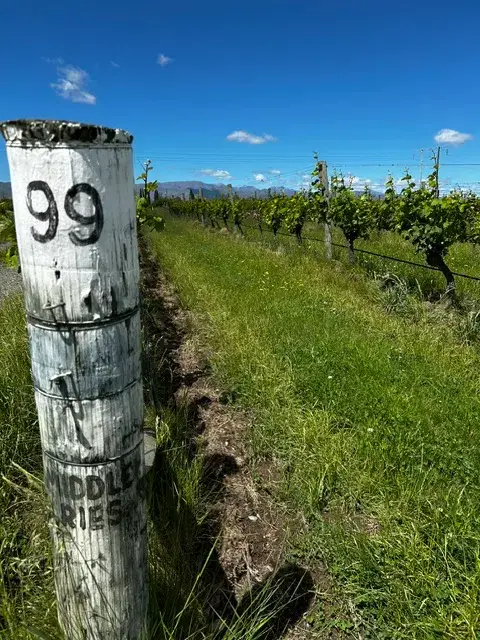
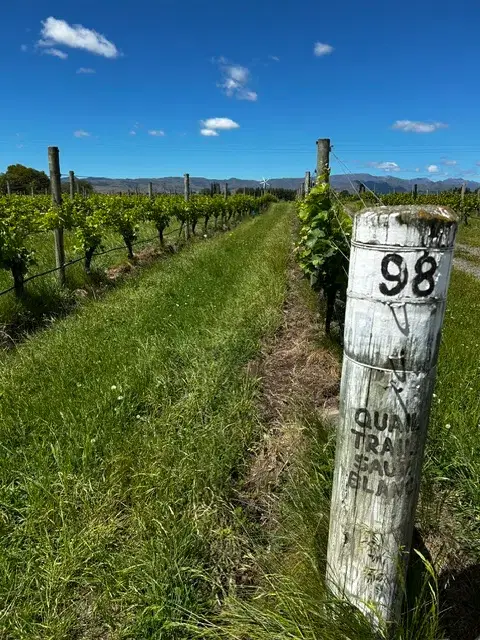
Many vines are netted once the grapes start to ripen, in some places bird scarers or falcons can be effective. Framingham farm organically, Stuart explained that they are spraying with sulfur every couple of weeks or so during the growing season – this is effective against powdery mildew, their main disease threat, though they have to be careful when pruning as trunk diseases are becoming more prevalent. Prevention rather than cure is key.
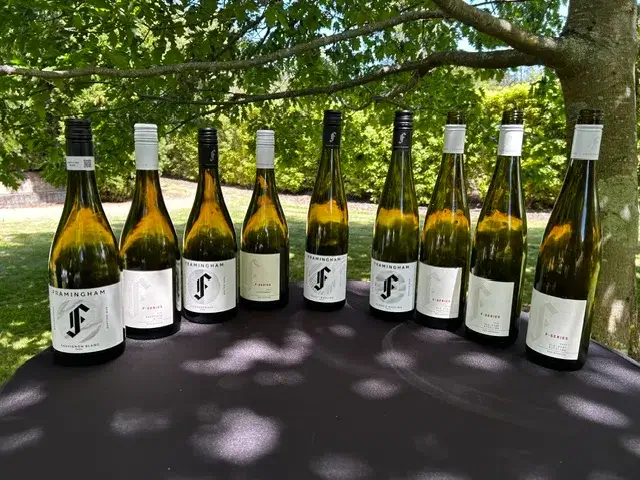
Framingham grow many different varieties, lease vineyards and buy in grapes from contracted growers, but our tasting, in the most beautiful shady garden by the winery, compared their ‘Classic’ and ‘F-Series’ whites (Sauvignon Blanc and Chardonnay) and explored five Rieslings: a bunch selected off dry, a Classic dry, and a vertical tasting of their Old Vines Riesling to finish.
.
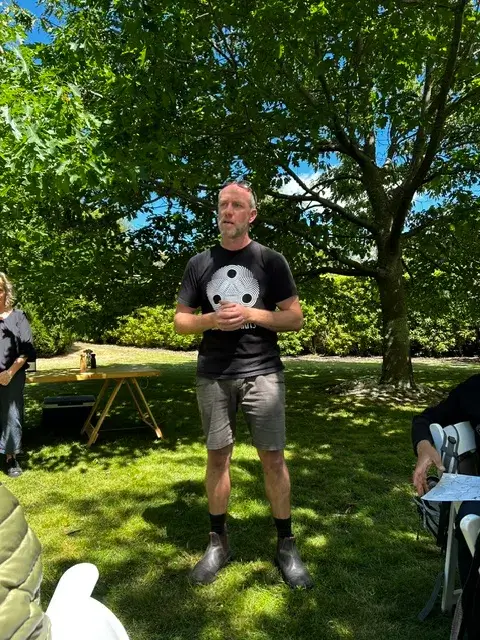
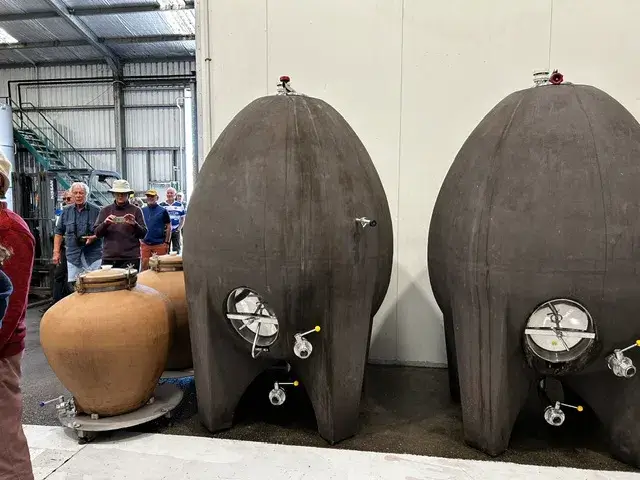
Andrew Brown has been head winemaker at Framingham since 2000, having started working with Andrew Hedley back in 2009. He took us through our tasting, explaining the different decisions that are made for fermentation and maturation for the different wines, and then led us into the winery where we saw concrete eggs, amphora as well as puncheons and barriques, and tasted their F Series 2024 Pinot Noir.
.
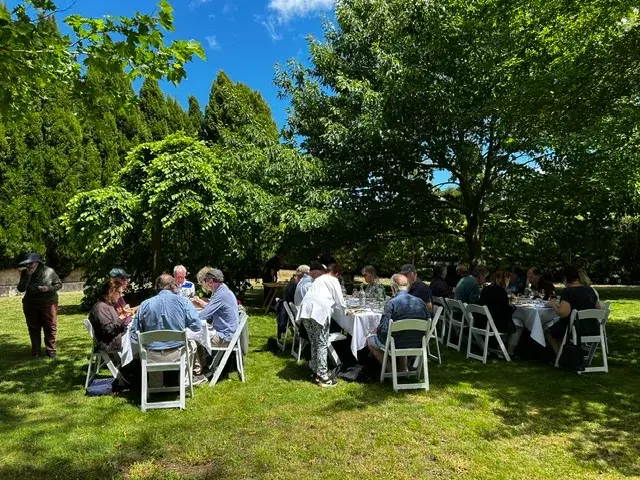
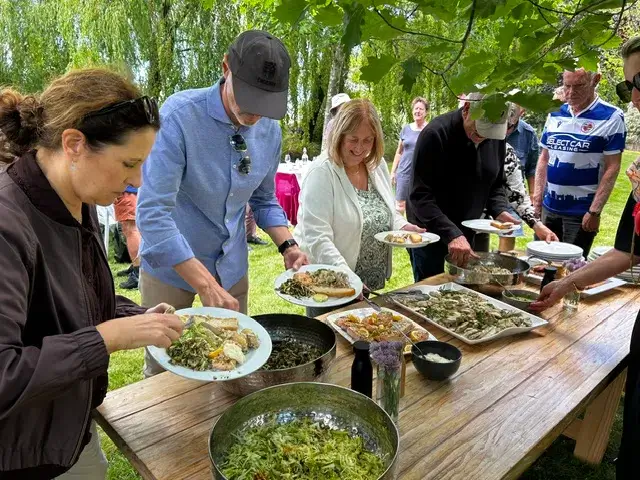
And then it was lunch – a lovely buffet of salads, chicken and salmon, with of course their wines, followed by some peitit fours with which we tasted their F Series Auslese Riesling. Everything was fresh, full of flavour and the whole atmosphere was wonderfully relaxed. Framingham wines are sold in the UK, including by Tim, but not everything we tasted is available now (particularly older vintages), which made it a very special occasion.
.
Tim warned us that our next visit would be on a very different scale. Twenty mintues drive took us to the Wine Studio, a wine making facility where independent wine makers can share equipment to make their wines, and store their maturing wines. Here we met Jaco van Hensbergen, who came over to New Zealand in 2014 with his wife Sandra to ‘do a vintage’ (they had been sommeliers in Holland), and never left. They lease vineyars in the Awatere Valley, and Jaco helps other wine growers out. They are totally focussed on getting the very best out of their vines, and doing as little intervention as possible in the winery.
.
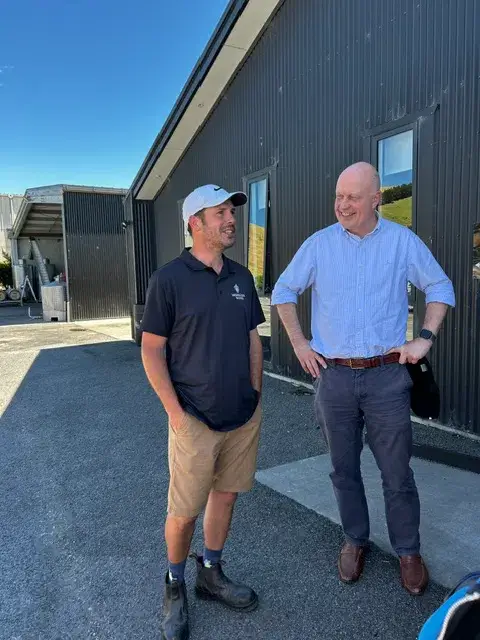
We tasted their Chardonnay, Sauvignon Blanc, Chenin Blanc and Pinot Noir, all from the 2024 vintage, and were fascinated by the huge attention to detail Jaco described he pays to his vines. He will ‘riddle’, ie turn, bunches of grapes half way through ripening to ensure evenness, he only picks grapes which means he may have four different pickings (a month apart) of the same variety fermenting in different vessels. The wines were lovely, and Jaco was a very entertaining speaker.
.
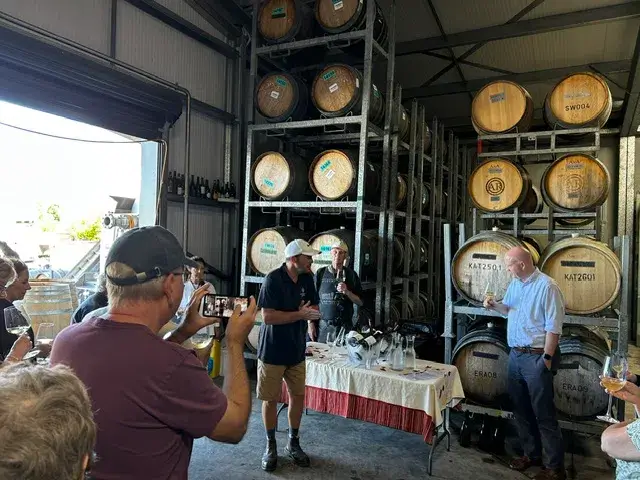
We finished with a tasting of 2026 wines from barrel. The Chardonnay was going through malolactic (a first taste of this for most of us), and we tried Pinot from barrels made by different Burgundian coopers. Jaco is at the start of his wine making career, and his fascination with the variables he can play with was compelling. It would be wonderful to return in a few years to see how he and Sandra are doing.
.
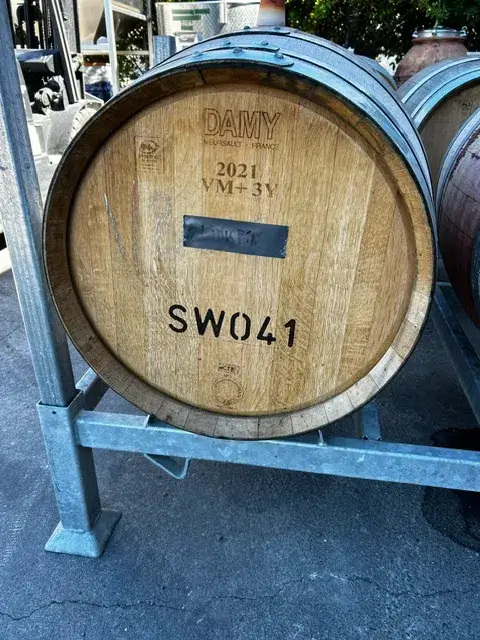
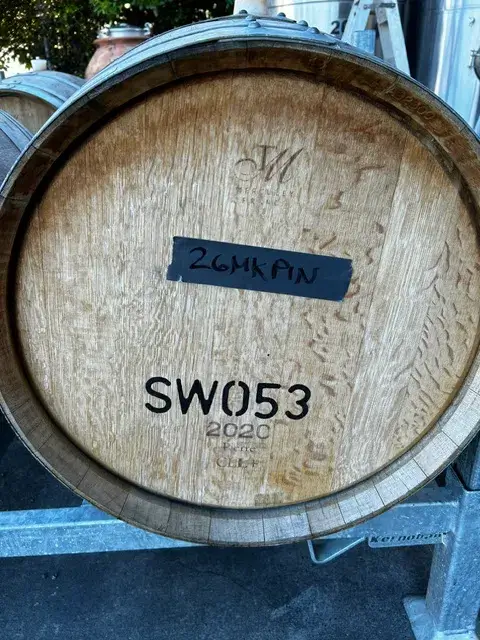
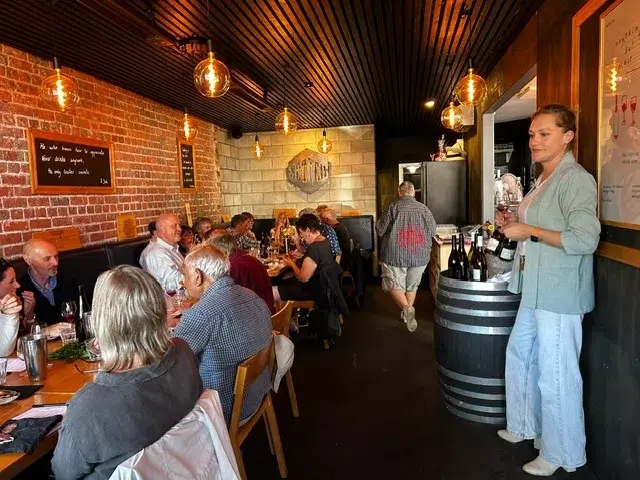
It wasn’t too far to our hotel in central Blenheim, and having settled in we walked over to the Scotch Wine Bar for a super tasting with Marie Navailles. Marie, a highly respected oenologist, came from France in 2019 and settled here with her family. She makes wines, picking selected parcels of grapes at different growers, and the wine bar serves as her major outlet. We were treated to a tasting of five lovely wines, a Pinot Gris, a Chardonnay, a Sauvignon Blanc and two Pinot Bars with a series of beautiful canapés, and Marie explained her philosophy and winemaking to us as we imbibed. Over a few more glasses and canapés we hung out for a bit longer and then wandered back to the hotel, it was a lovely evening.