
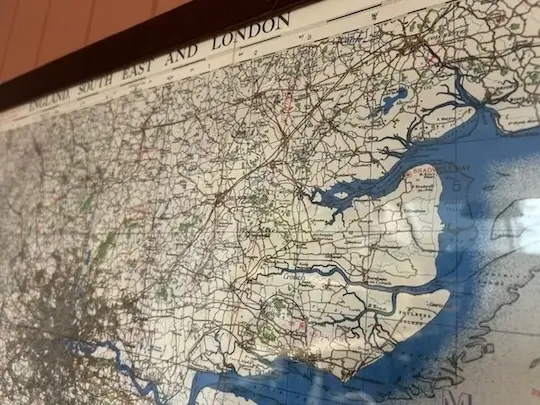
Last week a group of us visited the Crouch Valley in Essex. Increasingly in the wine media, the Crouch Valley is referred to as England’s best region for growing grapes for still wine, and we wanted to find out more. On the recommendation of Charlotte Surguy, DipWEST, a wine tour regular, we had engaged the suitably named ‘Crouch Valley Wine Tours’ to lead our exploration. We had the most wonderful three days, as packed an itinerary as any of Tim’s tours, meeting fantastic people and drinking some beautiful wine.
Graham and Caroline Martin, our hosts, in addition to running tours also own the Martin’s Lane vineyard, which was established in 2008 by a group of families under the leadership of Roy Martin (Graham’s cousin), who died in 2023. Roy was clearly an inspirational figure in the Crouch Valley wine community, many of the people we met talked about the advice he gave, and the leadership he showed in creating the Crouch Valley Vineyard Association.
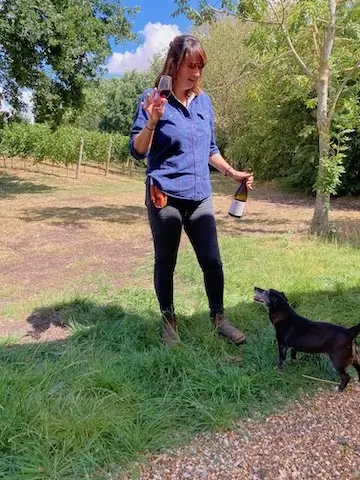
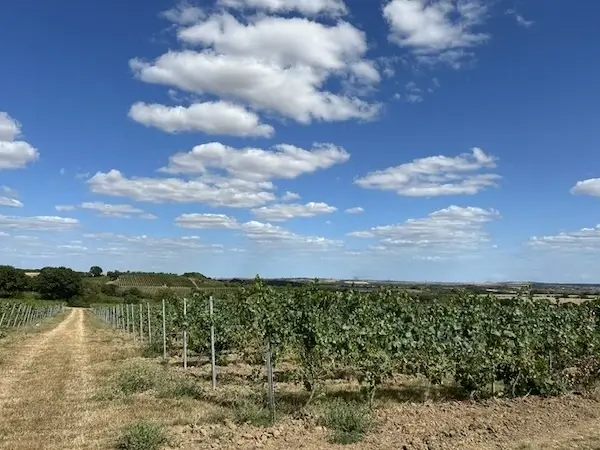
Our first visit of the tour took place in their vineyards, on a gentle south facing hillside looking down to the River Crouch, and here we learnt about the significance of the heavy London clay soils, which had initially seemed to be a very good reason not to attempt to grow noble grape vines (as many Sussex wine growers told them at the time), but turned out to be the source of the area’s success in ripening high quality grapes. As many London gardeners (and farmers) know, clay’s water retentive qualities are more bane than benefit for most crops – when wet too sticky to cultivate, when dry split by horrendous cracks. These conditions are a nightmare for livestock or arable farming, so some plucky locals were willing to give grapes a go (particularly because Essex has the highest level of sunshine and warmth in the UK, essential for ripening grapes).
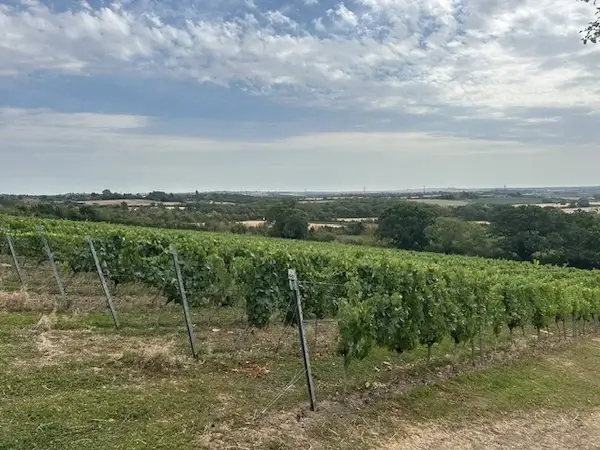
Duncan McNeill, their consultant viticulturalist came home to the UK following a career in viticulture in Germany, New Zealand and Australia, and learnt from scratch at Martin’s Lane how to get the best from such unpromising soils. As he explained to us it was worth it (and the learning goes on). My understanding is that clay retains water particularly cleverly from a vine’s point of view. Deep in the soil the clay does not dry out, and the vine’s roots go deep to get to the moisture – ensuring all the complexity of the mineral composition of the soil is available to aid vine nutrition. Higher in the soil, even after rain, the charges of the particles making up the clay cling on to water, and do not release it – discouraging root formation too high up. It’s still a nightmare to work the soil, particularly on slopes, so a lot of work goes into improving soil health through cover crops and minimal soil disturbance, and what do you know, virtually everything (at Martin’s Lane) is done by hand.
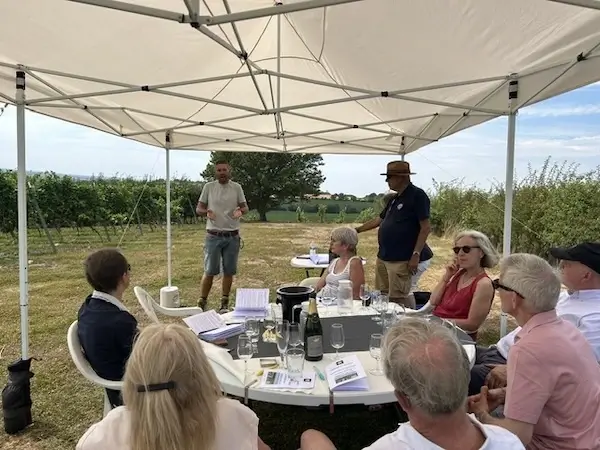
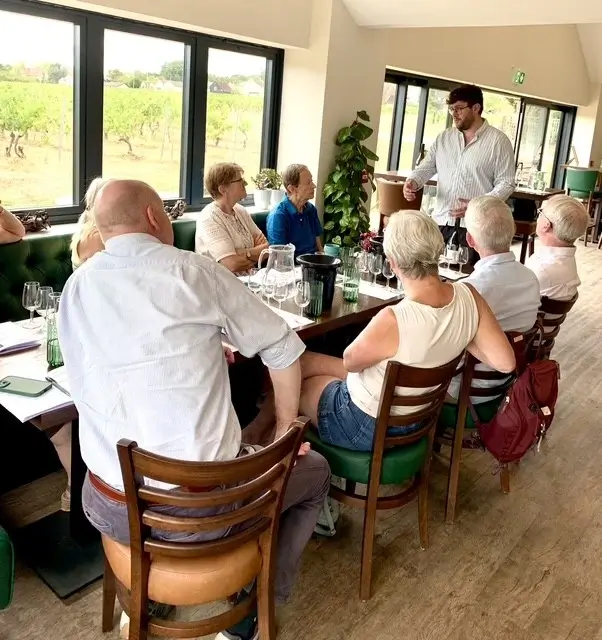
We enjoyed five of their wines at the top of the hill, which absolutely set the standard for the rest of the tour. The traditional method blanc de blancs from 2017 had great complexity and a beautiful finish, the 2022 Pinot Gris which had seen some oak was beautifully ripe, fresh and very gastronomic, the 2022 Chardonnay had super acidity and a minerally finish, and the two Pinot Noirs showed a fantastic contrast between the 2022 and 2024 vintages – the 2022 (named Founder’s Reserve as it was Roy’s last harvest) was my favourite. All were extremely high quality and we agreed that if we had tasted them blind we would have placed them firmly in French or even New World regions.
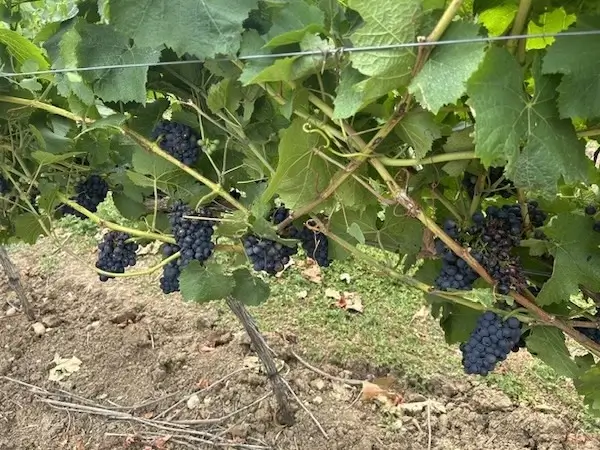
This set the standard for the rest of our visits, and none disappointed. I won’t try to detail each one, but each had a highlight and added to our knowledge (and enthusiasm) for the wines.
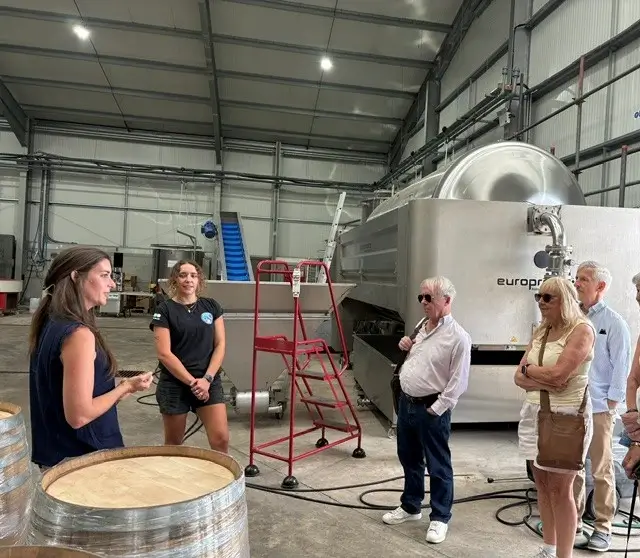
We learnt about wine making from Matt Cooper of Hollands Vineyards (over lunch at the Prince of Wales pub) and working at large scale from Nick Speakman at Missing Gate.
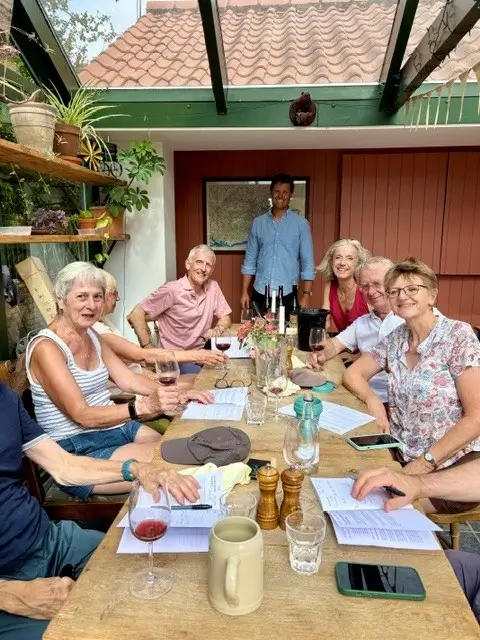
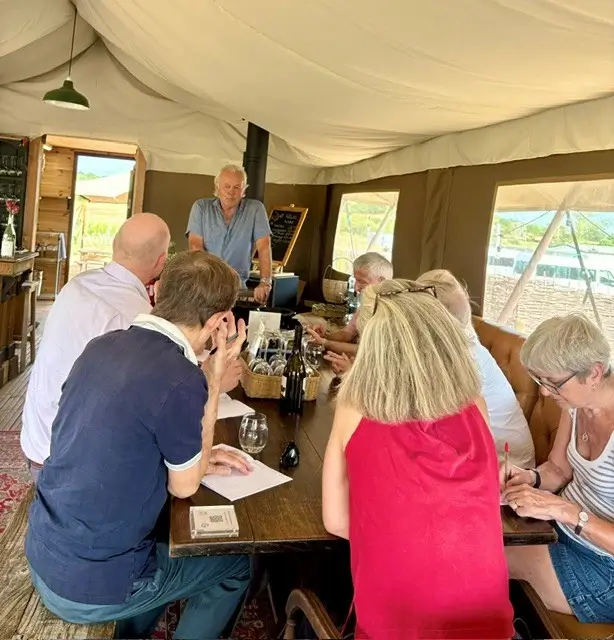
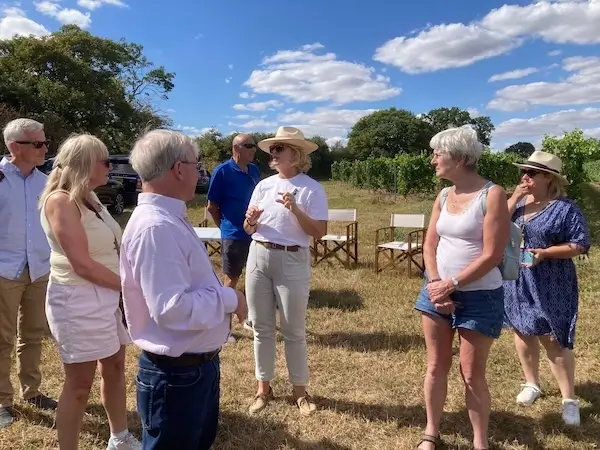
On day 2 we discovered why Sauvignon Blanc is working so well in the region from Emily Wilsden at Creeksea (if you are planning a party or wedding definitely check this lovely place out), had a masterclass in vineyard management from ‘vine mother’ Louise Brown at Althorne, discovered the wines of Crouch Valley’s most famous winery Danbury Ridge over lunch at the Purleigh Bell Pub, learnt about some of the first diversification from farming into vine growing from Dale Symons at Clayhill, where we also tasted wines from the other side of the Crouch Valley made by Umut and Katie Yesil at Riverview, and learnt about outside investment (from the respected Jackson Family Wines) from Charlie Holland at Marbury.
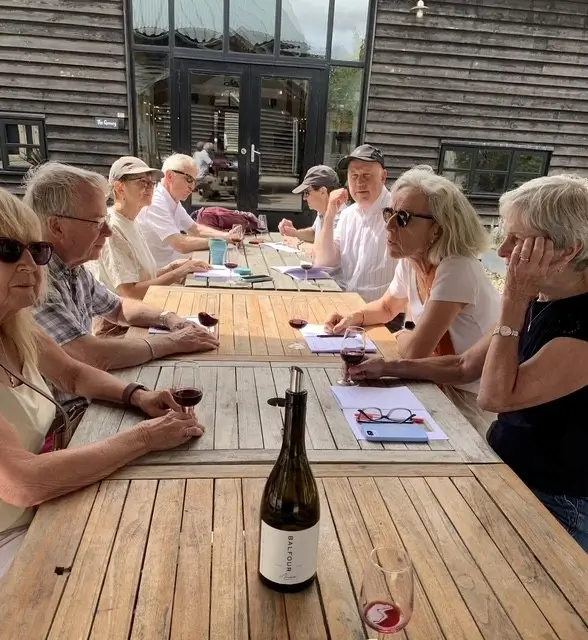
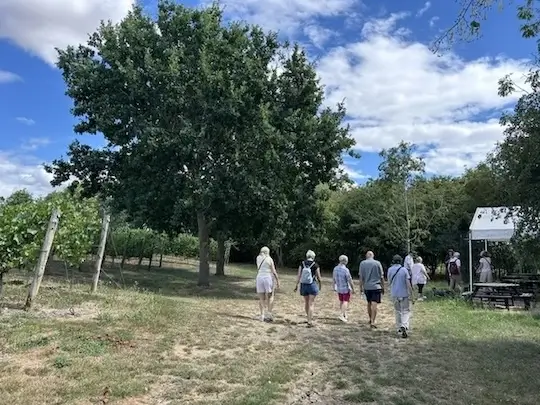
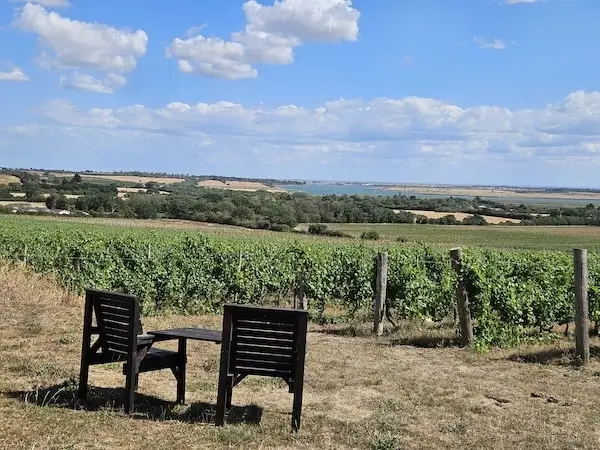
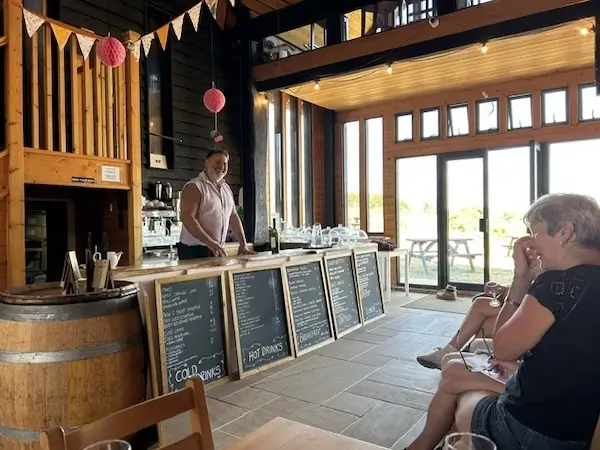
On day 3 we discovered where it pretty much all started at the Greenwood family’s New Hall Wine Estate, learnt about the importance of ‘custom crush’ from Sam Kemp who popped over from the RAD Custom Winery by London City Airport, had another view of diversification from farming from Ross Lonergan at Crouch Ridge Estate (over a delicious alfresco lunch overlooking the vines and river), and finished at Crow’s Lane with a masterclass from Debbie on how to start something from scratch, and what a wonderful community of people is in the Crouch Valley, ready and willing to help.
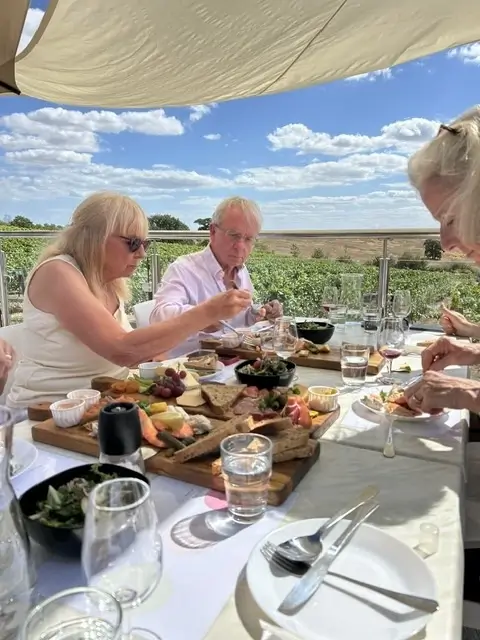
I can’t detail all the wines, but the quality of what we tasted was so beyond our expectations it’s hard to articulate. Great flavours and concentration, lovely alcohol levels, beautiful freshness and balanced acidity. A constant theme at our visits was the frustration that so much of the fruit grown in the Crouch Valley is actually sent to other regions of England to be made into wine. Some of this is labelled attributing the source of their grapes to Crouch Valley and but some isn’t. Moves are afoot in the valley to create more wine-making capacity, and it is a place buzzing with change and ambition. I had high hopes for our visit, but the degree by which these were surpassed was incredible. Our group agreed we must
1. Visit again in a few years to enjoy the progress that will have been made.
2. Drink a lot more Crouch Valley wines in the meantime.
If the above gives you a taster of why you must visit the Crouch Valley before too many other people discover it, please contact Caroline at Crouch Valley Wine Tours. She and Graham are wonderful hosts, and can put together tours for pretty much any group size. Don’t wait too long (though maybe give them a break over harvest which is starting early this year). Her email is info@crouchvalleywinetours.co.uk
A note on logistics: we travelled by train from Liverpool Street to Wickford, and then enjoyed being transported by a very comfortable small bus to all our visits. We stayed in Maldon, which has a nice selection of pubs and hotels, we could have stayed in Chelmsford, or in any number of country houses/accommodations. The self catering accommodation at Creeksea looked particularly nice.