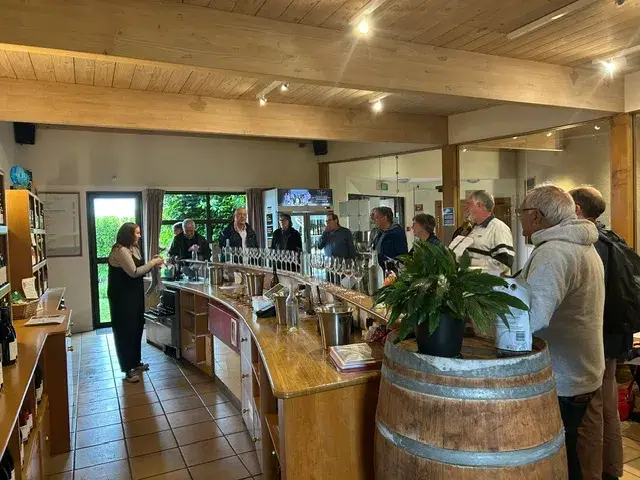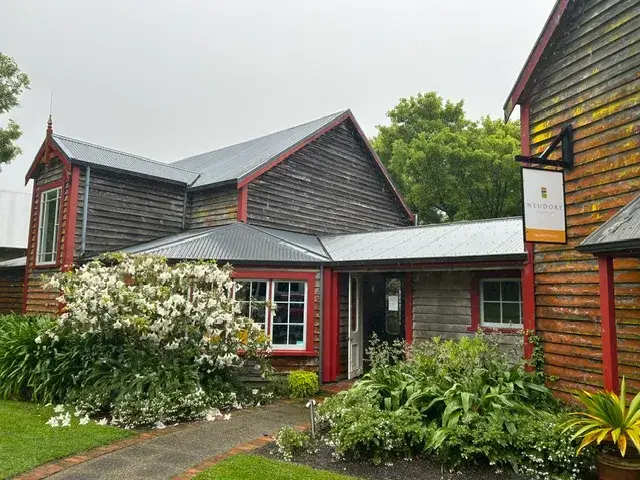
Our first day of visits on the South Island took us to the Moutere Hills of Nelson. Nelson was the first area to be planted with wine grapes in the South Island (in the nineteenth century), and modern winemaking got started in the 1970s – well before Marlborough or Central Otago. We visited the two pioneers of Nelson winemaking: Neudorf and Seifried.
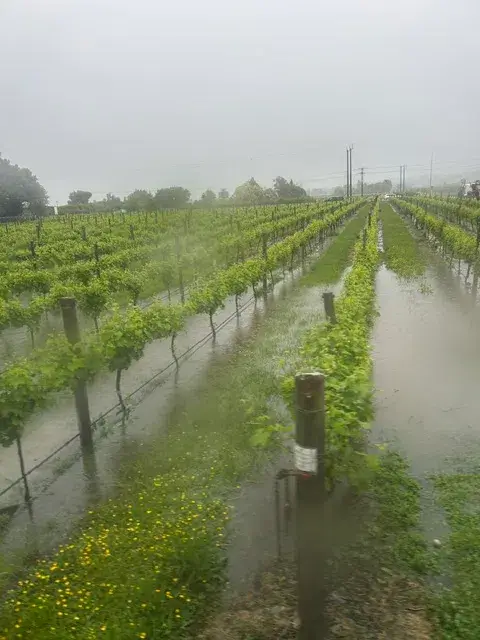
Nelson shares the record for the highest number of sunshine days in New Zealand, but today was not one of them. It poured. Sadly we could not see much of the pretty scenery of hills and bays as we drove west from Nelson city, and we were relieved that Neudorf have a watertight roof over their verandah overlooking the Home Vineyard.
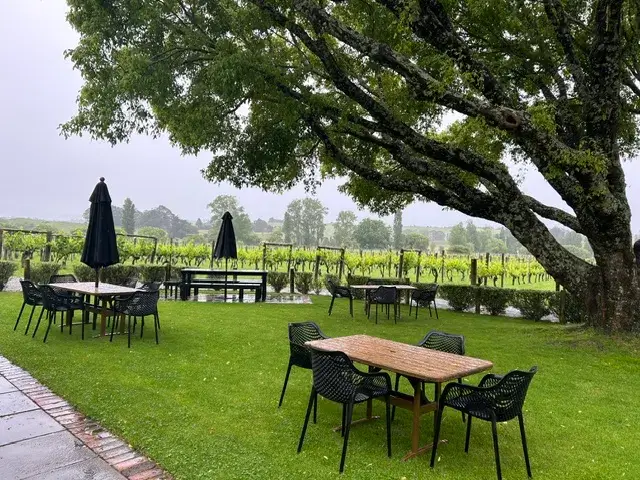
Rosie Finn, daughter of Judy and Tim Finn who founded Neudorf told us about their family history. Tim’s family came from India after partition, and while studying for a Masters in dairy cow psychology (I might have embellished that bit) he was inspired by colleagues in the viticulture department to get involved in the nascent wine industry. He and Judy (who had a career in journalism) chose Nelson, and the town of Neudorf (originally settled by German farmers) for its sunshine and long growing season and their homestead for the north facing sloping hills. Tobacco and hops were already growing locally which suggested vines would do well. The bank didn’t agree and they found it difficult to get a mortgage!
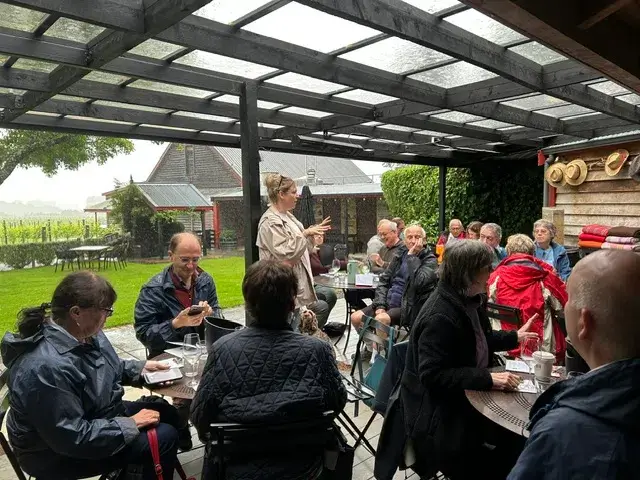
Experiments with different grape varieties, and different clones, led them to focus on Chardonnay and Pinot Noir, which they planted in the late 1970s and nearly 50 vintages on it was clear the bank manager was very wrong. Neudorf have a fabulous reputation, they are sold by the Wine Society in the UK, and their single vineyard allocations run out very quickly.
As we tasted through a selection of their wines Rosie described how she came back from the UK to get involved in the business, gradually taking on more of the sales and marketing side from her mother. Her dad died last year, but winemaking had been in the hands of Tod Stevens (now their General Manager) for several years and they continue to focus on their signature which is to keep winemaking restrained and let their lovely fruit express itself.
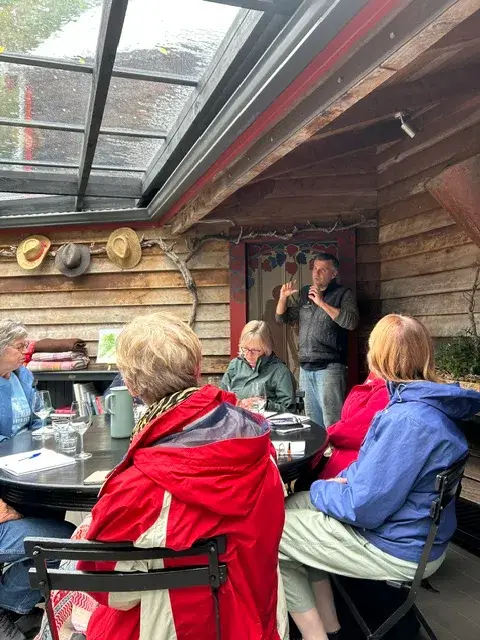
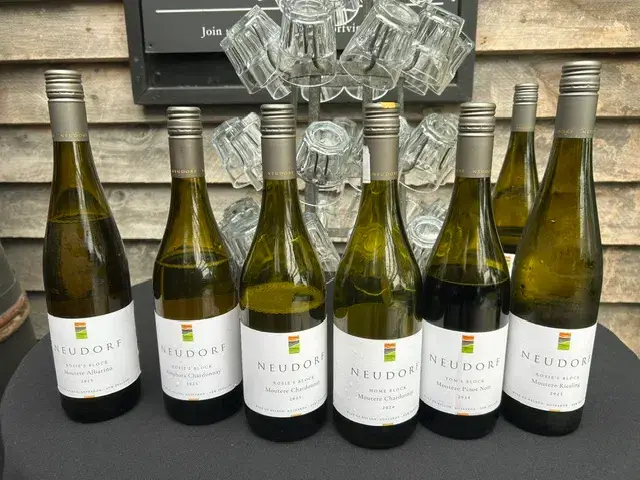
This showed through in the Albariño we started with, three single vineyard Chardonnays, a single vineyard Pinot Noir and finally a late harvest Riesling, which Reuben, their cellar manager, knew we would enjoy. We had enjoyed their Tiritiri Chardonnay at dinner last night.
Tod also talked to us about winemaking, including their use of amphorae, hand picking of the single vineyard vines, and spontaneous fermentation for all their wines. All the while, the rain poured, but we didn’t mind. Tim had to chase us out of the building and back onto the coach.
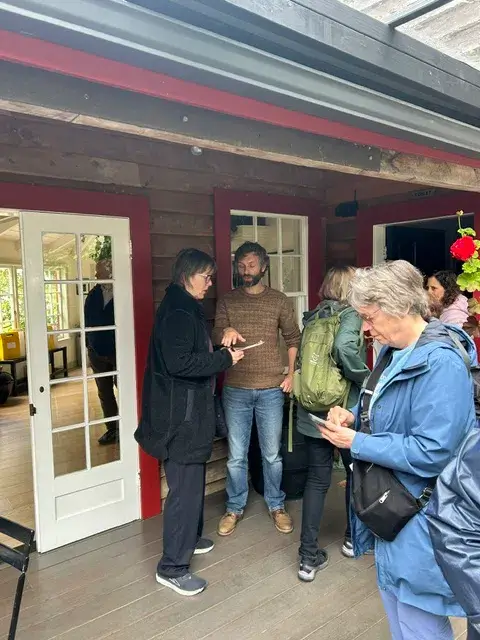
We had lunch at the Boatshed Café back in Nelson, a glorious celebration of seafood (and lamb), with some Neudorf wines.
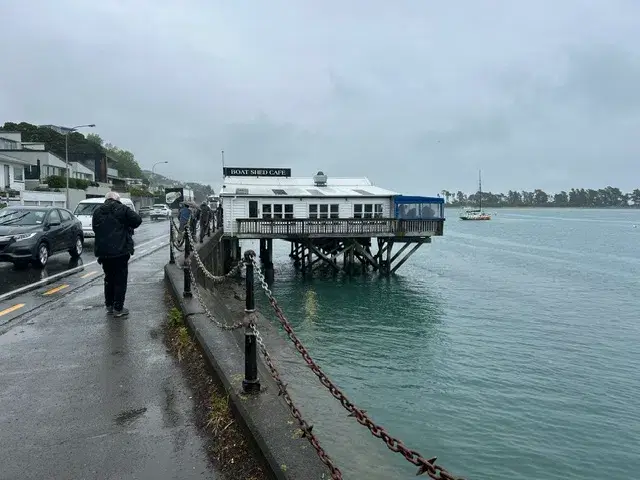
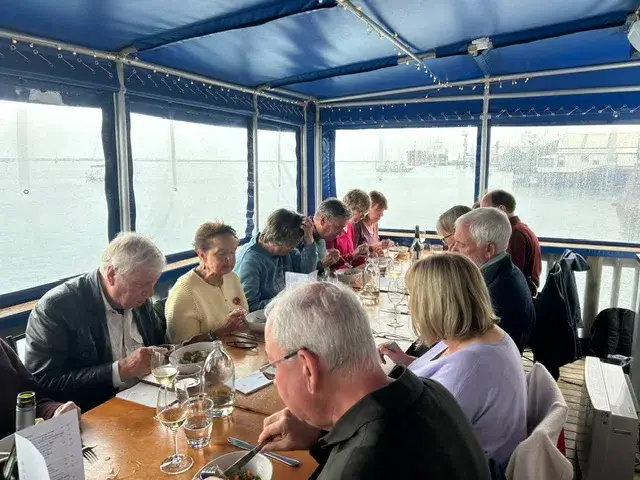
Then it was back to the vineyards, this time to visit Seifried Estate, the very first winery in the region. Herman Seifried migrated from Styria in Austria in 1971 to work in fruit growing. He fell in love with Agnes (who came from Southland), they married and became the original pioneers of South Island vine growing and winemaking, planting their first vineyard in 1973. Rosie at Neudorf told the story of Herman working with her dad to create a vine grafting machine that would speed up their planting efforts. The three Seifried children now run the business which encompasses 325ha of vineyards, selling wine locally and internationally (it is widely available in the UK).
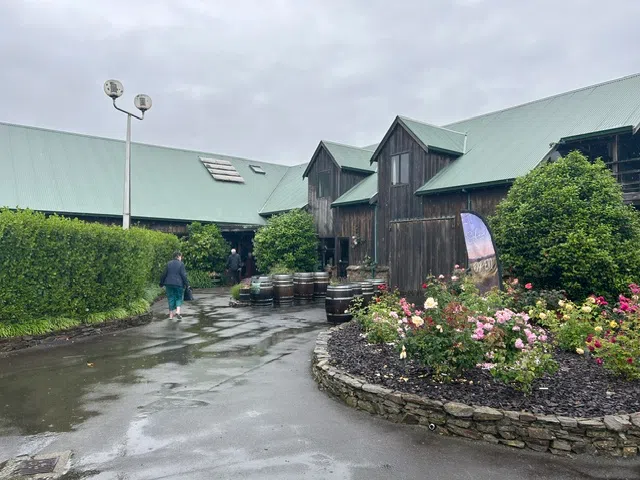
Our tasting was led by Thalia, who was wonderfully informative, explaining that the Müller-Thurgau that Herman and Agnes had originally planted had been replaced by more ‘noble’ varieties such as Chardonnay and Sauvignon Blanc, but Herman’s Austrian roots showed in the Grüner-Veltliner and Zweigelt that we tasted, and the Würzer – a hybrid of Gewürztraminer and Müller-Thurgau, which had a very attractive off dry flavour.
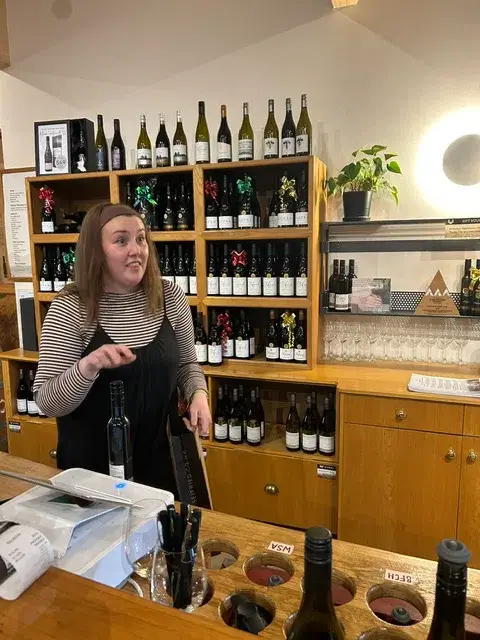
Older vintages of their dry Riesling, a Cabernet Franc and finally the Agnes sweet Riesling showed the quality of their vines and winemaking and we made quite a few purchases before heading home for the evening. The weather forecast looks better for tomorrow – fingers crossed!