

We assembled at Barcelona Airport, some of us flying in that morning, others having already been enjoying Catalunya’s many sites, sounds and tastes!
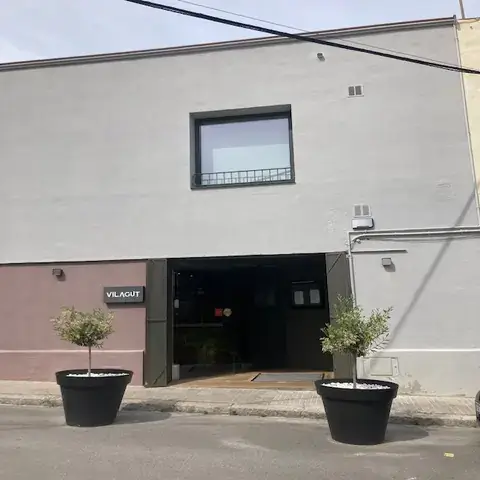
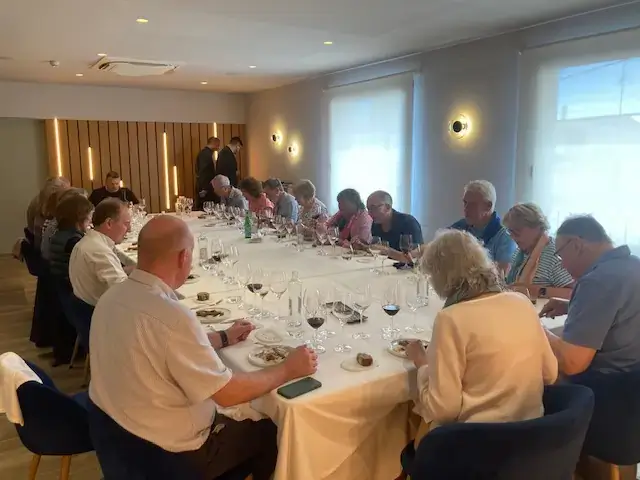
Onto our bus (a particularly nice bus, Tim was proud to note) and straight along the coast to Vilafranca de Penedès, where in the most unassuming place we had the most magnificent lunch. The Vilagut Restaurant put on an eight course menu, accompanied by four lovely wines, including two cavas from Cava Rovellats (our next destination) a Xarel-lo still white wine and a Merlot/Cabernet Franc blend, all of course from Penedès. The food was magnificent, the portions perfect in size, and it really set the scene for the quality of food and wine we will be experiencing over the next three days.
Cava Rovellats has been built by the Vallés family over the last century, exactly in line with the growth of Cava itself. The ‘traditional method’ of making sparkling wine having been brought to Spain, and phylloxera having provided a clean start in the vineyards so to speak, they planted white grape varieties in the grounds of their summer house in Alt Penedès, and now have 52ha of vines, and plan to plant more. They are still tiny compared to the likes of Cordoniù and Freixenet, but are very well regarded in Spain, and we found out why.
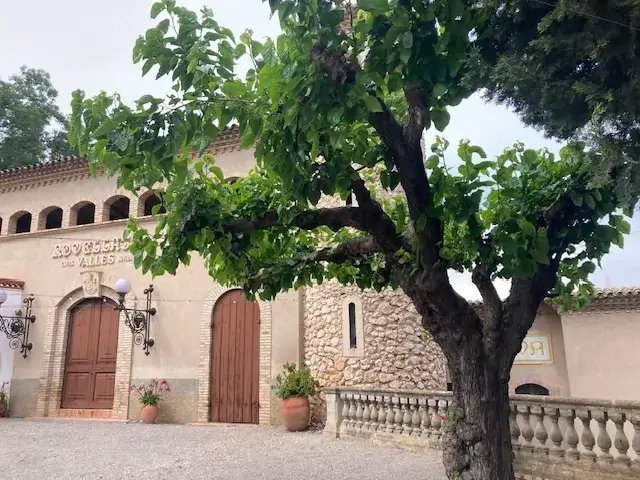
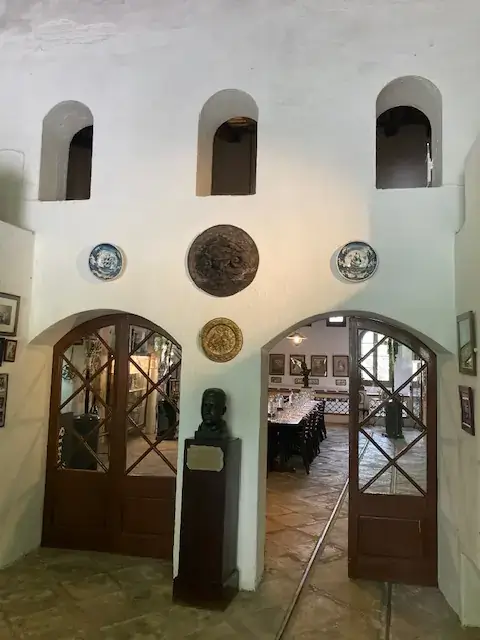
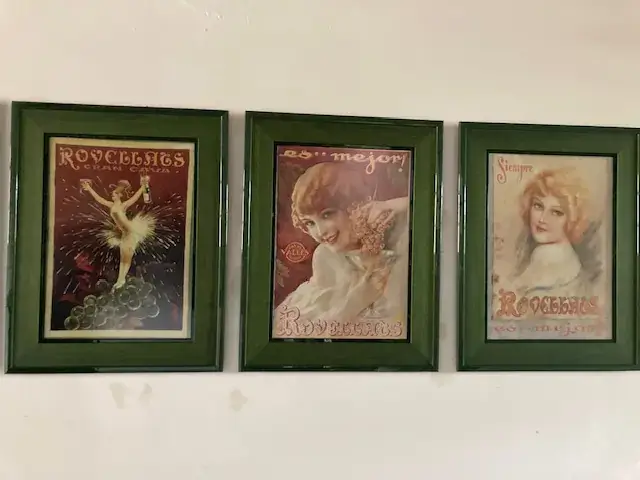
Our guide, Jef, told us about the history in the courtyard surrounded by mulberry trees, and we then explored the winery, built in the Modernist style in the 1900s. We walked through the old house where winemaking had taken place, but was now used for tastings, and a display of their advertising posters (now replicated on the cap of their top wines and very much valued by collectors!).
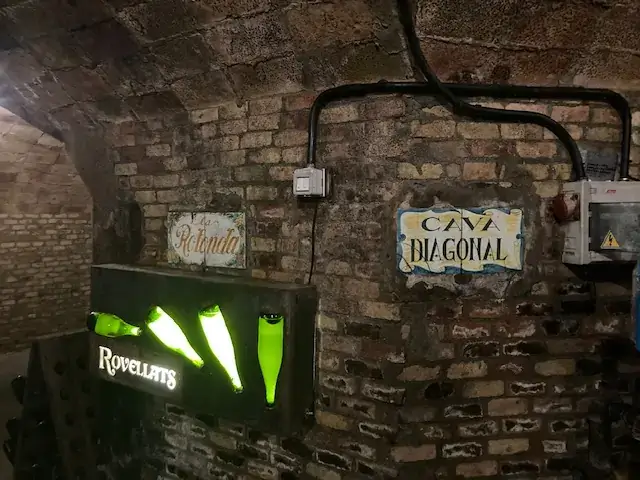
Down a long flight of steps into the cellar, called the Rotunda, its design based on the star shape of the catacombs of Paris. At the intersection of the tunnels, which hold the million plus bottles at any point undergoing secondary fermentation, Jef reminded us of the process of making Cava, and told us that Rovellats Cavas undergo at least 18 months of secondary fermentation, compared to the 9 months minimum required by the Cava DO.
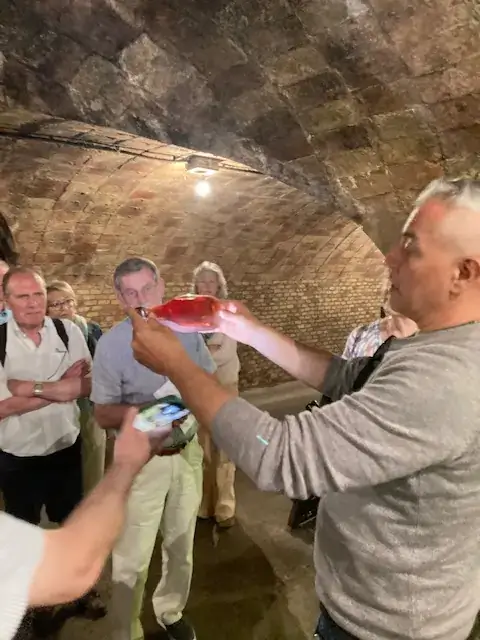
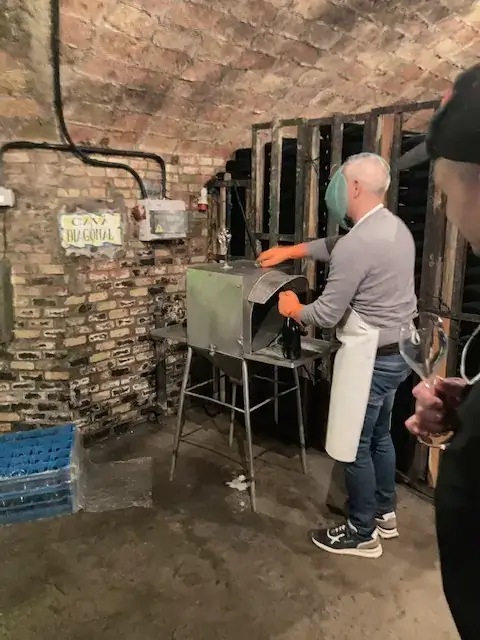
Using one of their superior cavas, which has been resting on its lees for 36 months, he demonstrated disgorgement (with the help of some PPP), and we tasted the bone dry wine with the green apple taste typical of Cava and were told the recipe of the liquer d’expedition, the top up that replaces the lost wine after disgorgement and includes any additional dosage, was a closely held secret known only to the owners and winemaker.
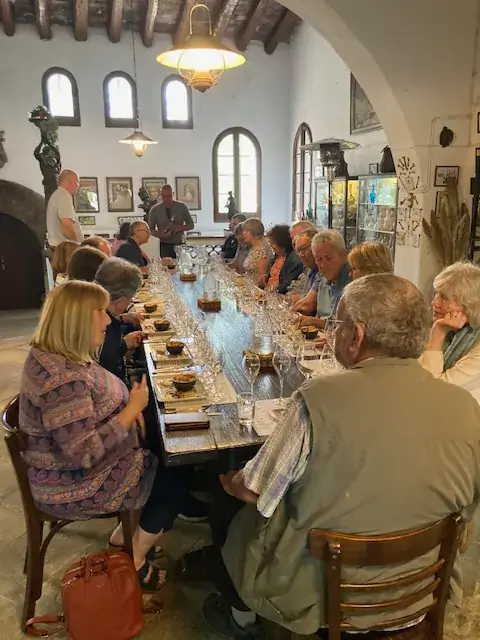
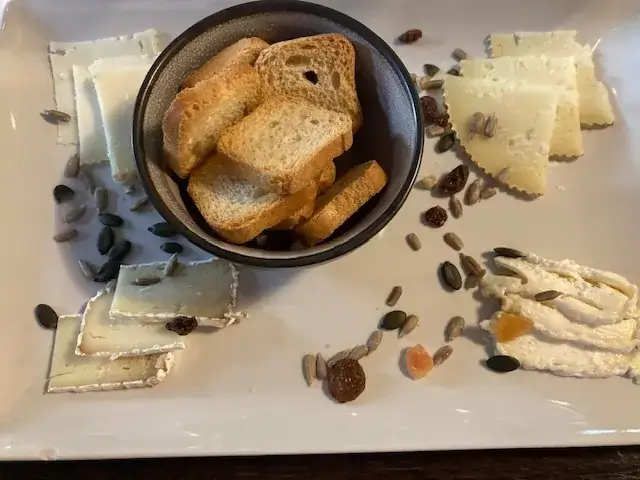
Back up in the tasting room we enjoyed four of their cavas, of increasing lees ageing, matched with four lovely local cheese. Jef explained that they always print the date of disgorgement on the bottle, as they believe their wines are best drunk within two years to ensure perfect freshness. All the wines were lovely, supporting Jef’s mission to ‘prove’ that Cava is at least as good as Champagne. We finished with one of their top wines, the 2017 vintage of the Gran Reserva Col-lecció, disgorged in December 2024, which was stunning.
We were very sorry to leave, but we were happy to check into our hotel in Altafulla, a very pretty coastal town, and to enjoy a drink on the rooftop terrace before a very welcome early night!