

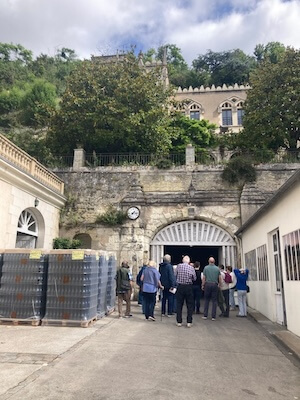
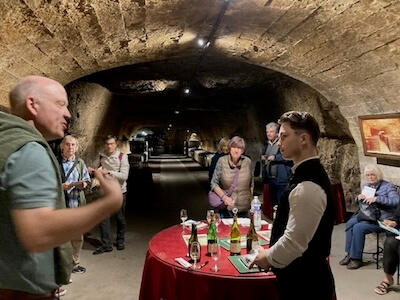
It was a quick hop from Tours to Vouvray, and we arrived at Marc Brédif, on the banks of the Loire River, at 10.30am promptly. The eponymous founder gained a stellar reputation in the early 20th century for both Vouvray and Chinon, and pioneered sparkling Vouvray. Their 2km of cellars, which have been dug from the local limestone tuffeau since the 10th century go back from the pretty Romance buildings, and were the location of both our tour and tasting.
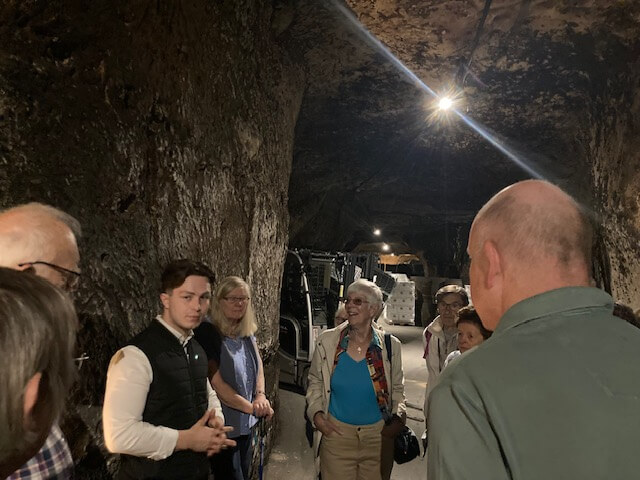
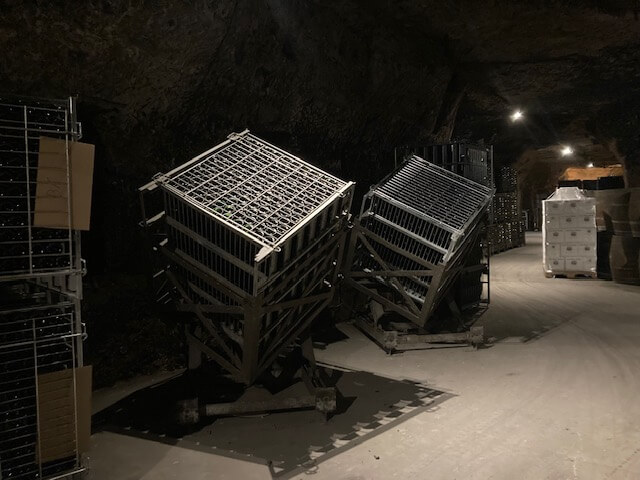
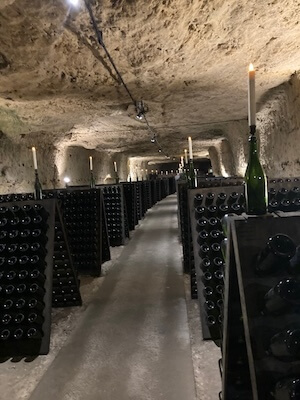
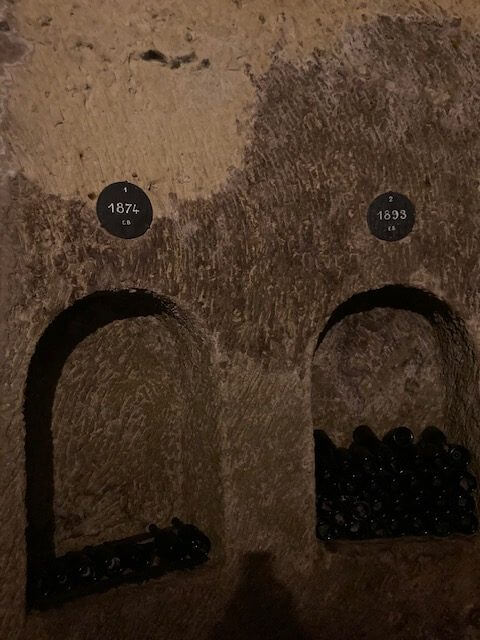
Our guide was Artur, and he led us on a route through the cellars, explaining that their depth (40m below the vineyards at the top of the cliffs) create the perfect conditions for storing wine – constant low temperatures and 60% humidity. We passed some of the 1 million bottles stored there, all containing Chenin Blanc wines. Some were in the process of riddling (destined for sparkling production), some in giropalettes others in manual predecessors pupitres. Others were simply stacked up, gathering dust, waiting to be washed, labelled and shipped. Brédif, now owned by De Ladoucette of Puilly Fumé fame, are justly proud of their reputation for wines that mature beautifully with age, particularly their botrytis affected ‘noble’ sweet wines, and in the Rotunda, deep in the cellars, we saw bottles from the best vintages of the preceding centuries – the oldest dating from 1874.
Since 1986 these noble wines have been called ‘Nectair’, and we culminated our tasting with a 1989 vintage, which tasted as fresh and youthful as could be. Leading up to this we tasted their sparkling Vouvray Brut, the still dry white Reserve Privée, their Vouvray Classic with a hint of sweetness and the 2015 and 1984 vintages of the Grand Année Moelleux (late harvest rather than noble), which demonstrated the versatility of the Chenin Blanc grape variety, each had distinct character, including an almost truffle-like flavour in the older Grand Année. We also tasted their Réserve Privée Chinon from 2020, which was a classic – red and black fruits, capsicum, graphite and a lovely finish.
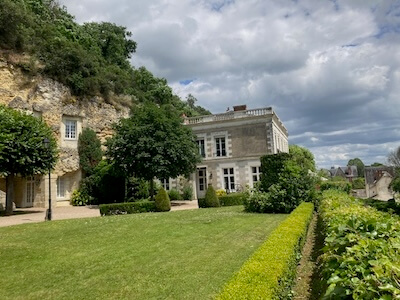
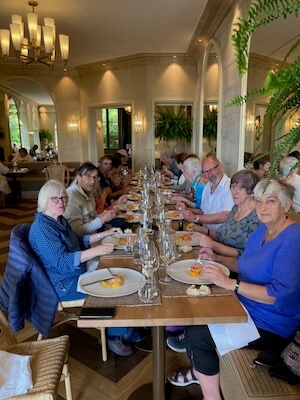
Lunch was next door in the Hotel les Hautes Roches, some of the building literally dug into the cliffs. It was a beautiful environment with lovely gardens, and our lunch of salmon and pork was perfectly accompanied by more Vouvray and a Saint Nicolas de Bourgueil red.
Fortified by some coffee, we had a short coach ride to the village of Vouvray, to visit Domaine des Aubuisières. Not quite such impressive buildings, or as long history as Brédif, but just as interesting. Charles Lesaffre led our visit. His grandfather founded the estate, but sold it to Bernard Fouquet in 1978, and developed its great reputation. Charles worked with Bernard from 2019, and bought the estate back in 2021 – a true ‘retour à source’! He is the winemaker, but with his wife Menehould also acts as a négociant: buying in grapes to make sparkling and sweet wines.
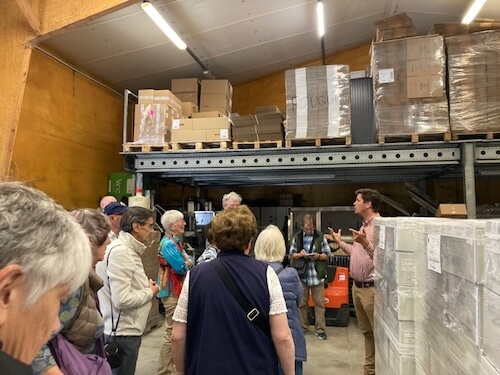
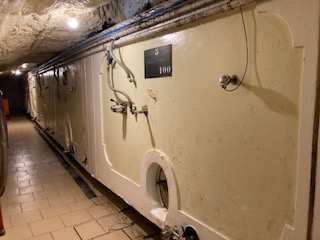
Charles is clearly an innovator. He is converting his vineyards to organic, and will be experimenting the the nearly abandoned Orbois variety – the only other white grape permitted in Vouvray wines. He has a variety of vessels in which he makes or matures his wines, including concrete and stainless steel tanks, oak barrels, amphorae and glass demi-johns. Each produces a different set of conditions for the wine: the material determining the amount of air that can come into contact with the wine and the shape creating movement of the wine which enhances its interaction with any lees.
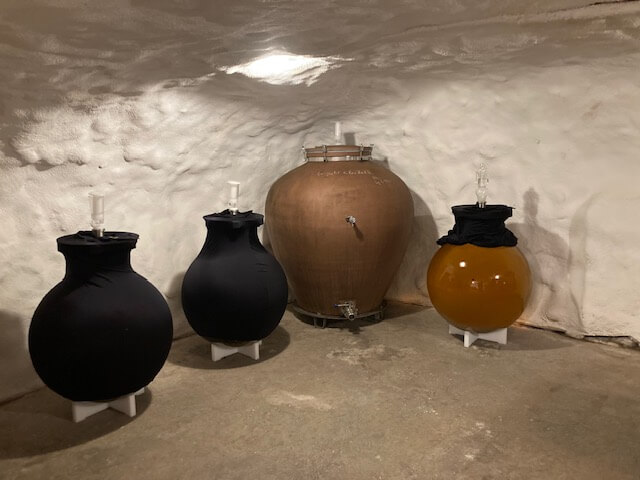
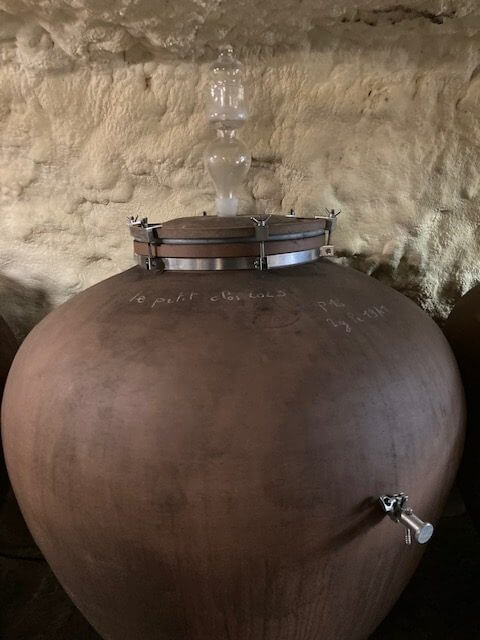
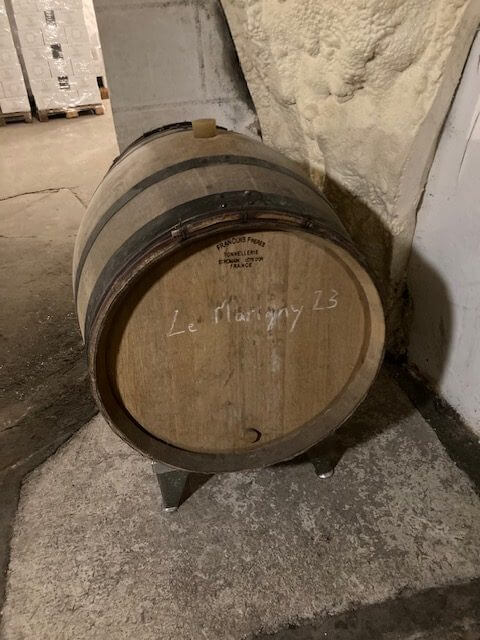
We again tasted in the cellars dug into the tuffeau, though these were more recent and not as extensive. It was fabulous to taste three dry Vouvrays from the same plot of land, owned by the estate: Le Bouchet vinified in stainless steel tanks, Le Petit Clos in sandstone amphorae, and Le Marigny in oak barrels, and experience the differences between them, pretty much entirely due to winemaking. On the day the wine made in amphorae was the most popular with our group – a lovely combination of apply fruit, minerality and a really rich texture, but all three were very high quality and it will be great to see how they evolve over time.
The more basic Cuvée de Silex (which is widely available in the UK) was great introduction to the still wines, and their sweet wines were also great, and the whole tasting was enhanced by pairing each wine with local fish, venison, wild boar and cheeses – the beech smoked goats cheese with Cuvée Saint Jean Moelleux was particularly splendid. The tasting was top and tailed with two Vouvray Mousseux wines: a Brut Fines Bulles and a Zero Dosage from Charles’s first vintage, 2019. I’m generally not a fan of Zero Dosage fizz, but this was a beautifully balanced wine: the richness and flavour of Chenin not needing to be softened by any additional sweetness.
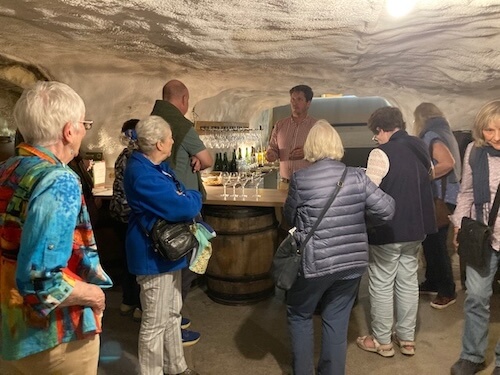
These were two visits of great contrasts and I think anyone who didn’t start the day a fan of Chenin Blanc was certainly one by the end.
We finished the day with our final night dinner at La Table de Château Belmont, across the river and up the hill. Unfortunately I completely forgot to take any photos, but it was a lovely meal and several people said some lovely things about how much they had enjoyed the tour. Lucky Tim, coming back next week!