
After our big day yesterday there was no let up. Back on the bus at 8.30, and south down the autostrade again, this time heading for the DOC Maremma Toscana. Tim gave a history of this region, which spreads inland from Grosseto and was a place where horticulture and livestock farming predominated. Vines had of course always been grown there, but it was the success of Bolgheri to the north that prompted serious winemakers to explore it more deeply.
Our first visit was to a very serious winemaker. Antinori is one of the most famous winemaking families in Italy (and beyond – we visited its Haras de Pirque estate in Chile during our South American wine tours in 2024 and 2025), instrumental in the creating the fame of Sassicaia, and very much at the forefront of Tuscan wine. In 1999 it bought the Le Mortelle estate, which until then had just grown plums and apricots. It is now one of the premium estates of the Maremma Toscana, and we had a wonderful visit.
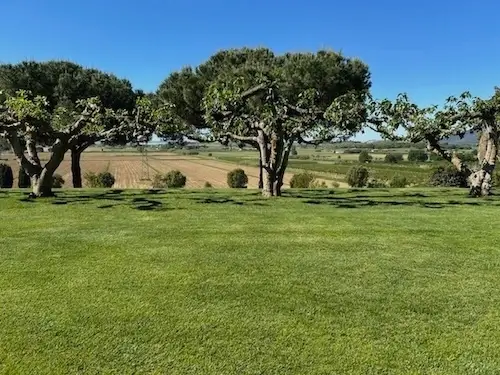
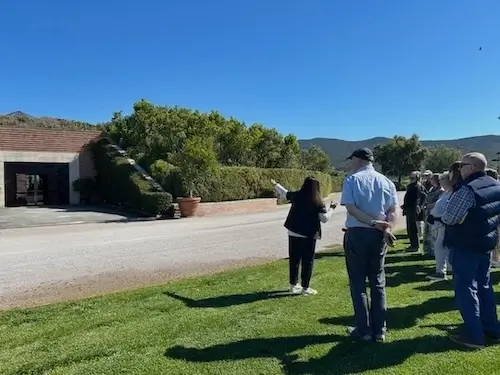
Our guide, Barbara, introduced the history in front of the old villa, with views out to the sea behind her. She then led us into their amazing circular winery which was completed in 2010. It replaced some old farm buildings but in its construction dug into a small hillside, and banked up earth above it so that it is virtually hidden from view.
High quality gravity fed wine production (avoiding the need for pumping grape must and wine ‘uphill’), is enabled by three floors. We entered, as the grapes would, on the top floor where after destemming, sorting and a light crushing for reds, they would descend through trap doors in the floor.
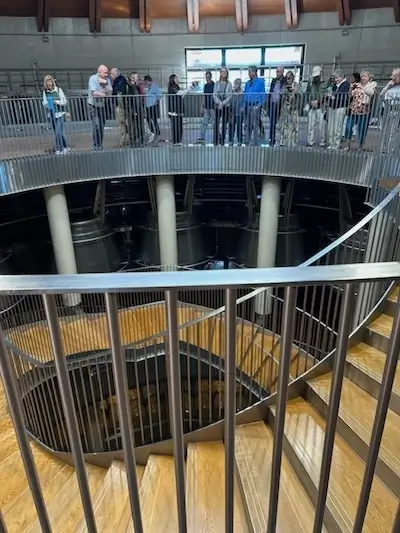
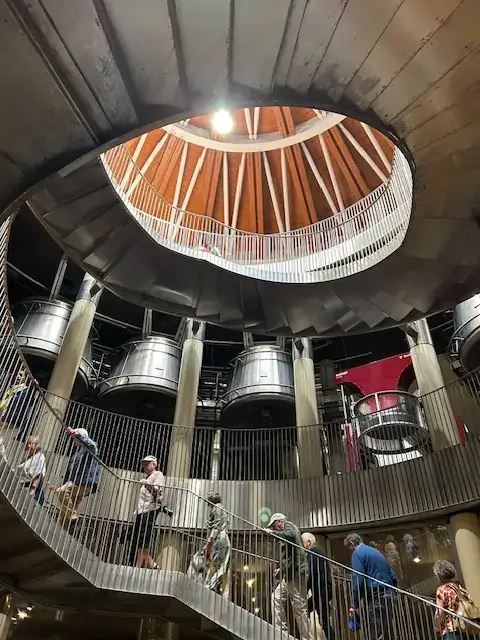
Down the spiral staircase to the fermentation level, we marvelled at the suspended stainless steel fermentation tanks, each fed by a trap door. These are shaped to enhance movement of the fermenting must, with an automated piston for punching down the cap formed from solids in the must, that rides a gantry to work on each tank in turn.
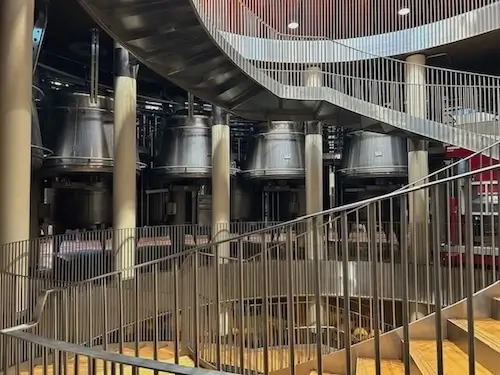
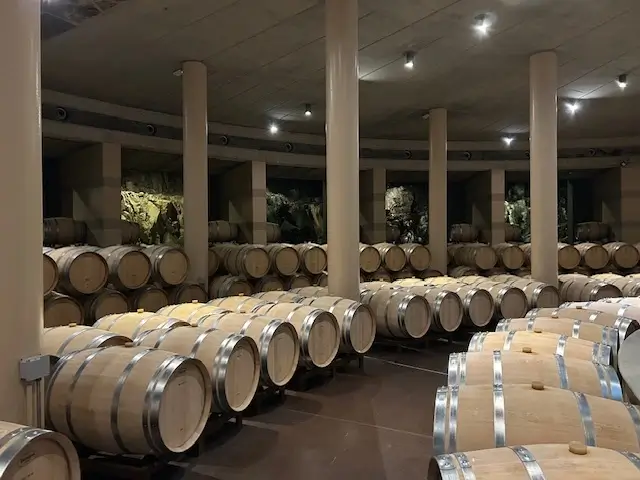
From these the completed fermentation exits through a tap at the bottom of the tank, through a filter, and into barrels, which we met when we descended another spiral flight of stairs to the barrel cellar. Exposed rock showed this was indeed dug into the hillside, though there are more convenient ways to enter it than the spiral stairs, helpful when moving barrels around. There were a lot of barrels, and we learnt that their top wines spend up to three years in first use barrels. They only use their barrels three times (luckily Antinori is big enough to find uses for them elsewhere).
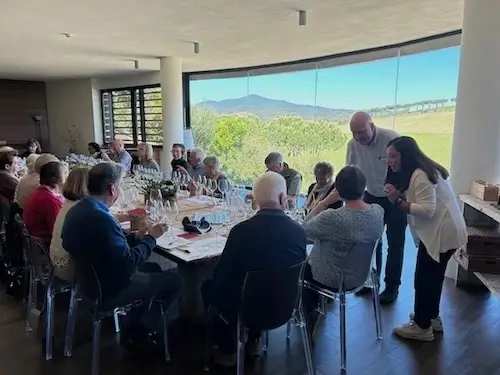
We ascended to ground level to enjoy our tasting in their beautiful glass sided tasting room overlooking the hill Poggio Alle Nane.
Our tasting was amazing, starting with Vivia, their white blend, and moving from their basic red Botrosecco to their top wines Poggio Alle Nane and Ampio. The wines were superb, and the reds absolutely showcased how the climate suits Bordeaux varieties – in particular Cabernet Franc and Carmenère. This was a wonderful visit, we hated to leave, but we had a date with another big name.
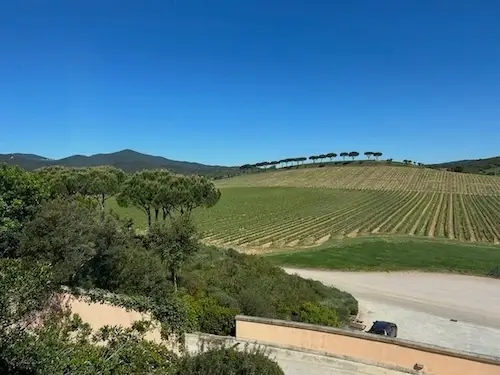
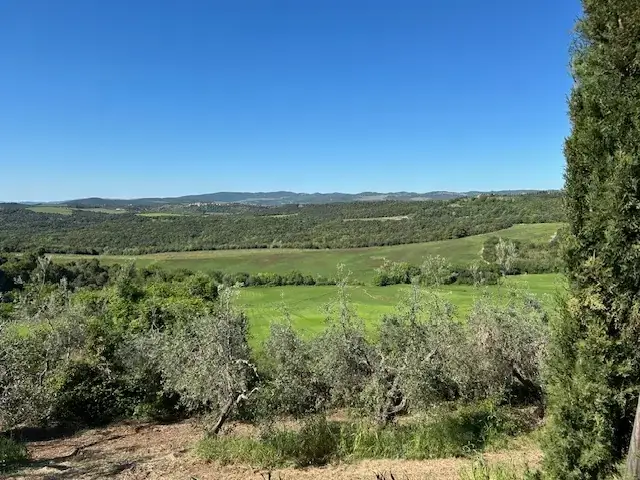
An hour’s drive back towards Siena took us to the Montalcino region. Famed for Brunello di Montalcino, a DOCG for 100% Sangiovese aged in barrel and bottle for five or more years, it is also a very beautiful place – Monte Amiata, an extinct volcano is to the south and lends it protection from wind and has created a variety of topographies, with vineyards enjoying beautiful sunny aspects that allow optimum ripening. While it has a long history in wine making, it was the Biondi-Santi family who ‘put it on the map’, dedicating themselves through the late 19th and early 20th centuries to perfecting their Sangiovese clone (Brunello), and their winemaking techniques (ageing in small barriques). However it was not until the 1960s that things started to take off and between 1961 and the current day the number of producers has grown from 13 to hundreds!
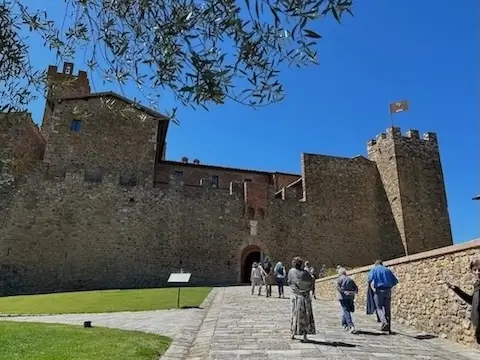
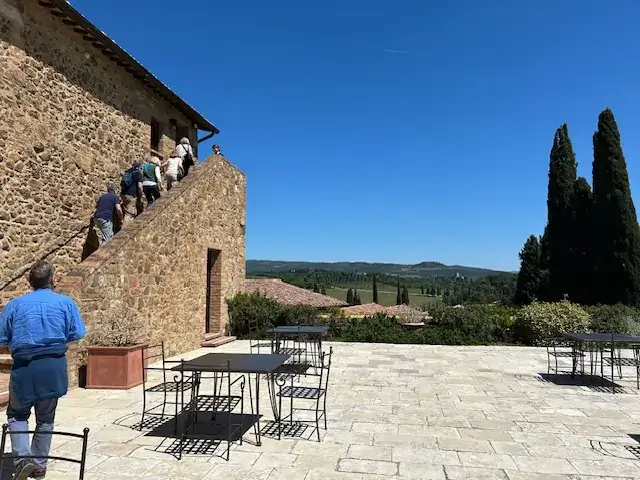
One of the early entrants was the Mariani family, Italian Americans who had a wine-importing business and were keen to return to their home country to make it themselves, and to honour their family member Teodolina Banfi (the first lay person to run the Pope’s household) by naming their company ‘Banfi’. They bought the estate of Poggio alle Mura, an old castle which sits atop a hill overlooking the Montalcino region in 1983, and in the subsequent 40 years have restored the castle, created some wonderful restaurant experiences, and acquired or planted 2,000ha of vines.
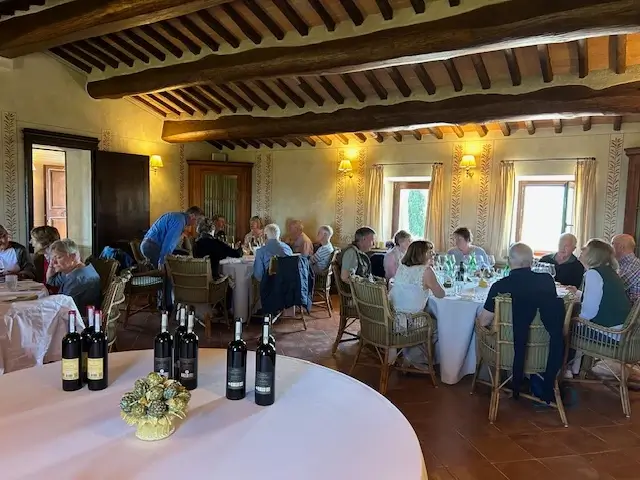
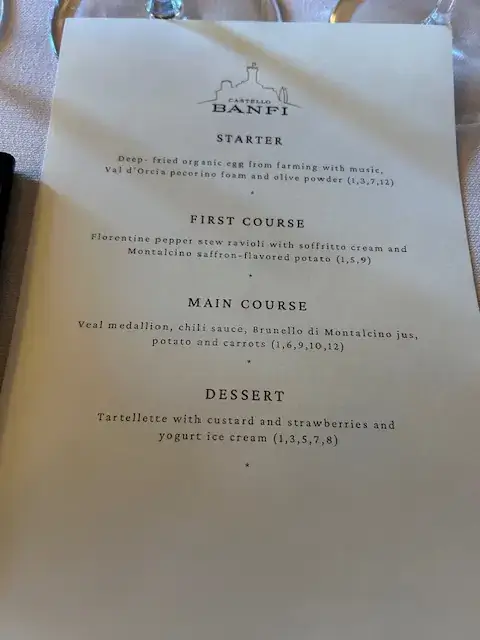
Having been amidst family businesses yesterday who grow vines on tens of hectares or less we wondered whether we would find our visit a bit ‘corporate’. Far from it, our hosts were friendly and really proud of their estate. We ascended to the private dining room where we had a wonderful four course lunch, accompanied by their Chardonnay, their Rosso de Montalcino, a comparison of two Brunellos (2021 and 2018, the latter their Poggio alle Mura made from grapes grown in the vineyards surrounding the castle), and their lovely late harvest Moscadelle de Montalicino.
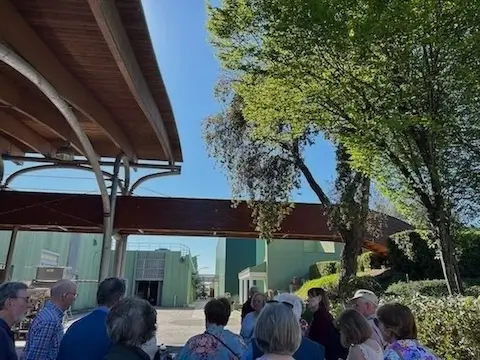
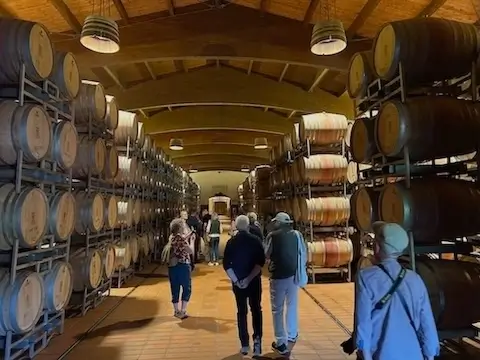
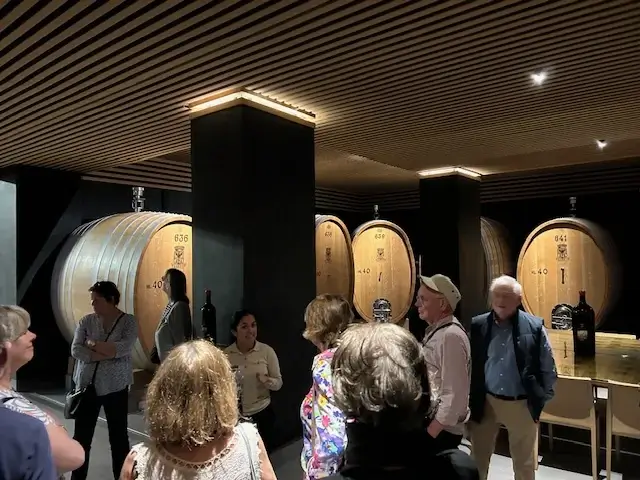
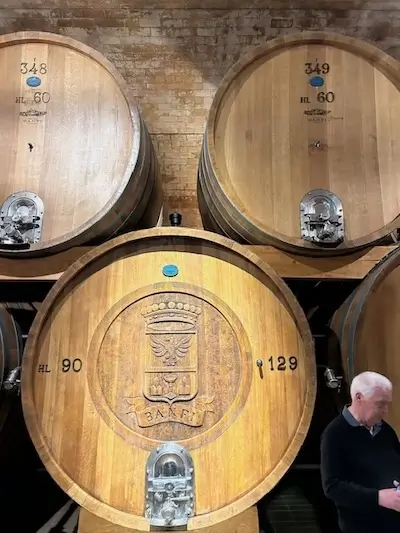
And then we descended from the castle to the enormous winery to be taken on a brilliant short tour, focussed on their truly incredible barrel cellar. I will let the photos do the talking. Banfi’s focus on quality wine making had shone through in the wines we tasted, and their focus on sustainability was a source of pride to their employees. This was a great contrast to some of our previous visits, and a great way to explore (and enjoy) the wines of this famous denomination.
We returned to Siena for a final evening together, and a walk around the old walls for some.