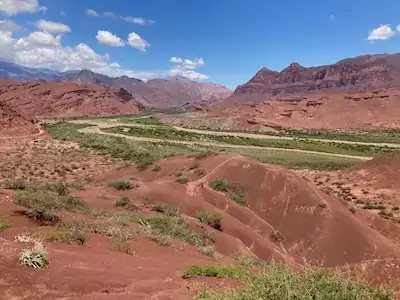
On Monday March 3rd our 2025 tour season kicked off in South America, with two tours in Argentina and one in Chile. Our first destination was Salta, in Northern Argentina.
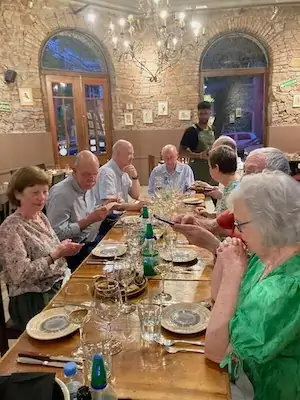
We convened in the Design Suites Hotel in Salta city, and greeted each other with a glass of fizz followed by dinner at the José Balcarce Bistró, a short walk from the hotel. We shared some mixed starters, including of course empanadas but also ceviche and humitas, and chose our mains – some going straight for the steak! Accompanied by some lovely Torrontés (from El Esteco, a winery in Cafayate that some of us later popped into) and Malbec.
Tim had primed us for an early start on Tuesday and we were on our coach at 8.30am. We met Carlos, our driver, and Mauricio, our local guide who turned out to be a fount of knowledge about the region and much else. Tim provided his introduction to the Salta wine region. This explained why we were starting with a four hour drive – Cafayate is actually the centre of wine production, and all our visits were there.
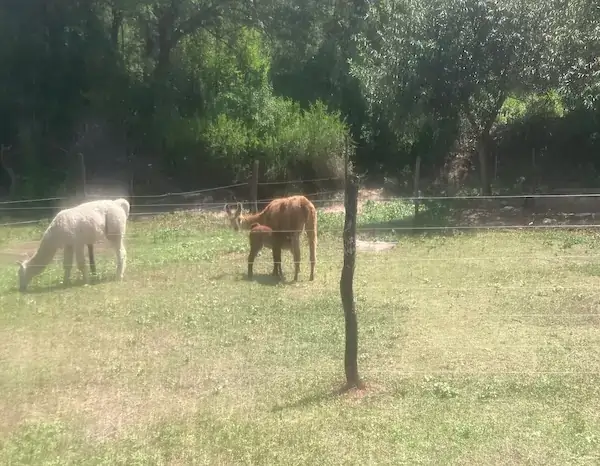
It was a beautiful day and the scenery changed from a wide, fertile river valley to more undulating scenery before we started to climb and entered the long gorge that follows the Rio de las Conchas (named for the fossilised seashells of its red sandstone rocks). A brief stop for coffee (and some baby llama admiration) and we were en route again, admiring amazing rock formations and impressive cacti (Mauricio explained how slowly they grow, and how much they were used by local people).
Tim’s street cred was raised several notches when he revealed he had driven the route alone a couple of years ago on reconnaissance, it was not a smooth road, and several bumpy patches showed a decidedly patchy approach to bridge building!
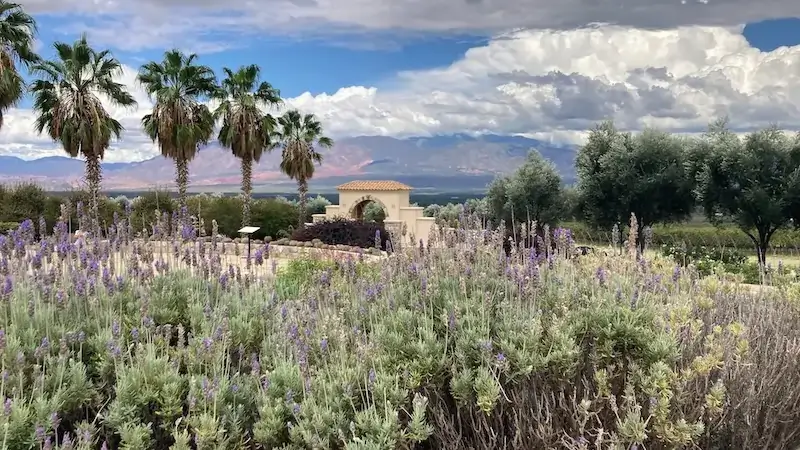
We ascended a paraticularly bumpy track but arrived at a very splendid place: Piatelli Vineyard Estate. This is only a few years old and has a sister estate in Mendoza. Its grounds were beautiful and the views across the Cafayate Valley were tremendous.
We had a very pleasant lunch before meeting Alejandro, one of the winemakers and viticultural manager, who despite being in the middle of harvest gave us a brilliant overview of their winemaking, including tasting samples from tanks at differing levels of fermentation.

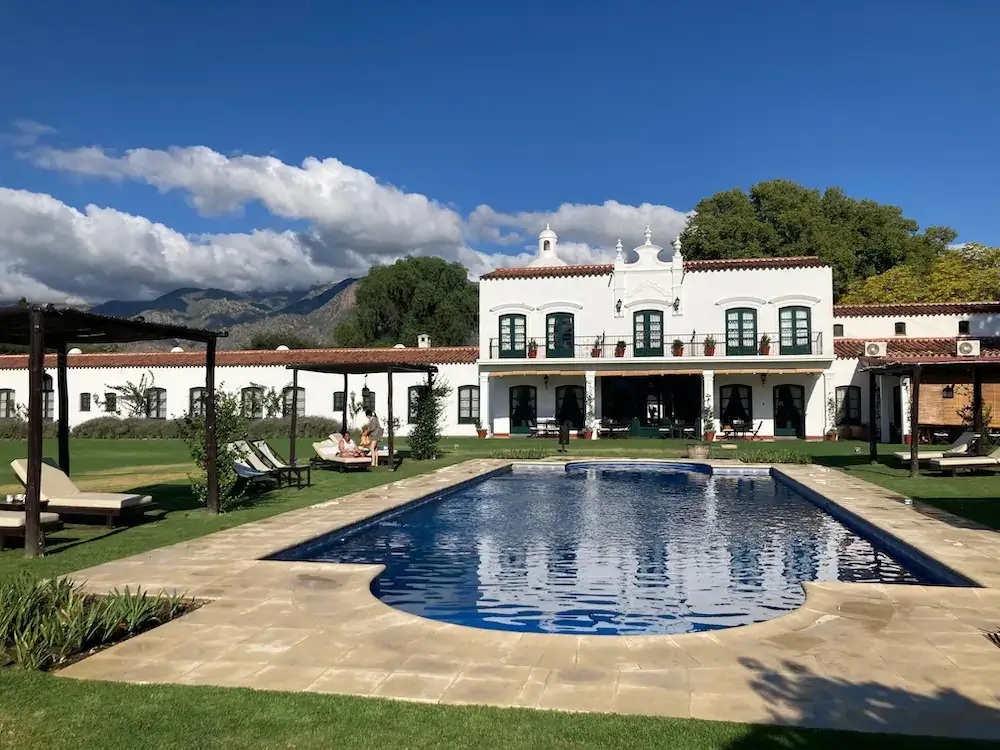
It wasn’t too far to our hotel, the Patios de Cafayate, with lovely colonial architecture and a very inviting pool. Some of us took Mauricio and Carlos up on their offer of a lift into town in the evening, and were very glad they gave us a lift back as we were treated to a spectacular lightning storm and some torrential rain.
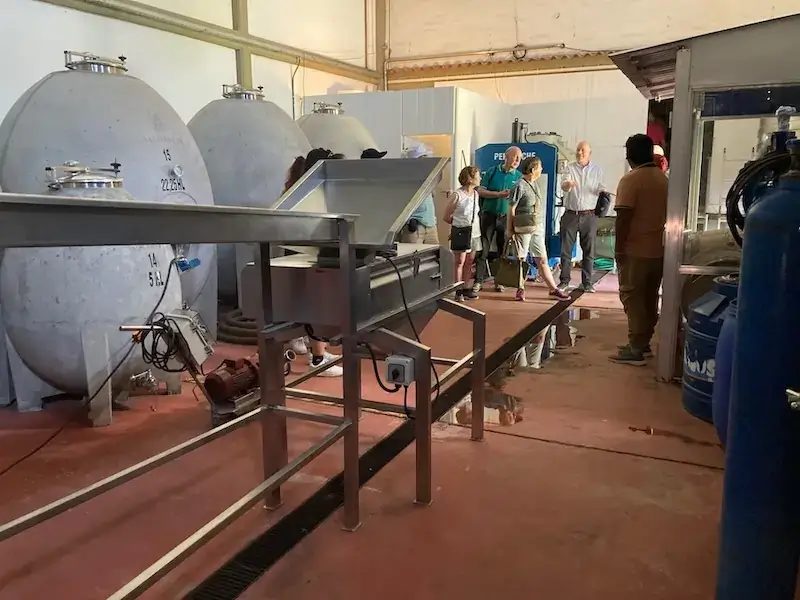
Despite the previous night’s inundations, Wendesday dawned in glorious sunshine, and we headed through the town and up (and up). Our first visit in the morning was to Finca las Nubes, the tiny estate belonging to José Luis Mounier, one of the top winemakers in Argentina. On 6ha of vines looking out to the magnificent mountains beyond the huge valley he grows Torrontés, Malbec, Cabernet Sauvignon and Tannat. The winery was appropriately small, with modern equipment that would allow small batches of grapes to be sorted, pressed, fermented and matured, as Luis, our guide, explained to us.
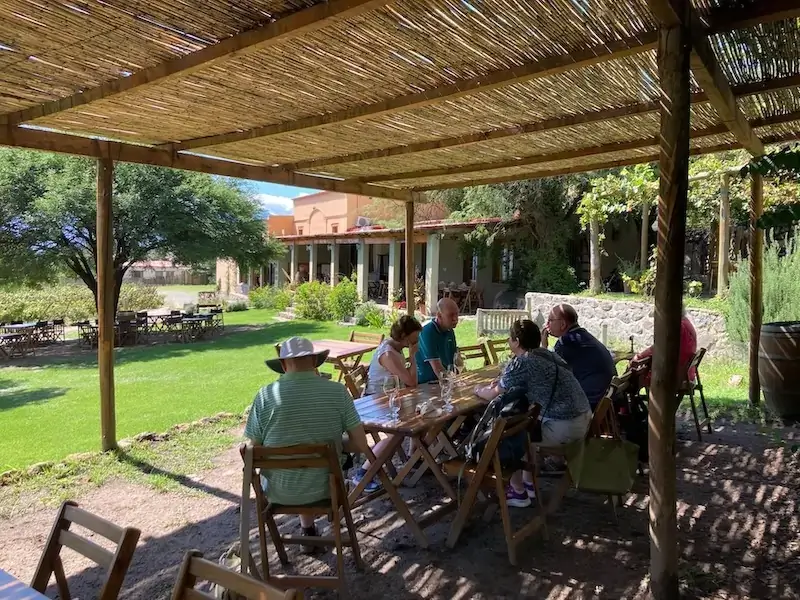
Luis led us through a tasting of the Los Nubes range of wines, which showed off beautifully quality – and typicity – of the grape varieties: only one had seen any oak. We then headed up to an outdoor table to sample a couple of Reserva wines under José Luis Mounier’s own label, which had had some barrique ageing. Tim thought his life’s work was complete as our group had a very interesting discussion about Reverse Osmosis and its role in removing alcohol from wine!
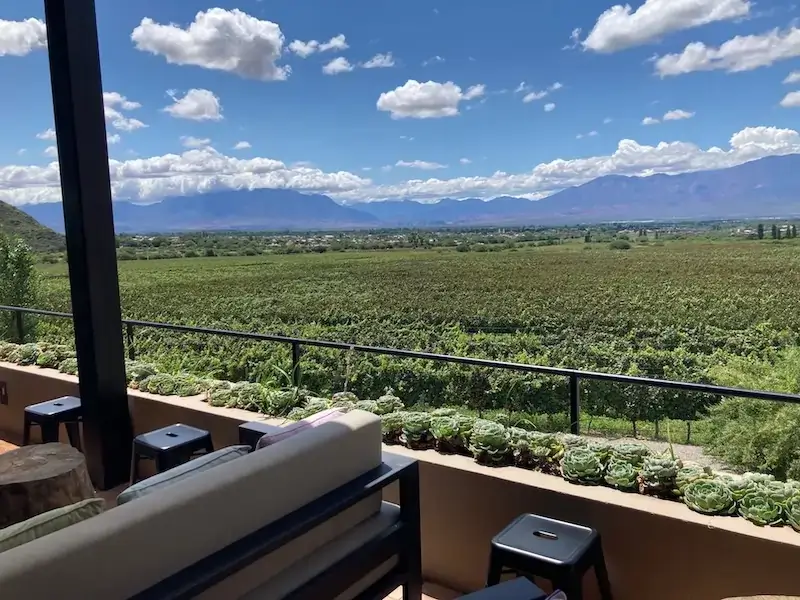
From Las Nubes we descended, some of us on foot, to an estate on a totally different scale: Amalaya. Their extensive winery is topped by a restaurant with panoramic views across the valley. Amalaya and Colomé wines are well known in the UK, Tim has been a keen promoter of them for years! But the story behind them is less well known and we were entranced to hear it from the lips of their chief agronomist Javier.
Donald Hess, whose family businesses in Switzerland had taken him to the USA, became interested in wine and invested in wineries in California – the Hess Collection.
In the 1990s he turned his attention to Argentina, determined to find the best place to grow Malbec. After travelling through pretty much all the wine regions from south to north he arrived in Salta, still not finding what he was looking for, until he discovered the wines of the Bodega Colomé estate, whose 100 year old vines (planted pre-phylloxera) were producing the grapes, if not the wines, he wanted. Initially he invested in vineyards in the Cafayate region, and was then able to buy the Colomé estate itself, and his vineyards are now in three areas at 2,300m, 2,600m and 3,100m altitude. The two estates now thrive – Colomé is the oldest bodega in Argentina still making wine, and Amalaya a significant high quality player. Vineyard practices are very much sustainable, with natural vegetation between the vines, and non systemic treatments, though ants have become a big challenge.
Our tasting was magnificent. We contrasted the Torrontés whites of Amalaya and Colomé, and then worked our way through the Amalaya Malbecs. All Amalaya wines are blends – the principal variety at 85% of the blend means they can declare it on the bottle but other varieties such as Riesling, Cab Sauv, Cab Franc and Merlot allow greater complexity. We finished with three pure Malbecs from Colomé, that reflected the effects of increasing altitude (more sunshine intensity and wider dirurnal temperature differences) with increasing intensity of flavour and tannic structure.
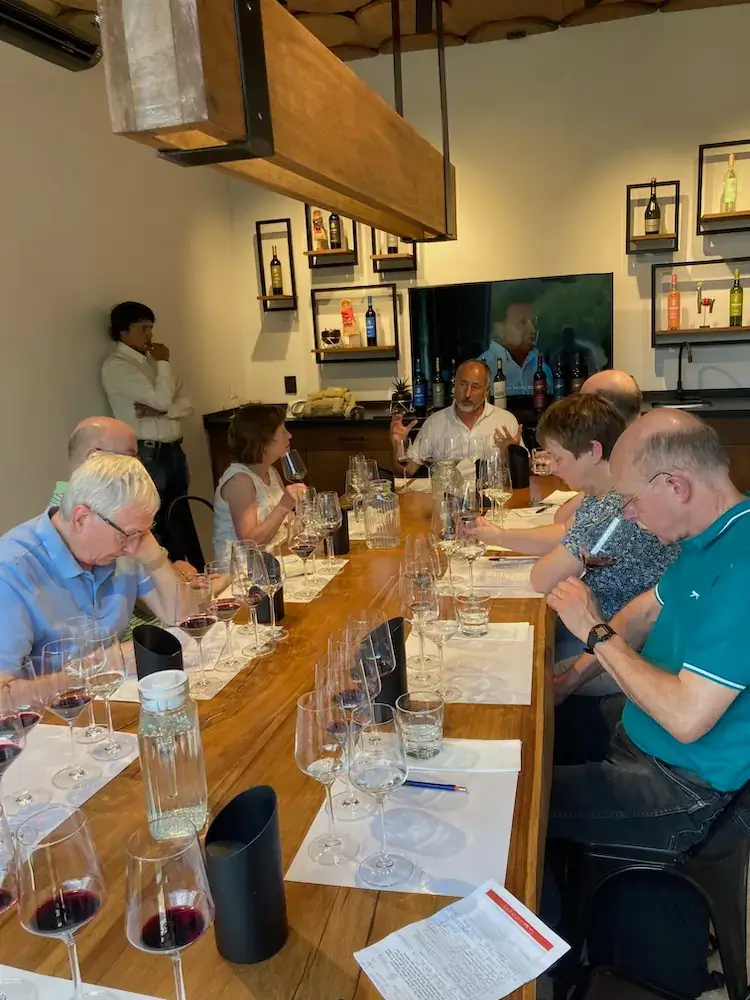
With lunch of salad and a casserole we enjoyed their Estate Riesling, Cabernet Sauvignon and Malbec (all pure varietal wines only sold at the estate), the latter showing how well the variety goes with the chocolate pudding.
We had to be dragged away, but a final night dinner at the hotel beckoned, and another amazing lighting show.

On Thursday we packed our bags again, and with them boarded the bus.
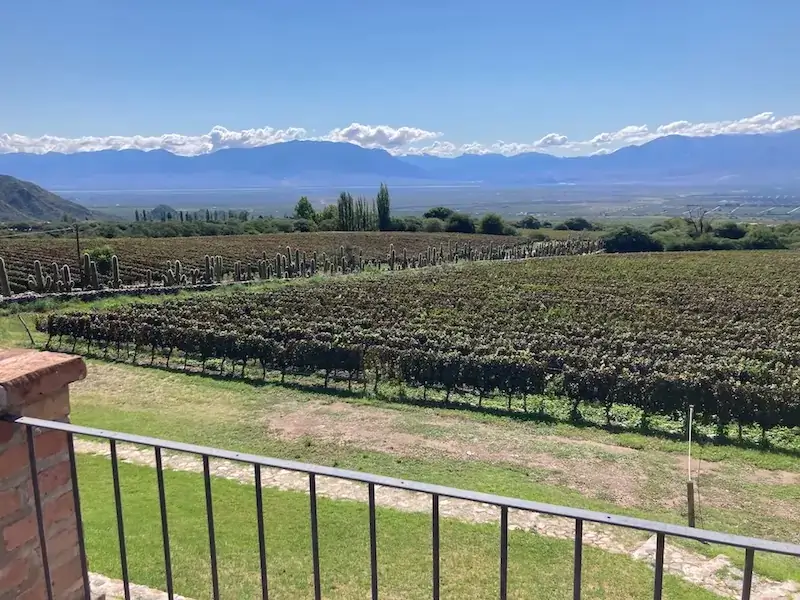
Our final visit gave us another stupendous view of the Cafayate Valley, this time having ascended a driveway of cacti! Yacochuya is the winery of the Etchart brothers, whose family sold their first wine business to Pernod Ricard and now focus on boutique production. Jeronimo led our tour of the winery, under the supervision of Arnaldo Etchart, the latter taking over for our tasting.
With 40ha of vineyards at 2,000m by the winery and a further 5ha in the valley, the winery is still growing, and deservedly so! Unlike other vineyards we visited who bore holes for water, theirs comes from the Yacochuya (which means clear water) River in the mountains above the estate.
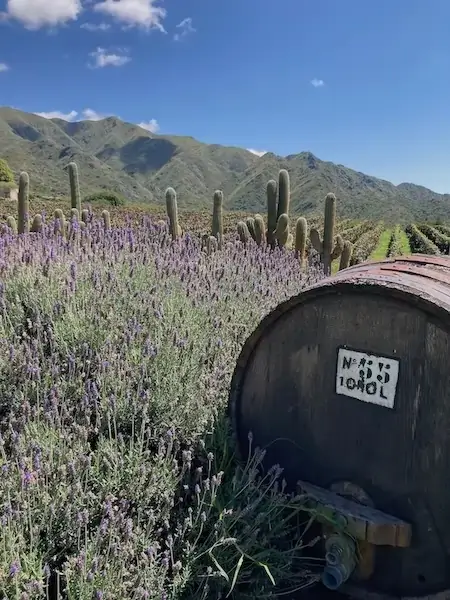
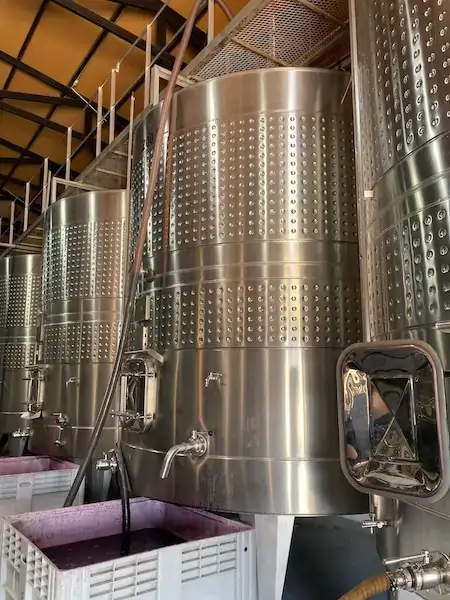
Michel Rolland, who came to Argentina 37 years ago to assist the country’s wine development, is still a consultant, and their wines are of very high quality, from meticulously managed vineyards and winery. We saw the remaining stalks from bunches that had been selected and destemmed, and the various steel tanks in the winery that allow them to vinify plots separately, and the French oak barriques in which their premium wines are matured. 2025 should be a great vintage – good levels of rain in January, but even our inundations of the last couple of nights will have drained away to allow harvesting of healthy grapes.
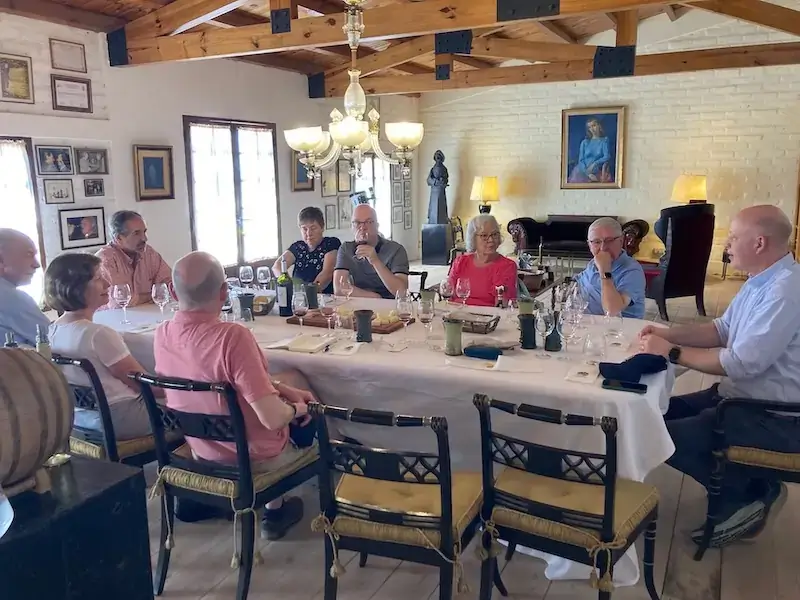
In their lovely upstairs tasting room, surrounded by art and awards they have won, we tasted their Torrontés and three of their red wines. It was a great way to end our studies of Cafayate, the reds in particular showing how approachable Malbec is even in youth, but also how much potential it has to evolve in bottle – if you can resist its charms for a few years.
Arnaldo was so generous with his time and care in answering our questions, it was a perfect final tasting of wines in this stunning region.
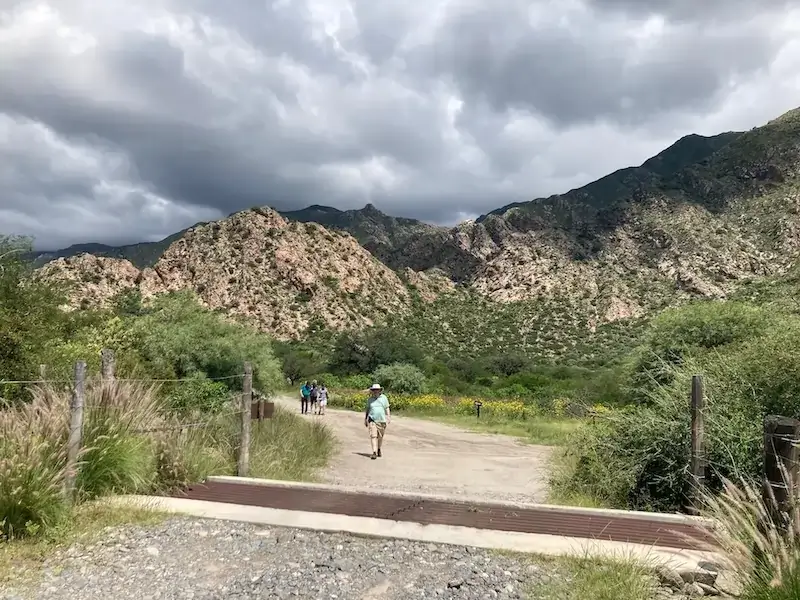
Our return journey was by the same route, with a couple of stops for investigations of local scenery including an amazing amphitheatre formed by an ancient waterfall.
Too soon, we were back in Salta and saying our farewells, though we would all be together again in Mendoza in a few days….