
Chile has established itself by producing consistent and reliable wine – predominantly Cabernet Sauvignon, Merlot and Chardonnay.
This sounds a bit dull at first glance and while the statement is true, it belies the innovation that is currently taking place throughout Chile.
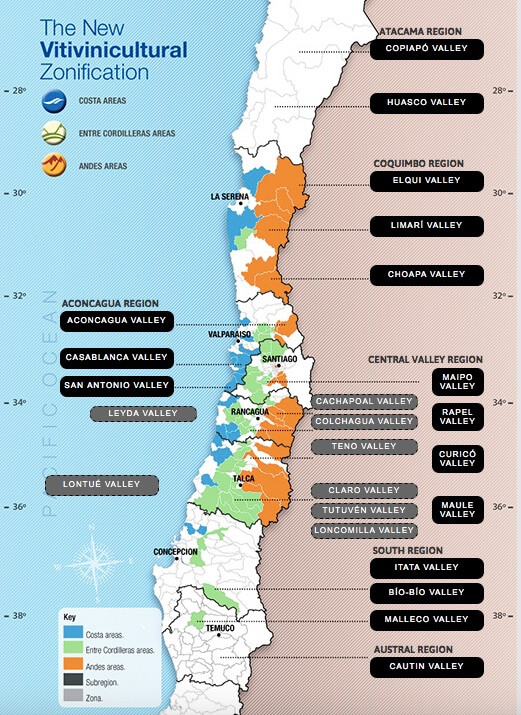
Terroir, inevitably, is the buzz word. Having planted vast swathes of irrigated, international grape varieties on the flat valley floors, there is now ongoing research and development on how to match specific valley terroir with the correct grape variety. This has also revealed the depth of difference within each valley.
Chile is quite extraordinary in geographical terms. 4300 kilometres north to south and an average of 180 kilometres east to west. Pacific ocean to the west, Andes mountains to the east, Atacama desert to the north and ice fjords to the south. There is an intricate weave of coastal mountains, rolling hills and valleys that make a true mosaic of terroir. This is the voyage of discovery that the Chilean wine producers and the so called ‘terroir hunters’ as they seek to unearth old, dry farmed vineyards as well as discovering the charm of lesser known grapes such as Carignan and Pais. Furthermore, it seems there is almost no limit to where you can plant vines. The Atacama desert is now home to its first vineyards and the most southerly point of vineyard planting is regularly challenged. The Andean foothills are also in play as the concept of slope and aspect is developed further.