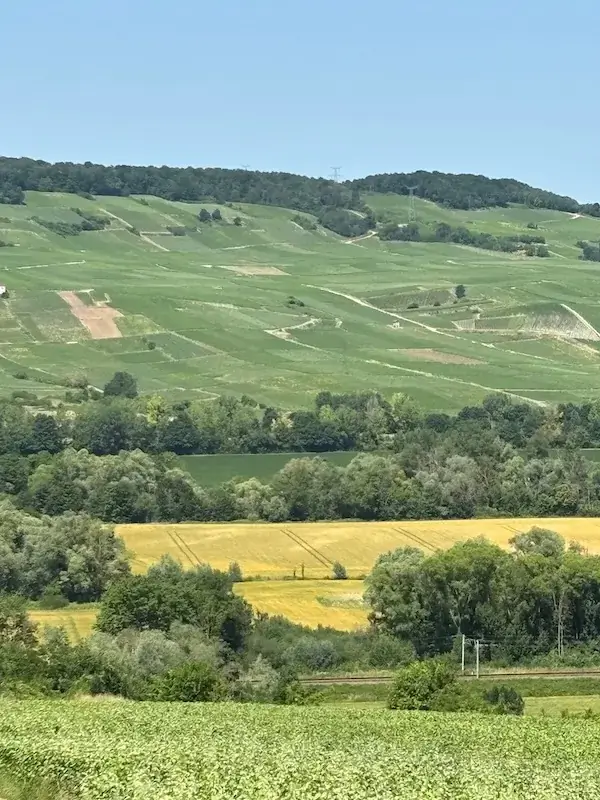
In 2025 I ran four wine tours to Champagne. This was my 25th year of running tours under my own name, so there was something to celebrate.
Our tours enabled us to visit all of the key regions of this wonderful wine region, to explore all of its styles, and to find out about the challenges it faces and changes it is making.
Our base was the city of Reims, we stayed centrally which made arriving by train extremely easy, and on each tour we assembled in the hotel bar for a drink (of Champagne of course) before walking round the corner to Le Concordet restaurant. On most of the tours we were able to sit outside, and on each tour dinner (served with both Champagne and still wines) was very good.
In the Grand Cru village of Bouzy in the Montagne de Reims region Pinot Noir is the most prominent grape variety, our visits there confirmed the wonderful quality of wines, many made from grapes grown in Premier and Grand Cru villages, in both the Montagne de Reims and Côte des Blancs regions, so there was no shortage of Chardonnay based wines!

At André Clouet we learnt about the trend of later disgorement – many houses now keep their wines on their lees in cellar after the second fermentation, disgorging them as late as possible to ensure customers enjoy the freshest expression of their wines. Jean-François Clouet is an incredible character who I first met 24 years ago, it seemed nothing had changed and time had stood still.
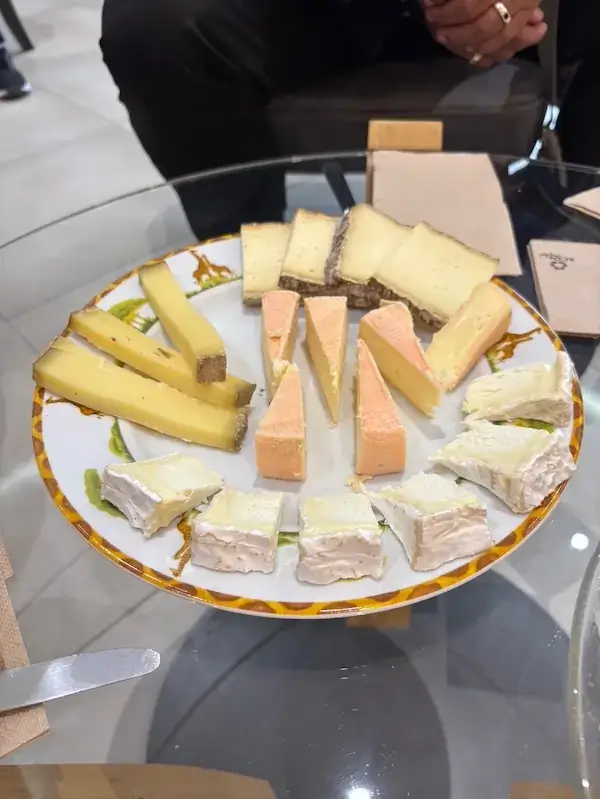
In Louvois, another Grand Cru village close to Bouzy we visited Guy de Chassey. After a quick tour of the cellar (dug by Guy himself) we tasted Champagnes with cheese – this was right up my street. Four superb cheeses: Chaource, Tomme de Savoie, Comté and Munster were paired with their different cuvées. A different approach and the wines had a different feel and style to Clouet.
Champagne Delavenne is owned by Jean Charles Delavenne, whose father and grandfather expanded the enterprise from the Bouzy vineyards bought by his great grandfather after the Great War, by marrying girls from Cramant and Ambonnay, and by digging the cellars that we explored. Jean Christophe not only practices organic viticulture but has also adopted lithotherapy, a form of homeopathy, that involves misting vines with spring water that has diluted elixirs that retain a ‘memory’ of the energy from various rocks and minerals. We explored his low dosage wines, including a rosé champagne, 17% of the blend being Bouzy Rouge – a still wine made from Pinot Noir grapes that is a speciality of the village and was the choice of French kings.

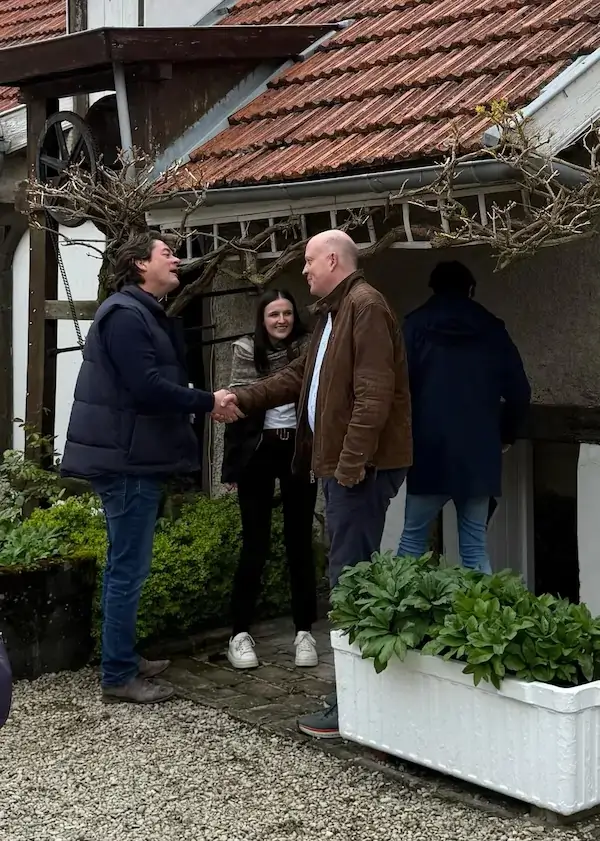
OI have sold Boutillez-Guer wines for a long time and we visited back in 2001, on my aforementioned very first wine tour. Manon the daughter (who was 7 years old when we first visited) now runs the estate with (very proud) father Marc in the background. We took a walk in the vineyard and contrasted their organic/ biodynamic plot with the pesticide/herbicide strewn neighbour, talked about the Montagne de Reims and climate change before heading inside for the tasting.

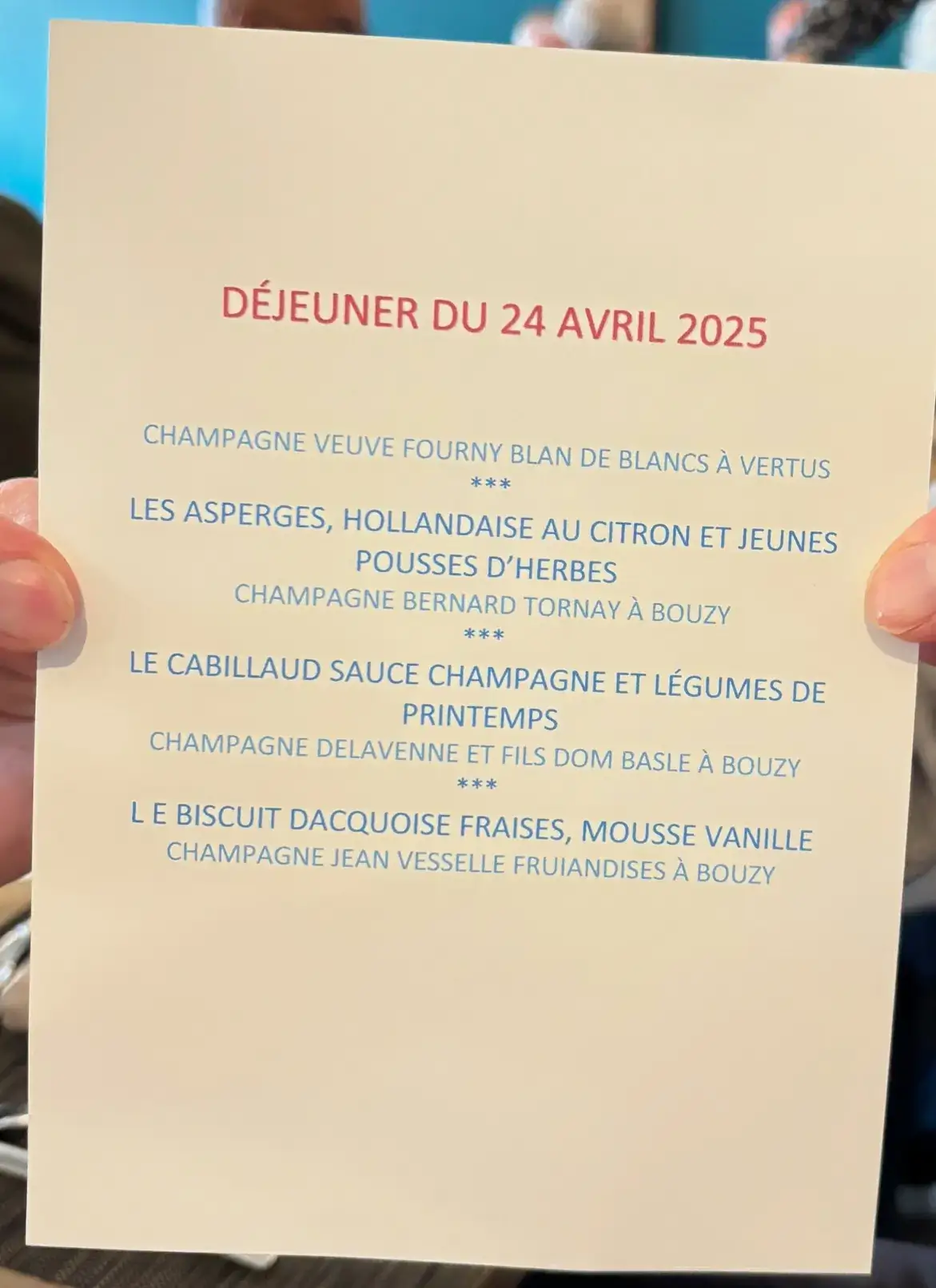
Le Bec Fin is a super family restaurant and on each tour we enjoyed lunch with four local champagnes culminating in a delicious demi sec rosé. We also ate at the excellent Table du 18 in Tours-sur-Marne, enjoying an excellent Bouzy Rouge and two contrasting Champagnes – this was how lunch should always be.

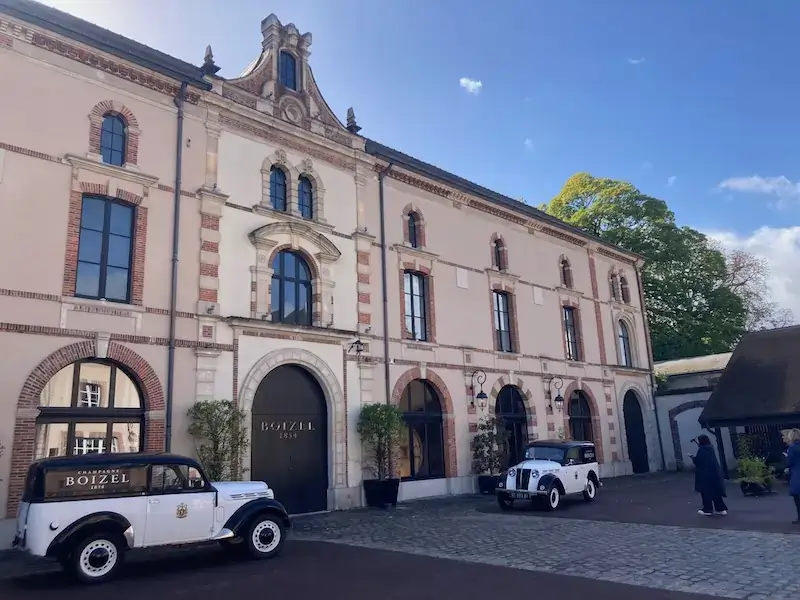
In Epernay in the Côte des Blancs we visited Boizel. Although part of the Lanson group the Boizel family are still heavily involved in the wine blending and production and are looking to innovate with single vineyard ‘monocru’ to really express an individual terroir.
The Grillade Gourmande restaurant in Epernay has a lovely outdoor garden and on several tours we enjoyed a lovely lunch accompanied by magnums of Champagne and Bouzy Rouge.

In the Vallée de la Marne we visited Champagne Le Gallais, a boutique winery in the Boursault castle, which was built by the Veuve (widow) Cliquot herself.

The Aube is the most southerly part of the Champagne region. The principal area is the Côte des Bar, situated to the south of Troyes. There has always been a bit of a disconnect between this area and the more densely planted and the better-known areas around Reims and Epernay. In the early 20th Century there were riots when it was suggested that the Aube might be removed from the Champagne appellation. Given that 25% of the Champagne vineyards are here, it was right that the Aube was formally included in 1911. Now, it remains an extremely important production zone for high quality fruit – in particular Pinot Noir.

Maison Devaux was a famous Champagne house run by a succession of three widows until 1951 and was then merged with the Union Auboise co-operative in 1987. It has beautiful gardens beside the Seine river which we strolled through before exploring the top level D range which is limited production and reflects the best plots from the best growers. This was a great tasting and allowed us to compare and contrast a range of styles, different blends, varying dosage and culminating in their 2014 Millésimé.

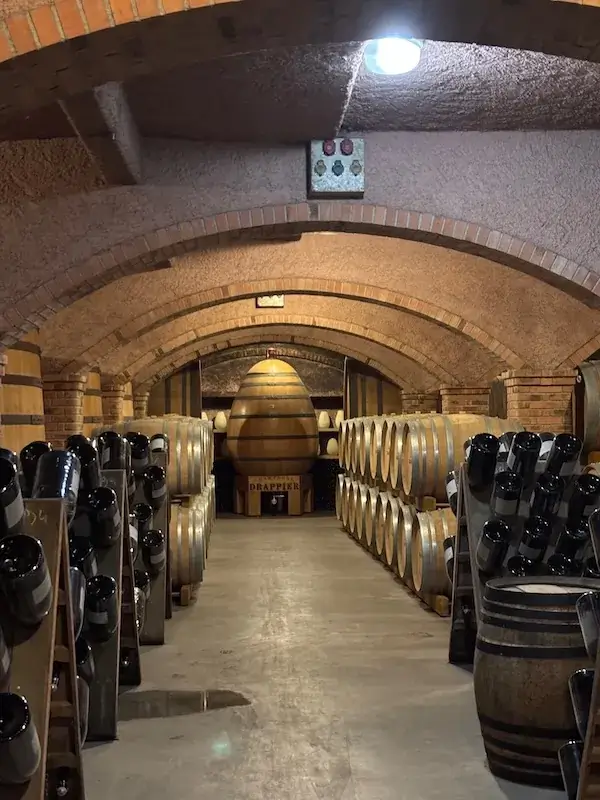
Champagne Drappier is one of the top estates of the area and is well known globally. We explored the 12th century cellars and heard about the experimental approach that Drappier has – we had a sneak preview of the egg-shaped oak barrel, codenamed Ovum, that was nursing their ‘Éclose’ 2012, released for the first time in 2026.
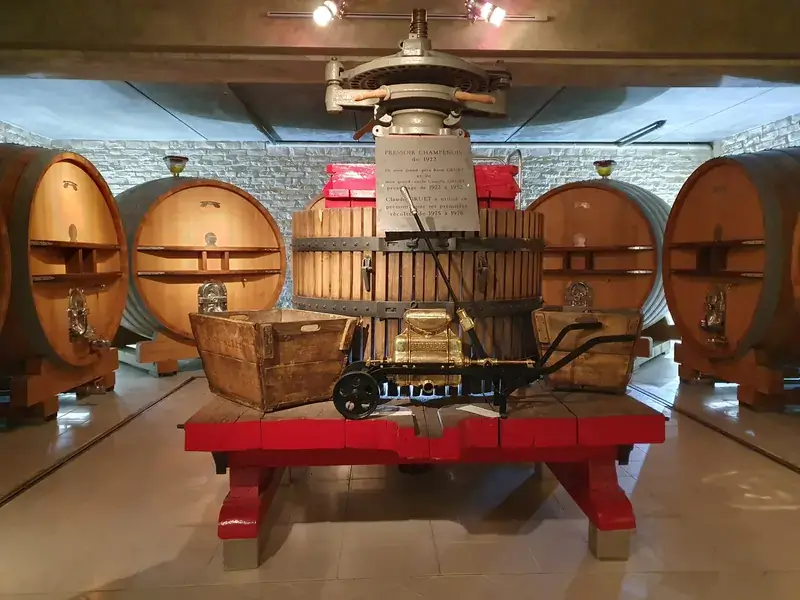
Champagne Gruet was founded in 1670 and is still family run, though it was only in 1975 that they moved from being growers to making wine themselves. Claude Gruet described making that decision, and our tasting included a 100% Arbane, This is a very rare grape, they only make 2,000 bottles each year (they make 3 million bottles in total!)
Lunch in the Aube was at Le Val Moret restaurant in Magnant, where we had, of course Champagne with our meal and also the Coteaux Champenois Pinot Noir still red wine.

Each tour ended at the Jardin des Crayères restaurant, sitting outside, drinking Alfred Gratien and Jacquart Champagnes from magnum and finishing with Ratafia de. Champagne (the region’s mistelle (like Pineau des Charantes), made from unfermented grape juice mixed with grape spirit.

90 people came on these tours, and I think we all agreed that we left them with a huge respect for the devotion and talents of the people we met, and an even greater love of the wine they make.