

On the final day of our tour we stayed in the Penedès region, driving through Vilafranca to reach Parès Baltà. Here we were greeted by a friendly team that included Joan Cusiné, the son of the founder (also called Joan), Jordi, his grandson, and Carlos, a local chap who was studying oenology, researching vine genomes and fount of knowledge.
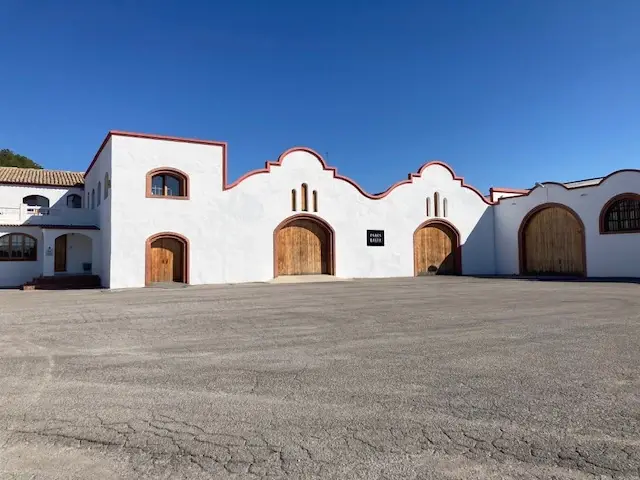
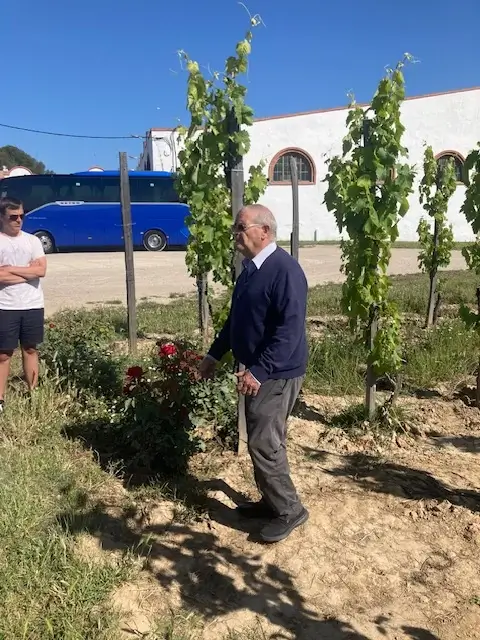
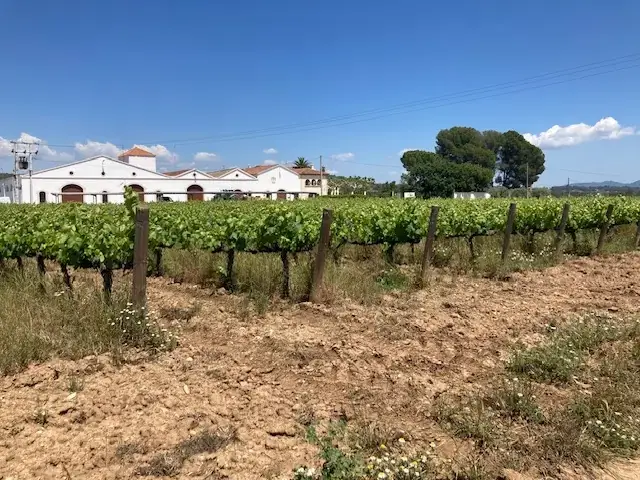
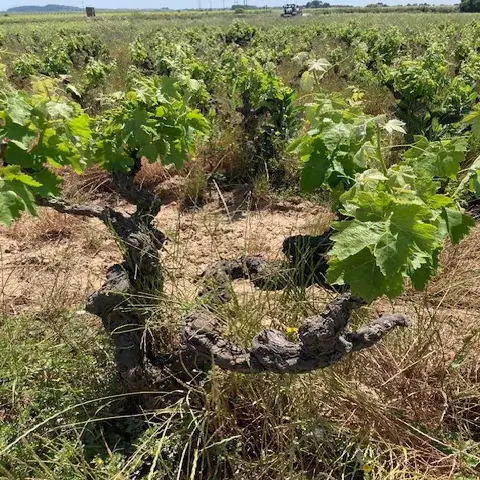
We first went into the vineyards near the winery, where Joan (who had taught English at a school near Market Harbrough in the 1960s and had some very happy memories) described his philosophy of wine making. As Pepe Fuster had said yesterday, it all starts in the vineyard. Joan was passionate about biodynamic practices and was inspiring about the ability of plants to communicate with their surroundings (including us). They farm organically and are increasingly introducing biodynamic practices, including training some of their vines in a spiral up a post, to better capture cosmic energy, something we had never seen before.
We then piled into a couple of minibuses and 4×4, and headed up the local mountain, El Foix, in the regional park. To find cooler conditions, they have planted vineyards in these higher altitudes, with Gewurztraminer, Merlot, Chardonnay and Sauvignon Blanc as well as local varieties such as Sumoll and Parellada.
We stopped a couple of times to look at the vines, and to admire the beautiful wild flowers and local shrubs and trees. Nightingales were singing – it was magical.
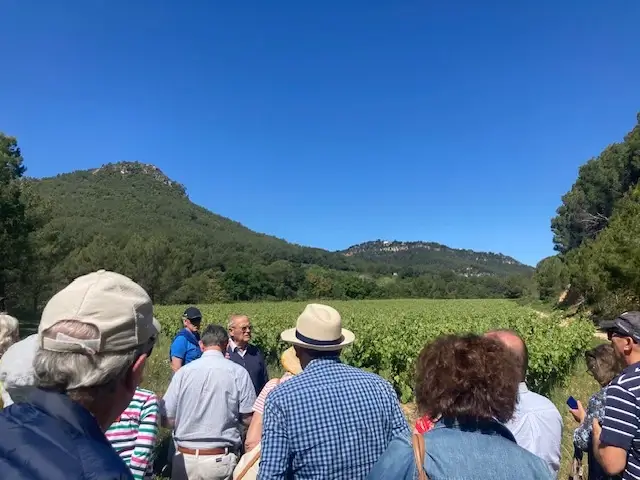
Joan seemed at ease with this natural environment, even if deer occasionally nibble and wild boar plunder the ripe grapes. They can always build fences. His delight in his surroundings and the pleasure we were taking from them was charming.
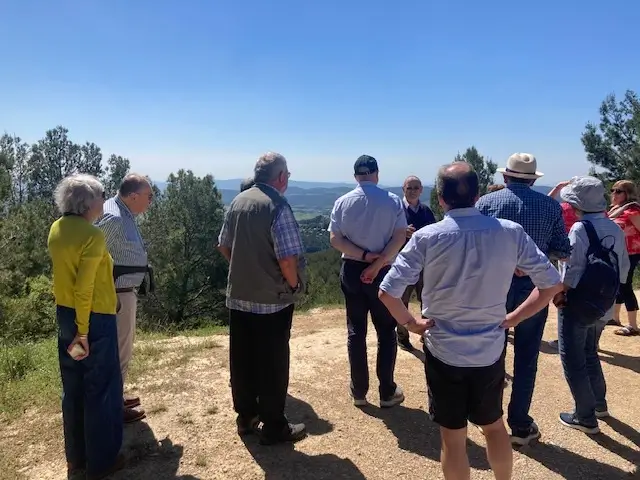
At the top of the mountain was a look out post, from which we could have seen the Mediterranean on a less hazy day. This was where locals would have gathered when pirates landed to plunder.
Back at the winery, after a very refreshing glass of their Brut Nature Cava, and an explanation from Joan about the vessels they use to ferment their wines, we descended to the cellar, built 100 years ago. It is 12m deep (an underground river stopped further excavation), and was wonderfully cool, and we got used to the black mould which shows how perfectly humid the conditions are.
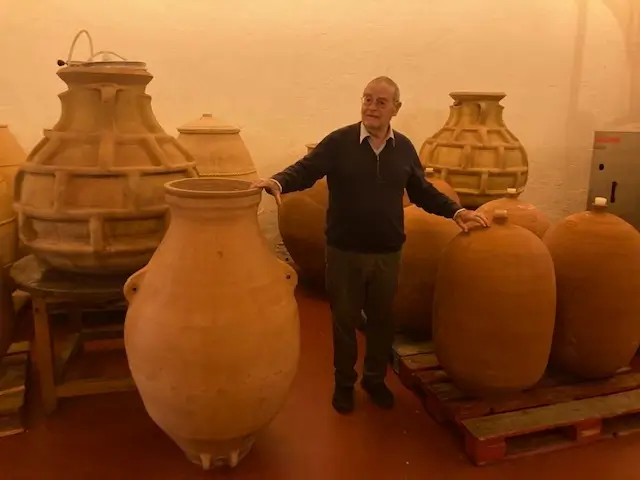
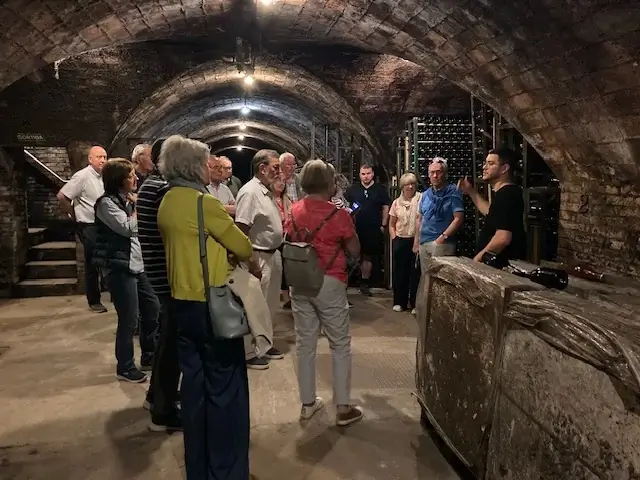
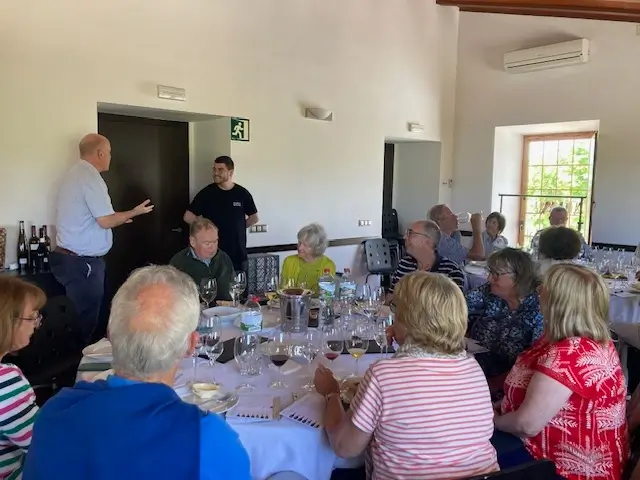
Their Gran Reserva cavas all mature here, for at least 36 months, and we talked further about the steps of making method traditional sparkling wine, before ascending to the tasting room for a light lunch and some more super wines, including their deep ruby coloured Radix rosé which was very gastronomic. We finished with their 2017 Blanca Cuisiné Cava, which had matured for 80 months on its lees, and was also extremely gastronomic – Carlos particularly recommended we try it with cheese.
From Parès Baltà we had a short drive to our final visit, Cavas Nadal. We had visited during our tours in 2014, since then they have joined Corpinnat, an association of Penedès sparkling wine producers who have more demanding requirements in both vineyard and cellar than ‘regular Cava’.
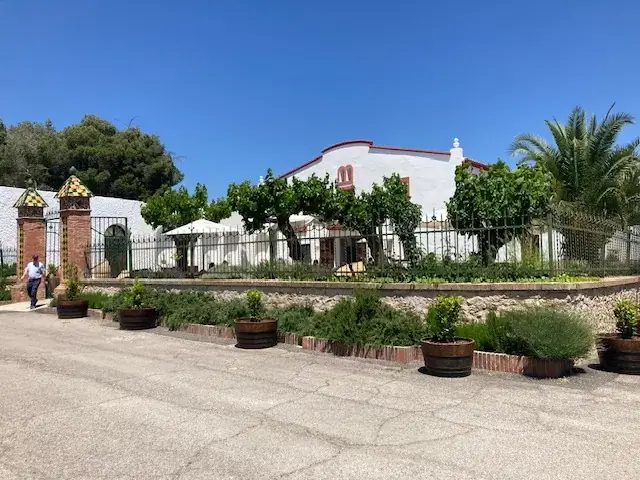
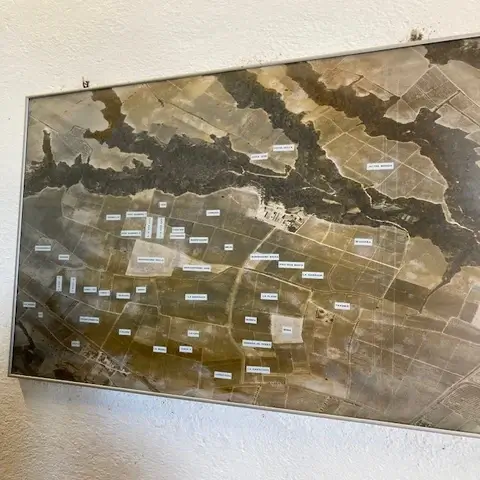
Ana introduced us to their vineyards near the winery, explaining that during the Civil war half of their 100ha had been requisitioned by the Republicans for an airfield.
Originally the family ran their farm on a share cropping system, and the various sub plots are named after the families who farmed them. This ended after Phylloxera, and Ramon Nadal, who was born in 1901 led their journey to modern winemaking. Ana described that any part of their land is only 10 minutes by tractor from the winery so at harvests grape stay fresh.
They make 200,000 bottles of sparkling wine each year, with a cellar 20m deep, to which we descended in a large elevator. It was of course full of bottles undergoing second fermentation. The oldest are kept upside down rather than on their sides, after 20 or more years (we saw wines from 2004 and 1997) the lees are simply acting as a preservative rather than imparting flavour. Everything is riddled by hand, broadly in time to meet the upcoming orders, so they ship their wines at peak freshness.
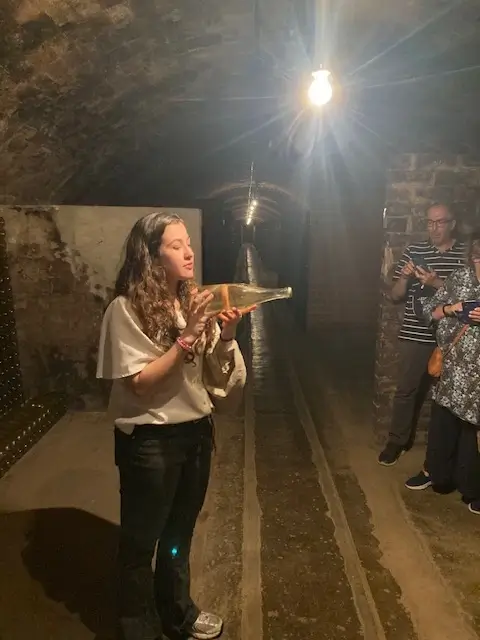
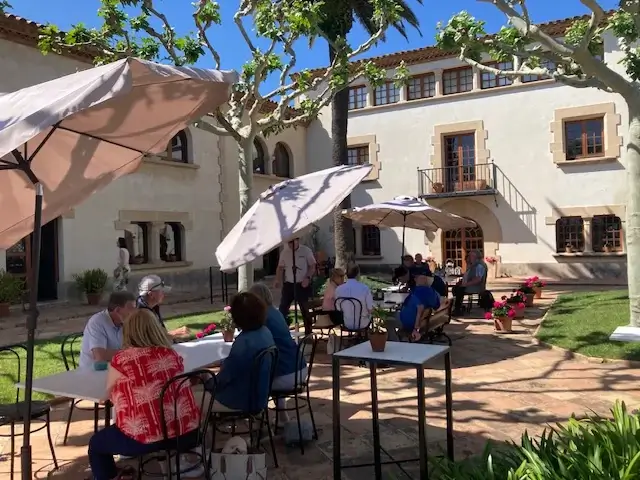
Back on earth we tasted five wines, three fizzes, a still Xarel-lo and a Noble (botrytis infected) Macabeu, matched with five croquetas. We sat on their terrace, shaded from the sun by some large shades, that did keep us on our toes as it was a bit blowy. The fizzes were from 2016 and 2017 and really showed what lovely flavours cava can develop, all little or no dosage but very balanced and smooth. The botrytised wine was a first, and went really well with our cheese croqueta. It was a lovely relaxed way to finish the trip, with Barcelona airport only an hour up the road.
Joan Cusiné at Parès Baltà had entreated us to return often (especially to help at harvest!). It is very tempting!